Something feels confusing
Separate mixed behaviour, vague attention, and an undefined relationship from the story anxiety is filling in.
Relationship advice library · Updated 2026
Clear explanations, realistic examples, words you can use, and safety-aware next steps for confusing or difficult dating moments.

You do not need to diagnose another person to make a good dating decision. Start with the behaviour you can observe, use one clear conversation where it is safe, and judge what happens next.
Separate mixed behaviour, vague attention, and an undefined relationship from the story anxiety is filling in.
Read patterns without minimising pressure, control, boundary crossing, or the practical safety signal in front of you.
Look for repeatable care, emotional capacity, room for two full people, and a trustworthy way back after strain.

Ghosting tells you that communication has stopped; it does not reveal why. If the stage of the connection warrants it, send one proportionate check-in, then decide from the behaviour that is actually available.
Read guide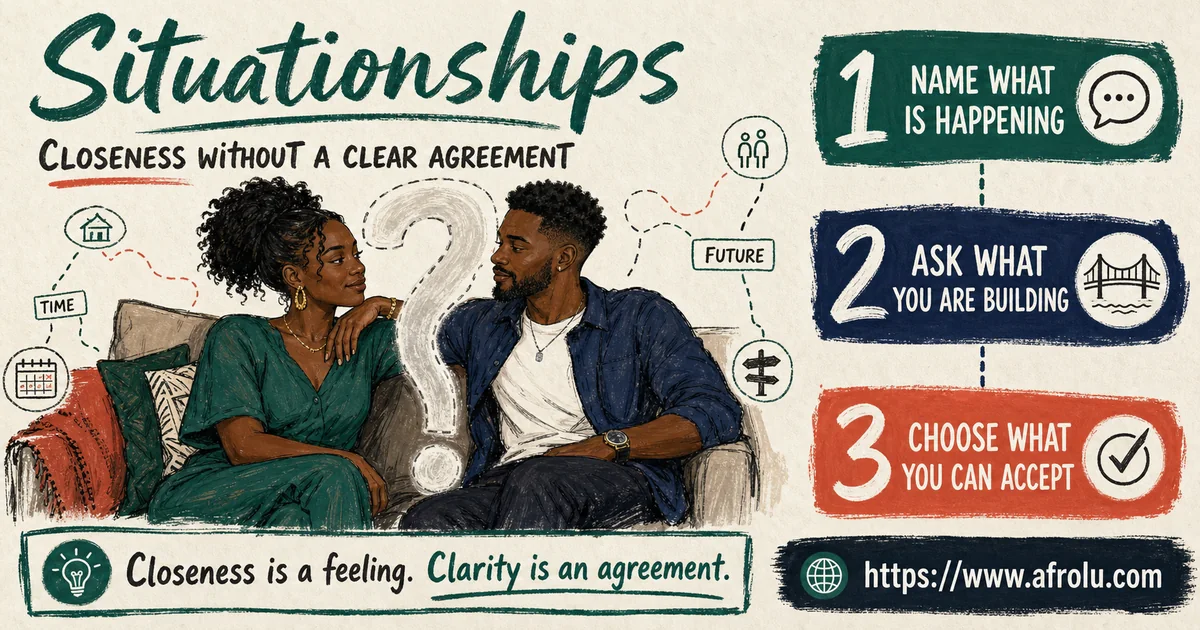
A flexible, undefined arrangement may work for some people when expectations and boundaries are mutual. It may become distressing or unworkable when needs diverge or discussion is repeatedly avoided. Use Afrolu's behaviour, agreement, and trajectory checklist to decide whether the arrangement available to you still fits.
Read guide
Dating types overlap. Online describes where you meet; casual or serious describes direction; multi-dating or exclusive describes an agreement; slow dating describes pace; and long-distance, faith, culture, parenthood, age, or disability describes context. Build one sentence across those five parts instead of forcing yourself into one box.
Read guide
Slow dating lowers acceleration, not interest. Keep one observable next step, leave enough margin to notice ordinary behaviour, and make the pace mutual. Slow seven clocks separately: match volume, messages, meetings, disclosure, physical intimacy, life integration, and relationship decisions.
Read guide
Casual dating can be respectful when the present offer is clear, sex and exclusivity are not assumed, consent remains current, privacy is protected, and either person can revise or end the arrangement without punishment.
Read guide
Say that you are open to commitment if the fit is right, then test five separate things: direction, capacity, compatibility, ordinary behaviour, and the agreements you actually make. A serious goal should guide selection without pretending a new person is already a promised future.
Read guide
Distance is workable when identity is independently verified, contact is dependable without becoming surveillance, visits are safe and fairly planned, money stays protected, conflict can be repaired, and both people can name what the distance is leading toward.
Read guide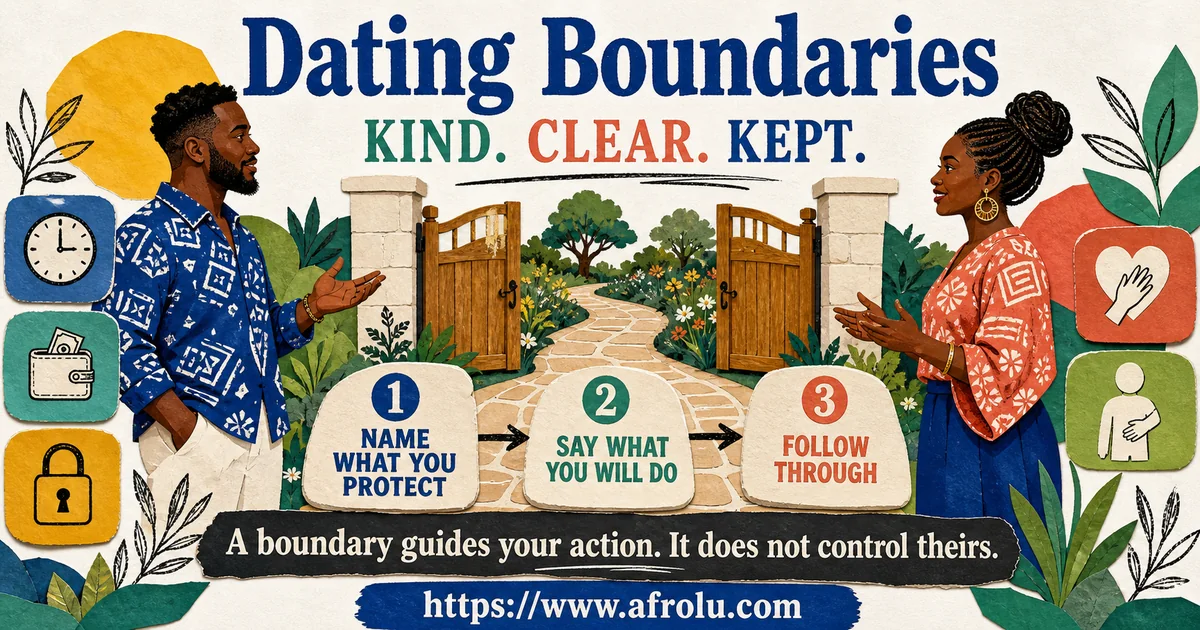
A dating boundary names what protects your time, money, privacy, body, safety, or emotional capacity, then states the action you control. It is not a threat and it is not a rule for managing another adult. Say it specifically, read the response, and follow through proportionately.
Read guide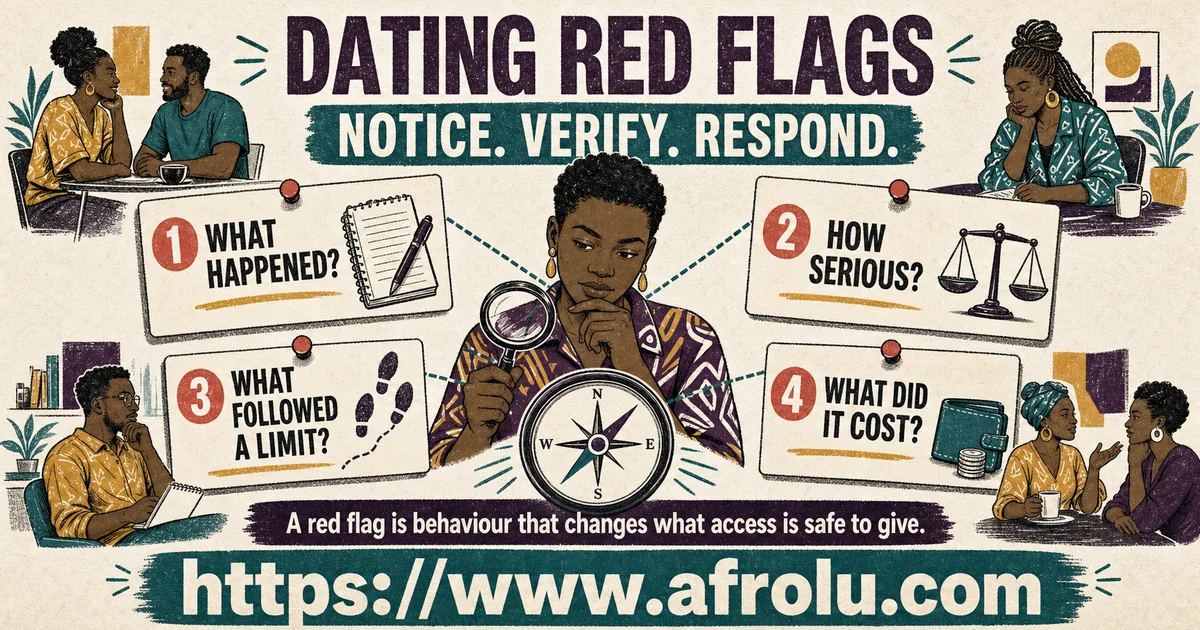
A dating red flag is either one serious event or a repeated pattern that threatens safety, honesty, dignity, money, privacy, or freedom to choose. Record the observable behaviour, judge its severity, notice what happens when you slow down or say no, and choose a proportionate response. Threats, coercion, violence, blocked exits, ignored consent, or suspected fraud do not require another test; you also do not need to wait for unwanted following or surveillance to become a stalking pattern before seeking safety.
Read guide
Do not make zero anxiety the entry requirement. Prepare a short, public, affordable date with verified basics, an independent journey, and a natural endpoint. If nerves rise, name the sensation, separate the feared prediction from present facts, and use one familiar reset. Return attention to one real detail in the conversation. Keep consent, identity, money, alcohol, privacy, and transport under a safety override: regulation should never be used to explain away pressure or an ignored boundary. Debrief only after your body has settled.
Read guide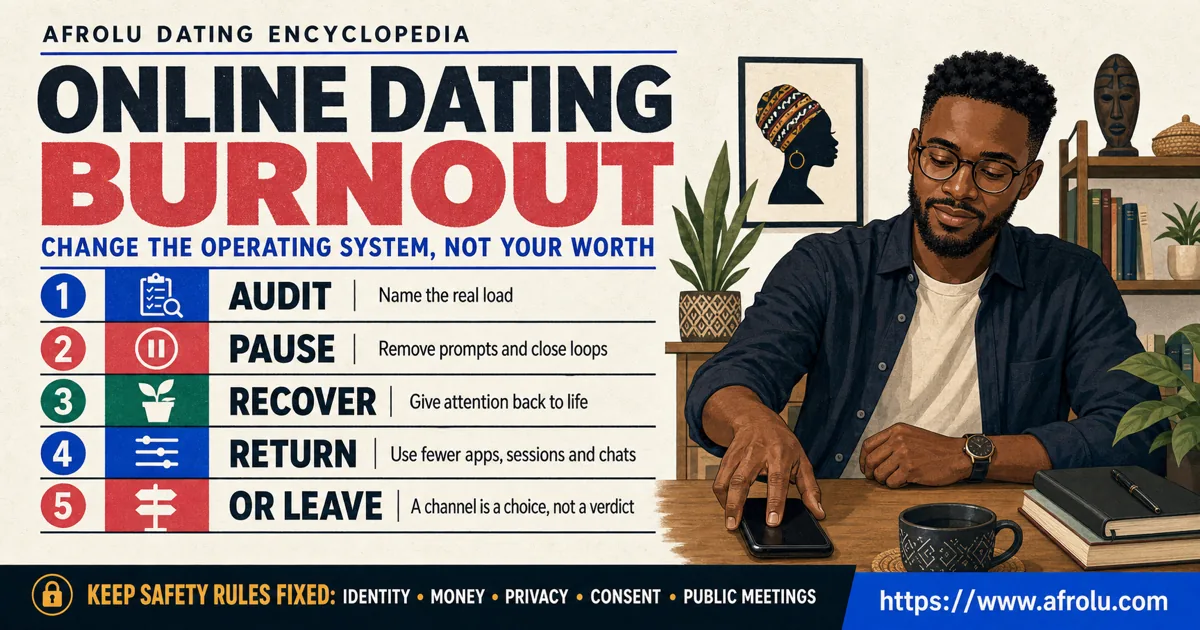
Treat "dating app burnout" as a useful description of fatigue, not a diagnosis. Audit discovery, comparison, messaging, scheduling, safety, rejection, and recovery. Take a deliberate pause that removes prompts and returns attention to ordinary life. Close developed conversations proportionately, but block or report unsafe contact. Keep identity, money, privacy, public-meeting, transport, and consent rules fixed. Return only with fewer channels, sessions, and active chats—or leave the apps when another route fits better.
Read guide
Love bombing is not a synonym for excitement, generosity, or early serious intent. The concern is a pattern in which intense praise, access, gifts, promises, or exclusivity pressure outrun real knowledge and make a slower pace feel costly. Keep your routines, delay major decisions, name one limit when it is safe, and judge the response rather than trying to prove a hidden motive.
Read guide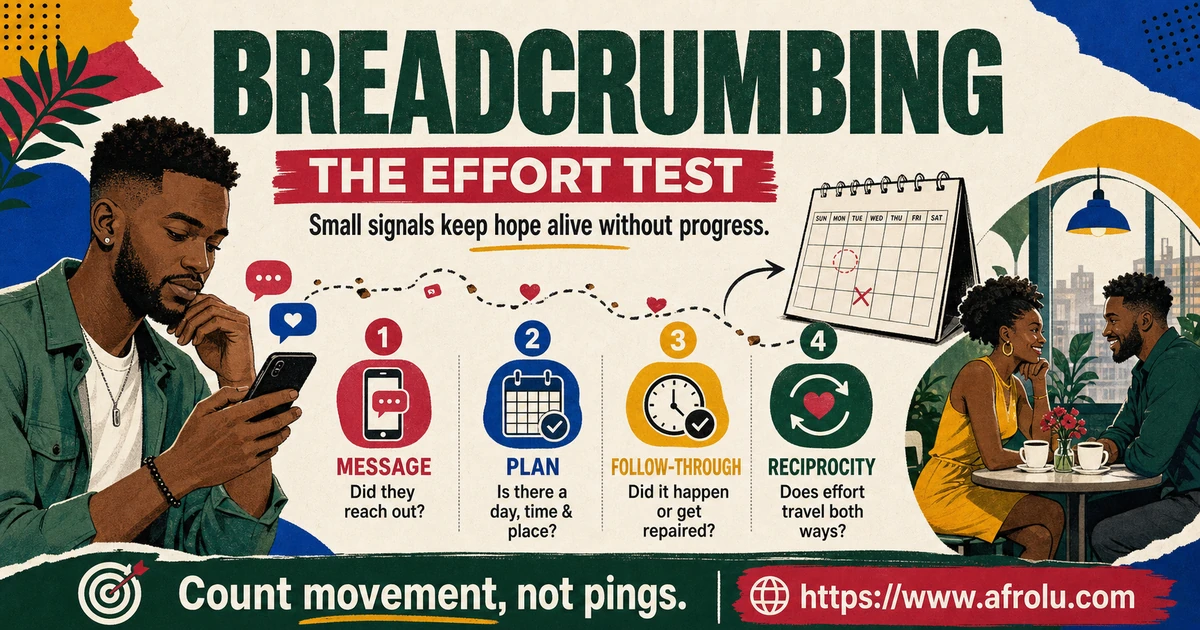
Breadcrumbing is a repeated pattern of small, intermittent signals that preserve romantic access or hope without dependable progress. Do not diagnose the person from one slow week. Track whether messages become specific plans, whether cancellations bring alternatives, whether effort is mutual, and whether the connection moves beyond low-cost digital attention. Ask for one concrete next step; if the answer returns to vagueness, stop financing the possibility with your time.
Read guide
You do not need to erase every feeling before dating. Check whether grief has support outside romance, daily life is steady enough for uncertainty, curiosity is about this particular person, relevant history can be disclosed honestly, and comparison can be noticed without controlling the pace. Start with one small date and review the effect; there is no universal waiting period.
Read guide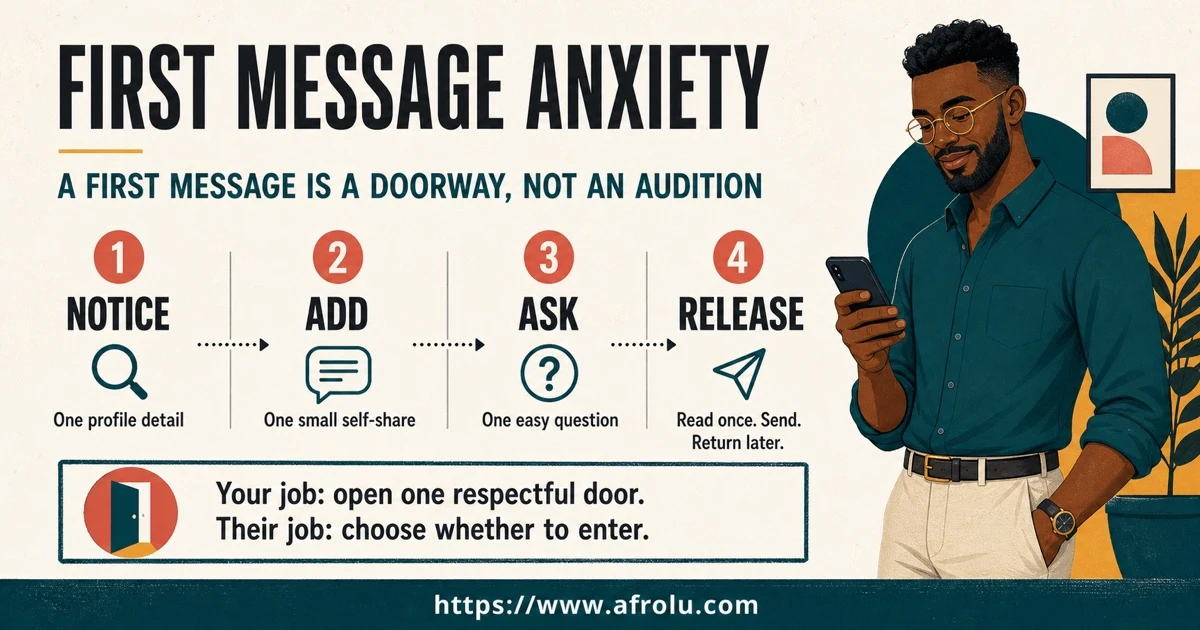
Treat the opener as a doorway, not an audition. Notice one real profile detail, add one small piece of yourself, ask one easy question, read once for clarity and respect, then release the outcome. The message begins a two-person exchange; it does not have to manufacture chemistry alone.
Read guide
Choose one public profile detail that feels easy to discuss. Write one warm question about it, then stop editing. Keep family names, schools, routines, and photos private. Send only when you can accept a reply, a slow answer, or silence. Distance changes timing, but it does not require a grand opener. Simple is enough today.
Read guide
Mara is 42 and trying online dating again. She does not need a perfect first message. One public detail and one plain question are enough. A photo of cooking herbs gives her an easy start: “Which herb do you enjoy cooking with most?” She stays inside the dating app and puts her phone down after sending. Consent stays freely chosen by both adults. Silence means only that no reply has arrived. Her address, live location, dating history, money, and account details stay private. A request for any of them changes the task. She can stop, block, report, and ask for help.
Read guide
Kofi is 36, lives away from the country where he grew up, and works long shifts. He wants a serious relationship, but his first message does not need to prove one. A public photo of a handmade camera strap gives him a simple start: “That strap looks handmade. Did you make it?” He sends after work and leaves the other adult free to answer in her own time zone. Consent stays free, and silence needs no chase. Employer systems, passport images, visa papers, addresses, bookings, and money remain private. Any request for them ends the chat.
Read guide
Lila is a 24-year-old Adult Student. She sees a match who likes classic films and says he wants casual dating. Her first message can stay light: “Your film note caught my eye. What old film would you watch again?” The question uses a public interest and assumes nothing about sex, secrecy, or future access. She sends once, then returns to an assignment and café shift. Both adults stay free to choose, including whether to reply. Her timetable, campus location, grades, money, login details, and private images stay closed. Pressure for any of them ends contact.
Read guide
Ruth is 33 and wants faith to guide her dating choices. Samuel's profile shows a hand-painted bookmark, so she starts there: “The bookmark caught my eye. Which part was most fun to paint?” The question is clear and does not test belief, marriage hopes, or weekend availability. She sends once and returns to worship, family plans, errands, and rest. Both adults remain free to choose whether to reply or leave the chat. Her home, worship place, community contacts, money, codes, and travel stay private. Spiritual pressure, late private invites, or payment links end contact.
Read guide
Sam is 39 and works across long project days. Zawadi's public profile shows a pencil sketch of an old railway station. He asks what made that place worth drawing, then closes the app. The question travels well across time zones and reveals no client, employer, calendar, or journey. Zawadi can answer later or not answer. Both adults remain free to choose. A company email, password request, urgent invoice, or travel-fare story changes the choice. Sam ends contact, saves evidence, blocks and reports the profile, and uses trusted or official help.
Read guide
Timo is 29 and new to online dating in Nairobi. Njeri's public profile shows coffee beans cooling after a roast. He asks which roast she enjoys, then returns to supper. The line does not guess the café, promise marriage, or ask for a meeting. Serious hope can guide Timo without making one reply carry the future. Both adults may answer, pause, or leave. His home, workplace, daily travel, money, account codes, and live location stay private. Emergency fare requests, secret pickup plans, and payment links end contact.
Read guide
Asha is 37, works full days, and has care duties at home. David's public profile says he bakes bread on quiet Sundays. She asks which loaf is kind to beginners, then charges her phone outside the bedroom. The opener shows interest without sharing a child's name, photo, school, routine, or care plan. It promises no fast reply and opens no work calendar. Both adults can answer, wait, or leave. Family-proof demands, workplace links, delivery fees, or home-address pressure end contact. Asha saves evidence, reports and blocks the account, and seeks trusted help.
Read guide
Peter is 51 and using a dating app again after many years. Elaine posted a shelf of jazz albums. He asks what she would play for a new listener. The line says nothing about his past, her private life, sex, a promise, or tomorrow. Casual does not grant home access or replace consent. Both adults may answer, change the subject, pause, or leave. Peter keeps his address, money, accounts, and old stories under his control. Address demands, sexual pressure, payment links, or arguments against a no end contact.
Read guide
Amara is 34, lives abroad, and wants a calm weekend. Malik's public profile shows a bright market meal, so she asks which flavour he remembers most. The question makes no guess about country, family, citizenship, or travel. She sends once and keeps Saturday for friends and rest. Both adults keep a free choice about every reply. Her passport, flight dates, family contacts, address, bank, codes, and live location stay private. A family emergency story, money transfer, strange link, or call from a new number after a block ends the chat. Amara saves proof, reports and blocks each account, checks her bank and device, and seeks trusted help.
Read guide
Njeri is a 26-year-old Adult Student with final exams ahead. Owen lives in another country and shows an astronomy-club photo on his public profile. She asks what night-sky event he would most like to see again. The question is warm, but it does not promise a relationship, trip, or daily call. Njeri sends it during a study break and returns to her notes. Her class times, campus entrance, student login, money, and travel papers stay private. Serious interest grows through honest replies and kept plans. A tuition request ends contact. She refuses and leaves the payment link untouched. Official support helps after she reports and blocks Owen's account.
Read guide
Daniel is 35, faith-led, and dating adults in Nairobi. Rehema's public profile shows tomatoes beside a community-garden sign. He asks which plant surprised her by growing well. The opener does not guess her church, ethnic group, estate, family, or beliefs. Daniel sends it after his errands and lets her answer freely. He keeps his worship place, home, live location, and travel details private. A later meeting would be public, affordable, and easy to leave. When Rehema demands a private prayer meeting that night and uses faith to shame his no, Daniel declines. He ends contact after insults, saves the messages, reports the profile, and blocks it. Belief can guide manners, but it never removes consent.
Read guide
Joan is 39 and protecting a work-heavy season. Musa's public profile shows him beside a bicycle at sunrise. She asks whether he prefers quiet roads or busy streets. The question avoids company names, income guesses, office places, and calendar details. Joan sends it from her personal phone after closing the work laptop. She seeks only one clear answer: does a respectful chat begin? A later reply may support one call, not a relationship forecast. Consent stays free for both adults, who can pause or decline. Joan keeps client facts, internal links, badges, passwords, and work hours private. A demand for calendar access or an office address ends contact. She saves the request, reports and blocks the profile, and alerts workplace security if anything was exposed.
Read guide
Malik is 31, new to dating apps, and meeting adults for casual dating. Zola's public profile shows an open sketchbook. He asks which drawing taught her something new. The question does not turn a casual label into sexual access. Malik sends once and keeps his home, login, money, and private photos closed. Consent stays free for each message, image, meeting, and touch. Zola may answer, pause, or say no. When a match asks for an intimate photo, Malik refuses. He offers no safer-looking image as proof. If the person asks again or threatens him, Malik ends contact and keeps the messages. He reports the profile, blocks it, and secures his accounts. Being new does not weaken his right to leave.
Read guide
Wanjiku is 38, a dating parent, and looking for a serious bond with another adult. James shows a public photo from a green walking path. She asks what makes a path enjoyable for him. Her first note shares no child name, photo, school, care plan, home address, or empty hours. Wanjiku sends once and keeps the weekend plan she already made. A thoughtful reply may support a public lunch after she checks care. It cannot prove a lasting bond. Either adult can change or decline the plan. James shows useful patience when he waits for her answer. A match who asks to meet her children at once loses access. Wanjiku ends contact, reports and blocks pressure, and gets urgent help for a threat to her family.
Read guide
Elias is 52 and dating again after years away. Sofia lives in another country and mentions a translated novel on her public profile. He asks whether the translation changed how the story felt. The note needs no fast answer across two clocks. Elias sends once and returns to his own book. His home, past grief, money, papers, travel dates, and account facts stay private. Both adults may reply, pause, decline a call, or end contact. A late book answer may still be warm. A call refusal is not a reason to push. If a match asks Elias for fare money, documents, or a code, he refuses and ends the chat. He saves the request, reports and blocks the profile, secures exposed accounts, and seeks help for threats.
Read guide
Zuri is 36, lives abroad, and dates adults with ties to Nairobi. Kamau's public profile shows a building with deep shade and wide steps. She asks which part of the design caught his eye. The question uses the picture without guessing his estate, income, family, or exact place. Zuri sends during her evening and lets Nairobi keep its own clock. Her passport, travel dates, bank, family contacts, address, and live location remain private. A design answer may support one more chat. A future walk stays only an idea until both adults choose real plans. Consent remains free. If a match asks for passport proof, visa papers, or proof money, Zuri refuses and ends contact. She keeps the request, reports and blocks the profile, secures exposed accounts, and gets help for threats.
Read guide
Ben can begin with the guitar shown on the profile and keep both study and work systems closed. He asks one music question from his personal account after the internship day. A friendly answer permits another ordinary exchange, not access to a campus, employer, calendar, or device. Silence needs no follow-up through another channel. Any offer of money for credentials ends the conversation. Ben saves the request, blocks the profile, reports it, and contacts official security if an account may be exposed. Here, Adult Student refers only to someone aged 18 or older who dates other adults.
Read guide
Esther can open with the poetry note on the profile rather than a test of belief or commitment. She hopes for a serious relationship, while the profile says casual dating. That difference matters, but one first message cannot settle it. A thoughtful reply may create room for a plain conversation about present intentions. Either adult may then decline without being converted, shamed, or persuaded. Esther keeps her sexual choices, private worship, congregation, and future hopes under her control. Spiritual pressure against consent ends the exchange; she blocks and reports threats or coercion. A request for money or account access also closes the chat. Esther sends nothing, reports the profile, and blocks the account. Every example here concerns faith-led adults dating other adults.
Read guide
Victor can ask about the handmade pottery bowl shown on the profile, then return to the weekend he already planned. The message offers interest without reserving Saturday or promising a date. If a reply develops naturally, both adults can later choose one brief public coffee and keep separate transport. Without a reply, no date plan exists. Victor shares no client name, office access, private calendar, home address, or accommodation. Pressure to meet in a private room ends the plan; he leaves, reports, and blocks unsafe contact. This low-pressure guidance concerns working adults dating other adults.
Read guide
A talking stage is a low-agreement discovery phase, not a commitment and not a countdown. Look for five kinds of evidence: identity and safety, reciprocal curiosity, verified or real-world progression, boundary and intention clarity, and decision movement. Daily messages can support those tracks, but message volume alone proves none of them.
Read guide
A DTR conversation is not a request for the preferred label at any cost. It is a mutual description exercise. Define six answers separately: the present bond, outside-dating scope, ordinary time and contact, sexual agreements and health, social visibility, and future direction or review. Each person remains free to say yes, no, not yet, or offer a different structure. The useful result is an answer you can act on, not temporary reassurance.
Read guide
Exclusive dating is a mutual scope agreement, not one universal package. Define six areas separately: outside dates, sexual contact, app and DM behaviour, disclosure when something changes, relationship label or visibility, and the next review or exit point. A yes to exclusivity does not by itself create sexual consent, prove STI status, grant device access, or promise a committed future.
Read guide
Dating green flags are repeated behaviours that make mutual trust easier: reliability, respect, responsiveness, reciprocity, and repair. Notice them when a plan costs time, a boundary limits access, a misunderstanding requires ownership, or your separate life needs room. One thoughtful gesture is encouraging; a pattern across different moments is evidence.
Read guide
Emotional availability is current capacity for mutual intimacy. Look for usable time, honest awareness of feelings and limits, curiosity about your inner world, respect for boundaries, and a return path after tension. Strong attraction, frequent disclosure, or constant texting can accompany availability, but none proves it alone.
Read guide
Anxious attachment is better understood as a dimension and stress response than as a fixed identity or diagnosis. When uncertainty activates the alarm, name the event, notice the body and forecast, regulate enough to regain choice, make one specific request, and judge the answer plus later conduct. Self-regulation should not silence a valid need, and reassurance should support trust rather than become an endless test.
Read guide
Attachment-related avoidance is better understood as a dimension and protective strategy than as a fixed identity or diagnosis. When closeness activates irritation, numbness, fault-finding, self-reliance, or an urge to leave, name the cue and current capacity before acting. Ask for bounded space, give a realistic return point, and return as agreed. Healthy autonomy preserves connection and choice; silent, punitive, or indefinite withdrawal does not.
Read guide
A secure relationship makes room for truth, difference, and separate lives without using uncertainty as power. Conflict stays bounded, a pause includes a return, repair names impact and responsibility, and the next version of the agreement becomes visible in behaviour. Security is not never straining; it is having a trustworthy way back.
Read guide
A relationship that begins soon after a breakup is not automatically unhealthy, and research does not provide a universal waiting period. Treat timing as context, then inspect function: motive, current capacity, truthful disclosure, ex comparison, pace, and treatment of the new person. Continue when curiosity and informed choice grow; slow or pause when attention must numb pain, prove worth, provoke an ex, or fill a vacant role.
Read guide
Do not demand blind trust and do not demand proof that nobody will ever disappear. When silence activates the old story, pause, write the present facts, send one proportionate message if the stage warrants it, observe the response and repair, then update trust from the pattern. A feeling can be real while the verdict remains open.
Read guide
Benching is popular slang for repeated warm contact that keeps a romantic option available while meaningful movement stays withheld. Do not diagnose one slow reply or prove a hidden motive. Compare contact with specific plans, reciprocal effort, progress, and the response to one clear question. Then choose the present offer, release unconfirmed time, and use a safety response if contact includes control, pressure, threats, or fear.
Read guide
Orbiting is a popular term for a person ending or withdrawing from direct romantic communication while remaining visibly present around someone's social-media activity. A story view or like can confirm exposure or attention; it cannot reveal motive, apology, readiness, or relationship intention. Read the sequence instead: direct contact, a named offer, a specific next step, and follow-through. Ask once if a real conversation would help, then choose from the reply and conduct. Mute, unfollow, restrict, remove, or block for your attention and safety when needed, not as a secret test designed to create pursuit.
Read guide
Mixed signals are repeated contradictions that leave the same important question unresolved. Stop grading isolated texts. Compare four columns: what was said, what happened, which constraint was named, and whether the gap received a specific repair. Ask one proportionate question, set a review point, and decide whether the present offer works for you without waiting to prove the other person's motive.
Read guide
First separate a practical safe-arrival message from the romantic decision. Then choose one honest lane: name a specific moment and suggest a second date if interested; give a short, real review point if genuinely unsure; or close kindly if there is no romantic fit. Send your position once and let the reply reveal reciprocity. Safety overrides etiquette when contact becomes pressuring or threatening.
Read guide
First, send a short note if you agreed to confirm safe arrival. Then decide separately whether you want another date. Serious hopes need honest plans, not instant promises. Offer one weekend time only when classes, work, money, and travel allow it. Ask for thinking time or give a clear no when that is true. Keep each answer plain.
Read guide
Asha can send one calm message after both adults have rested. She may thank Daniel for the Sunday call and name the choir story she enjoyed. Another short call can remain optional. Daniel may answer yes, later, or no without defending his choice. Shared faith does not decide mutual interest. Different time zones make an overnight silence ordinary. This advice concerns adults, and either adult may stop contact.
Read guide
Chipo should say whether she wants Saturday lunch, needs two quiet days, or wants to stop. The short coffee date gives her enough information for that present choice. It does not prove a second date. A Thursday answer is useful because Nairobi travel and a lunch booking require planning. Kamau may accept, suggest a change, decline, or leave the invitation unanswered. Both are working adults, and neither owes workplace access.
Read guide
Lindi does not need another date to test her concern. Peter asked about a hospital staff entrance, then sent several late messages about meeting near work. She may refuse, save the messages, block the account, and tell a trusted friend. Rest can come before any long reply. Being new to dating does not make her boundary less valid. This advice is for adults, and safety comes before kindness.
Read guide
Imani can say that she enjoyed dinner, dates casually now, and hopes for commitment in the future. Those three facts can exist together. A daytime walk is a small next step, not a new relationship deal. Jon may accept, ask for time, or decline. Children, home access, photos, money, and family routines stay private. Both are adults, and serious hopes never remove consent.
Read guide
Grace can send a short thank-you after Saturday tea, then use Sunday to think. She does not need to copy a new phone rule or promise another date. The old song gives her one easy memory to name. Paul may answer warmly, wait, or decline. Next Saturday can stay only an idea until Grace feels ready. Both are adults, and a slow answer does not remove consent or safety.
Read guide
Ama can confirm that she arrived home, then answer the dating question separately. She may offer Liam one Sunday video call, ask for a week to think, or end the connection. A flight and a warm airport meeting do not promise another trip. Each adult keeps bookings, passport images, addresses, and money private. Clear words should leave both adults free to say no.
Read guide
Wairimu is an adult student, and she may end contact now. Elijah asked for her hostel block and timetable, then claimed to know her next lecture place. None of those facts was needed for the café date. Wairimu should save the message, block the account, report it to the platform, and tell trusted campus support. A classmate may walk with her tomorrow. Safety comes before another explanation.
Read guide
Hana can thank Samuel for dinner before she boards her early train. She may also ask for a Thursday call after her work trip. That request shows serious interest without promising a relationship. Their shared faith gives them useful subjects to explore. It does not decide whether they fit as partners. Samuel may accept the call, suggest another time, or decline. Hana should keep employer details private. Several calm calls can begin a talking stage.
Read guide
Nandi can thank Leo for the after-work drink and leave next week open. They already agreed that the connection is casual. Neither adult promised daily messages or exclusive dating. A Tuesday check can ask whether another easy hour suits them. It does not reserve Leo's time. Their safer-sex talk stays part of every new choice. If warm dates are followed by jealous demands, Nandi should step back and read the wider Mixed Signals guide.
Read guide
Tessa does not need to obey her friends' timing rules. She can tell Mark that she enjoyed the Sunday craft market and ask about the museum next Saturday. A direct answer before Friday helps with tickets and transport. The quick goodbye happened as rain arrived, so it proves little about interest. Mark may accept, decline, or stay silent. Mutual planning would be a real second-date sign. Repeated prompting would only weaken the clear invitation.
Read guide
Ada should not continue with Kofi. During their video dinner, he asked twice for her children's names and school images. She refused, yet later messages called those details proof of serious interest. That pressure tests family access, not romance. Ada should save the messages, block Kofi on every platform, and report the requests. A trusted relative can review account privacy with her. No document, money transfer, or future visit should follow.
Read guide
Rose can tell David that lunch gave her hope and suggest the public gallery next Wednesday. She is dating again after a long pause, so a steady pace matters more than constant contact. The invitation can name serious interest without promising commitment. Rose should check opening hours, traffic, ticket cost, and her ride home before sending it. David may accept or decline freely. A kept gallery plan would begin a useful pattern, not complete one.
Read guide
Zola can mention the frozen-screen laugh and offer another call next month without choosing a date now. Her next two weeks include work travel, while Ethan's calendar is also unsettled. A slow reply does not weaken a low-pressure invitation across countries. Neither adult needs to share employer papers, book a visit, or send money. One short answer can protect both workdays without creating an extra duty. The Mixed Signals guide belongs later, if warm calls and unexplained withdrawal repeat.
Read guide
Zuri can tell Ben that she enjoyed dinner but can offer occasional dates, not daily messages. Both are Adult Students, meaning adults aged 18 or older who study. They already agreed that neither wants a committed relationship this term. The open question is whether their contact needs match. Ben may accept the limited rhythm or decline it. A clear answer protects study time. Mutual planning would later matter more than attraction alone during a demanding term.
Read guide
Mariam should not meet Yusuf again. She refused his private ride more than once after Saturday's community event, yet he said shared belief required her to accept. Friends helped her leave and reach home safely. His later sacred wording continued the pressure toward Sunday worship. Mariam should save the messages, end contact, block Yusuf, and report the behaviour to trusted community support. No spiritual closure meeting or forced mediation is needed after a clear adult refusal.
Read guide
Thandi can thank Noah after landing and ask whether two video calls this month would help them explore their serious hopes. The conference dinner felt meaningful, but one visit cannot show long-term reliability. Next Tuesday is the first possible call. Both adults should keep work calendars, employer systems, travel money, and bookings private. A second journey belongs after steady mutual effort. Several kept calls could begin a talking stage. Calm facts should guide the adults before another expensive trip.
Read guide
Leila can thank Musa for the rainy garden walk and offer a short daytime coffee next weekend. She is an adult new to dating, so no fast label or fixed reply time is needed. Family duties may affect the day. Leila should check weather, fare, and the public café before sending the invitation. Each adult keeps a separate ride, and home pickup stays outside the plan. Musa may decline without giving a reason. The whole plan stays public, short, and easy to leave.
Read guide
Amina can thank Kimani for the short after-work meeting and name her real limit. She can offer one public lunch next month, but regular weekday evenings are unavailable. A relative covered this first care window, and a late office task reduced the date to forty minutes. Kimani may accept the smaller rhythm or decline it. Both adults need an honest answer before another plan. The answer should fit life after this first date.
Read guide
Ruth should end contact with Kato. She is an adult dating again, and her casual agreement never included phone access or a trip home together. She already refused both requests, paid separately, and left with a trusted friend. The late insults add pressure rather than repair. Ruth should save the messages, block Kato's account, report any return, and check her digital privacy with trusted support. Her home address can remain unknown after this date.
Read guide
There is no evidence-based daily message quota. Build a rhythm across six variables: how often you exchange, how quickly time-sensitive messages need replies, how much depth belongs in text, whether plans keep moving, when each person can access a phone, and how uninterrupted space is protected. Name the pattern, test it in real life, and renegotiate it when work, distance, health, caregiving, faith, or relationship stage changes.
Read guide
Amina and Kato are both adults. Amina is a parent planning their Saturday museum visit. Care and bedtime create real quiet hours. A friendly photo can wait until the home is settled. A museum closure cannot. Kato should send that useful change once. Amina never owes a child's routine or live location. Pressure ends the plan. Fresh accounts get blocked and reported. Threats call for urgent local help.
Read guide
Ruth and Daniel are both adults. Their dates cross two time zones. They plan two calls each week. Greetings between calls may wait through sleep, trains, or work. A late train that moves a booked call needs one clear message. Serious interest appears in kept calls, not screen pictures. Ruth may refuse device proof. Unknown callers after her no are blocked and reported. A threat needs urgent support.
Read guide
Agree on a loose time for ordinary chat instead of counting every message. Keep same-day date changes in one clear channel. Explain work, sleep, travel, and family-call limits without sharing proof. A slow reply is not a debt. Refuse live tracking and private documents, then stop contact when a boundary is bypassed. Protect your accounts directly. Hold one weekly check-in and let silence carry the message when neither adult is ready. Keep one calm boundary sentence ready for when replies become too fast.
Read guide
Lindi and Noah are both adults. Their student lives balance class, work, travel, and rest. A joke can wait during a study block. A late internship finish needs a quick message if coffee is already planned. The adult holding that news should update the other before travel. Noah does not need Lindi's timetable or campus login. Unsafe requests end the meeting. New profiles are blocked and reported. Threats require urgent help.
Read guide
Mariam and Yusuf are both adults. Shared faith surrounds one short public tea. Prayer, work, family visits, and sleep remain private time. A kind daytime greeting may wait. A tea-shop closure needs a direct venue update. Shared belief never permits private-photo pressure. Mariam may cancel immediately. Misused community channels are blocked and reported. Danger calls for trusted, urgent help.
Read guide
Thandi and Kofi are both adults. A Sunday gallery visit must fit busy lives. Her on-call work and recovery sleep need quiet. An interesting article may wait. An urgent work call that changes Sunday cannot. Thandi should update the booking without exposing her calendar. Serious dating does not permit monitoring. Work-email contact after cancellation is blocked and reported. An escalating threat needs workplace and local help.
Read guide
Leila and Musa are both adults. Their first plan is one video chat. Leila is still learning what dating pace feels comfortable. A voice note may wait through work, sleep, or exercise. Weak data that moves their call needs a short update. Surprise calls and reply scores create pressure. Leila may end the match. A second profile asking for codes is blocked and reported. Threats need urgent support.
Read guide
Ada and Kimani are both adults. They are arranging an early Nairobi meal. Ada is also a parent, so care and school duties shape her phone time. A morning question may wait. Traffic that changes Kimani's arrival needs a same-day update. Clear timing does not require a school name or carer contact. Ada may cancel if tracking questions continue. Third-party contact gets blocked and reported. Danger needs urgent local help.
Read guide
Rose and Peter are both adults. Their possible lunch sits near her workplace. Rose is dating again and learning newer app cues. A reaction icon may wait through a meeting. Peter's shifted lunch time needs one direct note. Read receipts never justify workplace photographs. Rose may refuse and leave. Calls to reception after her stop are blocked and reported. Workplace threats need security and urgent help.
Read guide
Imara and Ethan are both adults. Their diaspora connection remains casual today. They also want space for serious hopes to develop honestly. A long story may wait through flights, work, or family dinner. A delayed flight affecting their public meeting needs verified timing. Fast replies cannot promise a future relationship. Imara may end that pressure. Questions sent through relatives are blocked and reported. Threats need urgent support.
Read guide
Zuri and Ben are both adults. Their student weekend includes a Saturday book fair. The study week already contains assignments, paid work, travel, and sleep. Friday chat may wait until the assignment is finished. A rain notice moving the entrance needs a quick fact. Repeated nudges can turn fun into another task. Zuri may cancel. Misused class channels are blocked and reported. Threats require urgent campus help.
Read guide
Safiya and Noel are both adults. Their faith-led calls cross countries. Worship, service, work, care, and sleep shape their separate days. Messages outside two known windows may wait. A power cut interrupting a booked call needs a new local time. Shared faith does not permit spiritual pressure or phone access. Safiya may end the call. A second number is blocked and reported. Threats need urgent local support.
Read guide
Chipo and David are both adults. Their busy Nairobi plan is an after-work meal. Client meetings and private appointments create quiet blocks. A social note may wait until the client leaves. Heavy traffic changing David's arrival needs a current estimate. Neither adult owes live movement or calendar access. Chipo may cancel beside colleagues. Company-profile contact is blocked and reported. Threats need workplace security and urgent local help.
Read guide
Tessa and Mark are both adults. A serious connection must fit changing work shifts. Tessa is also new to dating. Training, travel, meals, exercise, and sleep need protected time. A late shift before reserved supper needs direct notice. Manager verification is not romantic evidence. Tessa may cancel. Professional-network contact is blocked and reported. A workplace threat needs urgent help.
Read guide
Imani and Jon are both adults. They are considering one short daytime walk. Imani is a parent, and the connection remains casual. A song may wait through family breakfast or care. A shorter care window needs a simple change before the walk. Jon never needs a child's name, photo, or routine. Imani may cancel without debate. New numbers are blocked and reported. Harassment needs urgent local support.
Read guide
Grace and Paul are both adults. Their Sunday plan is a market visit. Grace is dating again after years away from apps. A green status light does not require a reply. An earlier market closing does require one clear notice. Status watching can become monitoring. Grace may cancel. Copied messages from another profile are blocked and reported. Threats need urgent support.
Read guide
Ama and Liam are both adults. Their diaspora match may include a future visit. They use planned calls and respect two time zones. Chat may wait through sleep, flights, family time, or weak data. A provider's flight change needs independent checking. Ama never sends passport or visa files through dating chat. Document pressure ends the call. Fresh accounts are blocked and reported. Travel threats need urgent help.
Read guide
Wairimu and Elijah are both adults. Their graduate-student plan is an early Nairobi meal. Research, paid work, travel, exercise, and sleep create quiet hours. A voice note may wait until research stops. A transport delay affecting their meeting needs current timing. Campus access never proves serious interest. Wairimu may cancel beside security. Private posts in student groups are blocked and reported. Threats need urgent campus help.
Read guide
Hana and Noel are both adults. Their faith-led plan is a simple workday lunch. Focused work, prayer, service, care, and sleep need quiet. A song may wait until Hana's evening prayer ends. A meeting that overruns lunch needs a direct update. Duty language does not create phone access. Hana may refuse and cancel. Public workplace comments are blocked and reported. Threats need trusted, urgent help.
Read guide
Nandi and Leo are both adults. Their casual lunch must fit two busy offices. Reports, meetings, commuting, care, exercise, and sleep limit phone time. A travel photo may wait. Leo's moved meeting needs a revised lunch hour. A casual label never opens Nandi's work calendar. She may end the plan. Pressure through a work platform is blocked and reported. Threats need workplace and urgent local help.
Read guide
Use five moves: notice something real, ask one answerable question, follow the answer instead of switching topics, share a proportionate piece of yourself, and return room. Begin with the present and everyday life, deepen only when reciprocity and permission are visible, protect identifying and intimate information, and close the date explicitly rather than trying to decode every signal.
Read guide
Begin with ordinary weekend life, not a test of belief. Ask what rest, worship, family, or service usually looks like. Share a small answer of your own, then listen. Either adult may skip a subject without defending that choice. Keep family names, private worship, money, and community conflicts outside the first meeting. A warm answer can guide one simple plan. It cannot prove spiritual fit or promise another date.
Read guide
Start with the hours both adults can use without losing sleep or breaking work duties. Share a broad call window, not a calendar screen. Ask what steady contact means across the two time zones. Keep client names, workplace systems, home addresses, travel documents, and account details private. A good call can support one later conversation. It does not confirm a visit, relocation, or serious future. Clarity should make today's choice easier.
Read guide
Choose one easy question and one public meeting plan. Ask what would make the place comfortable, then offer your own answer. A new dater may pass on home, money, health, family, or work details. Keep the first meeting in a busy place with a visible entrance. Each adult should arrange a separate trip home. Check any changed venue before moving. Never send M-Pesa money, a login code, or private proof to secure a date. Consent can change at any moment.
Read guide
Ask how someone handles a plan when work or care changes. Share one real example from your own life. Serious intent appears through honest timing, kept limits, and calm repair. It does not require a parent to reveal a child's name, school, routine, or home. A broad free window is enough for an early date. Keep salary, employer systems, family documents, and money private. Every meeting still needs consent and may end without a promise about the future.
Read guide
Ask what casual dating means in each adult's life now. One person may want occasional public dates, while another expects regular contact. Speak plainly about other partners, safer sex, privacy, messages, and endings before intimacy. Either adult may decline a topic or stop the date. Past relationships do not need a full history. Do not use money, app access, or sexual pressure to prove ease. A casual agreement remains important, specific, and open to change.
Read guide
Begin with where daily life is based now, not where relatives hope it will move. Ask which time zone shapes the working week and how much of the short visit is genuinely free. Share your answer too. Keep passport details, visa history, family addresses, and money private. A warm weekend can support one later call. It cannot decide relocation, marriage, or family involvement. Clarity means knowing the next small contact and what remains undecided.
Read guide
Protect study, fees, food, and the journey home before planning a long-distance visit. Adult Students keep those priorities. Ask which class week can hold a calm video date. Share only broad timetable information. Student logins, grades, campus routes, and exact housing stay private. A visit needs independently checked travel, public meetings, safe lodging, and return money. Do not send an urgent fee, ticket payment, code, or document to prove interest. Both adults may keep calling instead of traveling.
Read guide
Ask how faith shapes ordinary treatment, not whether someone knows the approved words. Then ask what serious effort looks like before families or community leaders enter. Share your own example and allow a pass. Keep worship details, home locations, money, and family contacts private. Choose one public Nairobi plan with separate travel. A belief difference needs respect, not shame. Serious intent becomes clearer through kept plans and repair over time.
Read guide
Begin with a broad question about daily life or a good free day. Listen before adding another question, and share at a similar depth. Let either adult pass without giving a reason. Keep salary, clients, health, family, and private systems outside the talk. Stop the date if access pressure replaces normal interest. Protect every affected account. Keep one simple opening question and one clear pause so each person has a safe chance to think.
Read guide
Translate the word casual into actions before agreeing. Ask how often the adults expect dates or messages. Discuss other partners, safer sex, privacy, and how either person would change or end the arrangement. An adult new to dating may request plain explanations and take time. Experience is not required for consent or a boundary. Keep account access, past sexual history, money, and home details private. If an answer stays unclear, pause intimacy and choose no next plan yet.
Read guide
Plan the date inside the parent's real care window, not around pressure to appear free. Choose a public weekend activity with a clear cost, ending, and separate ways home. Ask about hobbies or rest before family details. Children's names, schools, images, routines, and locations stay private. A parent may pass once and change the subject. No warm meeting earns home access, care contacts, or money. Repeated family questions, tracking, threats, or blocked movement require leaving and help.
Read guide
Ask which steady action would show serious care across distance. Use kept calls, honest updates, and calm repair before discussing a flight. An adult dating again may keep old heartbreak, former partners, medical history, and private documents closed. A missed call does not reopen the past. Any visit needs verified transport, separate lodging, a personal budget, and return travel. Never send money or documents to prove commitment. Serious intent should make the present more reliable.
Read guide
Start with what the visiting adult enjoys about Nairobi now. Ask one identity question only when it is welcome, then accept a short answer or pass. A brief public meeting near familiar transport is enough. Keep nationality documents, visa history, family addresses, travel plans, and money private. The visitor does not owe relocation hopes or a longer stay. One small invitation should remain easy to decline. Pressure about proof, transfer, or movement requires a safe exit. Consent to meet, continue, or change venues may end at any time.
Read guide
Begin by checking which evening remains after class, work, travel, food, and rest. An Adult Student can offer one possible evening without sharing a timetable image, employer details, or campus system access. Set a day for confirming the plan, such as Thursday. Keep books, food, fees, and return travel inside the personal budget. A clear answer may be yes, no, or not this week. Pressure for proof, money, codes, or private records ends the dating conversation.
Read guide
Ask how faith and casual dating fit each adult's own choices. Clarify what casual means, whether either person sees other partners, and which safer-sex talk is needed before physical contact. An earlier yes applies only to that exact choice at that time. Belief never permits shame, coercion, or an ignored refusal. Keep worship, family, community, money, and health details private until freely shared. Leave when spiritual language or sexual pressure is used to defeat a boundary.
Read guide
Ask which serious relationship habit can survive a demanding work week. Use one quiet Saturday hour to discuss reliable updates, protected rest, private work facts, and a modest next action. A title, salary, employer, or busy calendar does not measure human worth. Deadline changes need a truthful message and a checked alternative. Keep client details, office systems, money, and exact movement private. Serious intent appears in repeatable care, not access to a professional life.
Read guide
Keep the first long-distance date small: one short video call, one easy question, and a clear ending. New adult daters can ask what unfamiliar words mean instead of pretending to know. Share only a broad location, never a home address, document, account, or daily route. A friendly call creates no duty to travel, send money, show private photos, or continue. Choose another brief call only when both adults want it. Pressure, fraud, threats, or stalking require stopping contact and seeking help.
Read guide
Ask which public Nairobi meeting fits after care duties, traffic, and the journey home. A dating parent may share that care affects time without naming a child, school, caregiver, home, or daily route. Choose a day for confirming childcare before either adult travels. The dating match should not provide care or meet family members on an early date. Keep money and transport independent. Pressure for family access, live location, M-Pesa payment, or an ignored no requires ending contact.
Read guide
An adult dating again can ask how a public meeting fits after work, then keep the first plan modest. Share availability without sending a calendar, badge, payslip, office address, or commute. Learn app buttons through official help, not a match's link or screen instructions. Control personal money and transport. Never send a login, code, gift card, or urgent payment to prove trust. Repeated messages, work contact, threats, or fraud require ending contact, reporting the profile, protecting accounts, and getting help.
Read guide
Ask what serious means inside the current casual agreement. It may mean honest conduct, reliable updates, and respected limits without promising a committed relationship. Adults across countries should also clarify other partners, message rhythm, time zones, safer sex, privacy, and endings. Keep travel, visa, family, money, and identity records personally controlled. A visit needs separate facts and consent; it never proves seriousness. Urgent fees, relocation pressure, threats, or stalking require ending contact and getting help.
Read guide
Look for three elements that begin to agree: warmth about the first meeting, specificity about seeing each other again, and follow-through that turns the idea into a workable plan. Eye contact, chemistry, emojis, a long date, and fast replies can be clues, but none guarantees another meeting. If you are interested, send one clear, low-pressure invitation and let the other adult freely accept, offer an alternative, stay uncertain, or decline.
Read guide
There is no universal rule that one gender must pay. Choose a date both people can afford, clarify the likely cost before it becomes a surprise, make or receive an offer without performance, and agree on splitting, treating, alternating, or contributing by capacity. Whoever pays buys only the agreed food, tickets, or activity: never touch, sex, private access, personal data, gratitude on demand, or another date.
Read guide
There is no single rule that decides who pays for every date. Nia and Joel only need an honest plan for this afternoon. She has enough for a drink, her usual bus, and tomorrow's lunch. He wants a snack and suggests a board game. They can buy their own items, share the game only if both want it, or skip that fee. A small receipt does not make their meeting less adult. Paying also creates no right to touch, private information, or another date. The clearest answer is the one they discuss before ordering.
Read guide
Amina's weekend budget begins with paid care and the ride back, not museum tickets. She and Kato can agree that he buys entry while she pays for lunch. They could also visit the free room and order something modest. Either arrangement works when the care deadline remains protected. An offer to help with money never entitles Kato to a child's school, home address, photographs, or an introduction. This advice is for dating adults. Family privacy and a reliable return matter more than making Saturday look generous.
Read guide
Ruth and Daniel should keep their first travel plan reversible. Each adult can buy a local dinner while they discuss the visit. Ruth should book her own return train and a cancellable room through providers she verifies herself. Daniel's wish to contribute does not make a rushed transfer sensible. Serious interest appears in patient planning, accurate costs, and respect for an independent return. Passport files, card codes, and emergency money remain private. This adult relationship can develop over another video meal if any travel detail stays unclear.
Read guide
Wanjiku and Sam can keep their Nairobi art date light by using local prices and separate payments. She covers her juice and both local rides. He handles his admission and any foreign-card charge. Before paying, they should confirm the venue price rather than rely on a screenshot or hurried currency estimate. Wanjiku's emergency fare stays untouched. Sam's visit does not require her to receive money through a relative, expose identity papers, or share an account. A free exhibition remains a full adult date when conversion details feel confusing.
Read guide
Lindi is an Adult Student balancing evening classes with early career plans. Her date budget should protect tomorrow's lunch, course printing, data, and the last usual bus. Tea beside public transport may fit when Noah wants a full restaurant meal. They can sit together while paying for different orders. She never needs to display student-aid records, a portal balance, or a login to prove that her limit is real. A clear adult date supports her work goals without turning essential study money into romantic evidence.
Read guide
Name the comfortable budget before choosing an expensive place. Count food, activity, care, and safe travel home. Agree whether each adult pays a part or one freely offers. Faith can guide the talk, but it cannot assign debt. Payment buys no touch, private access, loyalty, or future date. Every later yes stays separate. Choose one backup option before the bill is shown so exits stay clear. Keep one safe recovery step for when one adult feels pressured.
Read guide
Thandi and Kofi can enjoy the art show without making a grand weekend bill stand in for serious intent. Her budget includes parking, admission, one early meal, and a ride reserve. Kofi may buy entry while Thandi pays for dinner, provided both agree before the purchase. A second venue is a new plan, not an automatic extension. Sunday rest and private work systems remain protected. Job titles, impressive bookings, and generous offers give neither adult control over the other's time, devices, clients, or future commitment.
Read guide
Leila and Musa need only two local drinks and an agreed call time. Each adult can buy a coffee nearby, avoiding delivery fees and money between countries. A surprise order does not become Leila's debt because Musa clicked purchase first. She may refuse delivery without damaging the new connection. Work data, sleep, and future travel savings stay outside this video date. Any delivery page requesting a bank login or one-time code is unsafe. This adult relationship can remain warm through a shorter weekend call that neither person must finance for the other.
Read guide
Ada's Nairobi date should be planned around paid care, daytime traffic, and a public pickup. She can buy her bookshop-cafe order while Kimani pays for any extra activity he chooses. Crossing town is not included merely because lunch goes well. A later venue could add ride costs and another care hour. Transport help never requires Ada's home address, a child's routine, or access to family life. The clearest adult plan keeps the meeting near her selected ride and settles every changed cost before movement.
Read guide
Rose and Peter should treat their weekday lunch as a personal meeting, not an office transaction. Each adult can pay the venue directly for one set meal and keep workplace accounts, badges, and calendars private. The cafe in the public lobby is a useful fallback when time is short. A discount never justifies handing Peter her badge or entering an email password. Rose can return through the public entrance without revealing her floor or schedule. Dating again as an adult does not require her to exchange career access for convenience, generosity, or another invitation.
Read guide
Imara and Ethan can keep tonight's relaxed meal separate from their hope for something serious. She pays for her local order and ride; he settles his meal, foreign-card fee, and transport. They should count both currencies before choosing the restaurant. Whoever pays receives food, not proof of trust or a promise about future travel. Family money remains protected. A travel wallet requesting passport images and account codes should be refused and reported. Two adults may enjoy a casual date while reserving long-term plans for a later conversation.
Read guide
Zuri is an Adult Student who can enjoy a free weekend festival without spending her printing or weekly food money. She and Ben can buy separate snacks and take their planned buses home. A paid after-party is outside the original date, especially when its ticket would consume course funds. Ben's offer to lend money is not helpful when repayment includes romantic access or guilt. Zuri may decline, leave, and keep another meeting optional. A party page seeking campus and card logins should receive no credentials, code, or payment.
Read guide
Mariam and Yusuf can share a video meal while keeping any family visit unbooked. Each adult buys food locally. Mariam protects chosen giving, identity papers, home details, and enough money for her own return and room. A person from their faith community may offer help, but shared belief cannot verify a travel firm or make secret-code requests safe. Yusuf should welcome questions rather than frame them as spiritual doubt. This advice is for adults whose faith guides conduct while practical travel facts and consent remain independently necessary.
Read guide
Chipo's early Nairobi dinner should end beside the ride she selected. She pays for her meal; David pays for his drinks and parking. They do not change venues after traffic and night fares rise without a fresh agreement. A transport refund never needs Chipo's client app, work login, or bank code. Professional status creates no private access and no duty to extend the evening. Venue staff can provide a public waiting place while her known ride arrives. This adult plan puts an accountable exit ahead of prestige, convenience, or pressure.
Read guide
Tessa is new to dating and should choose lunch that fits her paid break and return transit. She buys her simple meal; Mark pays for the premium menu upgrade he wants. An impressive venue cannot prove that either adult is ready for commitment. Changing restaurants may cost Tessa work time, so it needs a fresh budget and agreement. She never has to share her calendar, payroll screen, or login to establish career seriousness. Respect for a modest plan offers better relationship evidence than one polished bill.
Read guide
Imani's park-cafe date can stay brief, public, and affordable. She pays for one drink, planned care, and her local travel. Jon pays for the shared food he ordered before asking. She does not need to extend care or move venues because the food has arrived. An offer to cover care never purchases her address, a child's details, private time, or another meeting. A short walk beside the staffed cafe is a complete fallback. This casual adult date should end when Imani's care window ends, without guilt or financial strings.
Read guide
Grace and Paul should replace old payment customs with a written Sunday plan. She can buy lunch while he pays the market entry he chooses. Transport and a return reserve come first. Small purchases need individual owners because samples, crafts, and snacks can hide the total. Paul does not earn another stop by paying, and Grace does not need to prove independence by refusing every kind offer. A free market walk remains a complete adult date. Any coupon asking for a device password is fraud, not savings.
Read guide
Ama and Liam should book any cross-border visit through verified firms and retain separate control of travel. Her budget needs a return fare, private room, local rides, and emergency money before shared activities. An unknown visa fee stops the plan rather than creating urgency. Liam cannot use love as a reason for Ama to pay an agent immediately. Passport files, gift cards, and login codes never belong in chat. Until identity, dates, providers, and complete costs are checked, video dates remain the safer adult option.
Read guide
Wairimu is an Adult Student who can choose tea near class and keep her planned Nairobi ride. Elijah pays for his larger order. A costly rooftop does not prove serious goals, especially when late traffic could consume printing money or create an unsafe return. Their best evidence is Elijah's response to a practical limit. Wairimu never needs to disclose a student portal password for a table booking. Serious dating grows through repeated respect for study, food, transport, and adult consent, not through one photogenic venue.
Read guide
Safiya and Noel can meet for tea during a shared work break without turning generosity into a test. She pays for tea and local travel; he buys the full meal he prefers. Her chosen giving and evening community commitment remain protected. A grand dinner is a separate invitation, not the faithful continuation of lunch. Noel's offer never purchases private time, another venue, or access after work. A charity page asking for Safiya's banking code must be refused and reported. Faith-led adult dating should make consent and honest limits easier to respect.
Read guide
Dating multiple people is not automatically cheating, polyamory, or carelessness. Before exclusivity, it can be a workable dating approach when you state the non-exclusive scope, disclose information that changes consent or health decisions, protect private details, keep promises within your real capacity, and narrow or end connections before ambiguity becomes borrowed commitment.
Read guide
Start with the reason. Limit notifications when prompts are the problem. Pause or hide when you want a reversible break from new discovery. Uninstall when you only want the software off the device. Cancel renewal through the actual billing provider when cost is the issue. Use the platform’s account-deletion flow when you want the dating account closed, after reviewing conversations, safety evidence, billing, access, and data implications. If exclusivity is the reason, agree on it in words first; an app icon cannot create a shared commitment.
Read guide