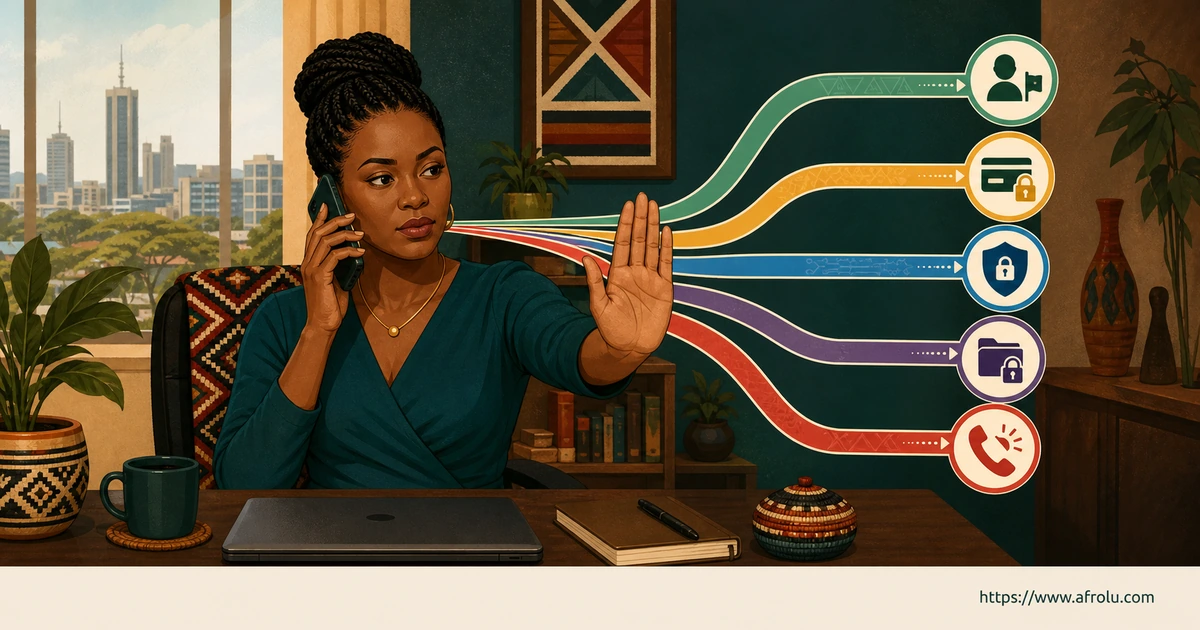
Direct answer: stop contact and do not send more money, credentials, intimate material or documents. If danger is immediate, prioritise emergency help over screenshots. Otherwise preserve a small private record, secure the account or payment route that was touched, report the profile inside the service, and choose the official route that matches the actual incident. A profile report cannot reverse money. A payment complaint cannot remove an account. A cyber report is not a data-rights request. None of those routes guarantees recovery or a particular outcome.
This page is a response desk, not a test that labels every awkward conversation a scam. Sudden affection, a delayed video call, a private profile or inconsistent phrasing can raise questions, but they do not prove fraud by themselves. Money pressure, credential requests, investment pitches, threats, blackmail, impersonation, unauthorised account access and refusal to respect a clear boundary require action because of the conduct—not because of a person’s job, nationality, gender, accent, photographs or dating history.
The five-lane incident router
Impersonation, harassment, prohibited content or conduct inside the dating service.
A transfer, card charge, mobile-money prompt or account instruction has occurred.
Credentials, device access, malicious links, account takeover or technical intrusion.
Personal information is collected, exposed, misused or retained in a way that may engage data rights.
Threats, coercion, stalking, violence, confinement or another immediate safety concern.
The lanes can operate together. A match may impersonate someone on an app, persuade an adult to send money, capture an account password and threaten to circulate private material. Do not search for the single “perfect” report button. First stop the next loss. Then open the relevant routes independently and keep the reference from each one.
The Kenya online-dating safety guide covers preventive account and meeting controls. This page begins after a suspicious event or pressure has already appeared. For a product-specific example, the Tinder incident triage separates an app report from financial and official routes without claiming Tinder causes the conduct.
The first fifteen minutes are about control, not certainty
- End the next payment, call, download, screen-share, login or document handoff.
- Move to a device and contact route you believe the other person does not control.
- Use independently found official channels—never a number or link supplied by the person applying pressure.
- Preserve the minimum material that is safe and lawful to keep; do not negotiate for a confession.
- Tell one trusted adult what is happening if secrecy or panic is narrowing your choices.
Freeze the story without confronting the person
A scam narrative is designed to make the next step feel urgent: a medical bill before visiting hours end, a parcel fee before customs closes, a fare before the last vehicle, an investment window, a phone replacement, rent, airtime, a visa cost, a subscription “verification,” or a promise that one final payment unlocks everything. You do not need to disprove the story. The safe question is smaller: “Should a dating match control this money, account, document or deadline?” The answer is no.
Do not announce every check you intend to make. Confrontation can lead to deleted accounts, faster threats or more elaborate explanations. A short boundary is enough: “I will not send money or account information. I am ending contact.” You may say nothing if responding feels unsafe. Block after preserving what the chosen route needs, unless immediate safety or account security requires blocking first.
Do not recruit social media to identify or shame the profile. Public accusations can expose the targeted adult, spread intimate material, misidentify an uninvolved person whose photographs were copied, and contaminate the privacy of other people. Use the service’s report control and the official routes you reach independently. Afrolu’s five-claim profile check explains how to examine a concerning account without collecting passports or turning a reverse-image result into a public verdict.
A job title, employer story, professional wardrobe or account that appears affluent belongs in a claimed biography column. It neither proves trust nor proves a scam. Put the observable conduct in a different column: what was requested, which deadline was imposed, whether secrecy was demanded, and what happened after a clear boundary. The next protective action follows that conduct. Prestige must not lower the evidence standard, and suspicion must not become a verdict about an occupation.

Build a minimum-evidence envelope
Evidence is useful only when it remains proportionate, private and connected to a real route. Where it is safe and lawful, record the service and profile identifier, the relevant messages or threats, dates and times, the exact payment instruction, transaction reference, merchant or recipient shown, and the security action you took. Note what you observed separately from what you infer. “The account asked for KSh 8,000 to a named number at 14:10” is an observation. “Every person with this profession is a scammer” is not.
Do not preserve entire years of conversation when a narrow set shows the issue. Do not download or forward intimate images. Do not keep another person’s identity documents. Do not ask friends to circulate screenshots. If a competent authority or provider gives current preservation instructions for the particular incident, follow that route. If keeping material would place you in danger, prioritise safety and tell the receiving channel what could not be retained.

Choose the route by the harm, not by the nearest logo
Profile or in-app conduct
Use the current report function of the service where the conduct occurred. Tinder, Bumble, Badoo, Muzz and AfroIntroductions each publish their own reporting or safety instructions. A provider may review account conduct under its rules; it is not an emergency service, bank, court or guaranteed investigation.
Money or payment exposure
Contact the bank, card issuer, mobile-money provider or merchant through a channel you found independently. Explain the transaction and follow the current fraud or reversal process. Safaricom’s published guidance supports immediate reporting and a reversal request route, but eligibility and recovery depend on the actual facts and provider process.
Cyber incident
For a malicious link, account compromise, device intrusion, credential theft or other cyber incident, secure the affected accounts first, change reused passwords from a trusted device, enable available multi-factor protection and use the current National KE-CIRT incident route where it fits.
Crime, threats or immediate danger
DCI publishes reporting channels and an online-dating fraud playbook. Use police emergency numbers 999, 911 or 112 when danger is immediate. Gender-based violence and other support routes may also apply. A dating-app report should not delay urgent help.
Personal-data concern
A relevant complaint about collection, disclosure, access, correction, erasure or another personal-data issue may belong with the organisation first and, where applicable, the Office of the Data Protection Commissioner. This page cannot decide a legal claim.
Intimate-image pressure
Do not pay, bargain for deletion or send more material. Preserve only what is safe and lawful, secure accounts, avoid further circulation and seek the appropriate platform, police, cyber, GBV or qualified route for the facts. Consent to create or send something once is not blanket consent for further use.
M-PESA dating pressure belongs in the money lane. A request for fare, airtime, rent, an emergency, a reversal, a verification fee or a “small test transfer” does not become safe because the story is plausible or the amount is low. If nothing moved, refuse the transfer and share no PIN, OTP or screen. If money moved, stop further contact, keep the transaction reference, and reach Safaricom through a current official channel you found independently; a dating-app report is a separate profile action. No article, provider or reversal request can promise recovery.
M-PESA request state: choose only what has happened
This private action switch changes the next step, not a verdict about the person. It asks for no name, number, amount, message or transaction detail. The choice stays in this browser tab and is neither stored nor sent to Afrolu.
Start with immediate danger. If anyone is threatened, followed, confined or at risk now, leave when possible and use the current emergency route. Do not delay urgent help to complete a web checklist.
No state selected
Pause the next transfer or disclosure. Choose the closest completed event above; if more than one applies, begin with physical safety, then active account or payment exposure.
A request arrived; nothing was sent
Do not send a test amount. Share no PIN, OTP, login, screen or document. End the financial request and use the platform report control when the conduct fits.
Money was sent or a prompt was authorised
Stop further transfers, preserve the transaction reference, and reach the financial provider through a current official channel found independently. A reversal request does not guarantee recovery.
A PIN, OTP, link, login or screen was exposed
From a trusted device, end remote access, secure the primary email and affected accounts, replace reused credentials and contact the relevant official provider. Use the current National KE-CIRT route when the cyber facts fit.
There is a threat, coercion or intimate-image pressure
Do not pay or send more material. Prioritise immediate safety, preserve only what is safe and lawful, and use the relevant platform, police, cyber or support route without widening circulation.
Four sentences that interrupt pressure
Money: “I do not send money, credit, codes or investment funds to a dating match. I am ending this request.”
Documents: “I will not send a passport, ID, bank record, work letter or live location. A dating conversation does not require them.”
Private material: “I do not consent to recording, saving, forwarding or publishing my material. Do not contact me again.”
Account access: “I will not share a password, OTP, screen, remote-access session or verification code. I am securing the account through the official channel.”
A script is not a requirement to keep communicating. Silence, blocking and leaving are valid when a reply would invite more pressure. If the person knows your home, workplace or current location, adjust the safety plan before announcing an exit. The Telegram pressure guide provides a channel-specific example of minimum preservation, account security and blocking after an off-app move.
Three incidents that look similar but need different decisions
The fare request
An adult promises a meeting but asks for transport money to a personal number. Do not send it. A legitimate meeting can be postponed until each adult controls their own fare and return. If money already moved, preserve the transaction reference and contact the payment provider through its official route.
The investment mentor
A match turns affection into a crypto, forex or business opportunity and supplies the platform, “agent” or deadline. End the financial path. Do not install remote access or move money to prove trust. Secure accounts and route any transaction or cyber fact separately.
The intimate-image threat
A person threatens circulation unless paid or sent more material. Paying does not guarantee deletion. Stop the exchange, preserve only what can be kept safely, protect accounts, involve a trusted adult, and use the appropriate provider and official routes without widening circulation.
The conduct, not the biography, drives each decision. A real hardship does not make a new match the correct payer. A real professional title does not make an investment suitable. A real photograph does not create consent for recording or distribution. A verification badge, video call or long conversation cannot convert pressure into a safe request.
Employment or status is also not a reason to hand over an employer letter, payslip, passport, work login, OTP or money. If a real bank, employer, immigration office or other external service appears relevant, reach that organisation independently and ask what its own process requires; do not use the match’s link or contact. Do not counter-demand their documents either. The firewall protects both adults from turning a dating conversation into an unqualified identity, employment or account investigation.

Secure the doors the interaction may have touched
List the exposed systems: dating account, email, phone number, mobile-money wallet, bank, social account, cloud photos, identity record or device. Change a compromised password from a trusted device and replace it anywhere it was reused. Review account sessions and recovery details. Contact the relevant financial provider. Tell mobile and email providers about takeover risk where necessary. Do not continue using a device you believe another person controls to perform the recovery.
Separate unmatching, blocking, hiding a profile, deleting an account and cancelling a subscription. One action may not perform the others. A scam response should not accidentally leave renewal running, and a cancellation receipt should not be mistaken for removal of profile data. Use the provider’s current instructions and retain confirmation for the actions you choose.
If an account was opened through a fake link, do not return through that link. Find the provider’s official domain or app independently. Search advertising, copied support pages and direct messages can imitate help desks. No legitimate support agent needs your PIN, password, OTP or remote-control access to “recover” a dating loss.
When several harms arrive together, use a priority stack
A multi-lane incident can make every task feel equally urgent. It is not. First protect life and physical freedom. Second stop an active transfer, device session or account takeover. Third preserve the small record that a legitimate route can use. Fourth open the separate reports. Last, decide what to explain to friends, an employer, family or the wider public. This order prevents a perfect screenshot from taking priority over leaving danger and prevents public storytelling from spreading material before the relevant account is secure.
Example: a meeting threat plus a mobile-money demand. Move to an occupied place, contact emergency help if danger is immediate and do not remain nearby to record the person. From a trusted device, contact the financial provider through an independently found channel. The app report can follow once it does not delay safety or money action. Record which tasks could not be completed and why; a missing image or message does not make an adult responsible for the threat.
Example: an investment link plus reused credentials. Do not reopen the link to document it. Disconnect any remote-access session, use a trusted device, secure the primary email first, then the financial and dating accounts, and replace reused passwords. Check account recovery details and active sessions. A National KE-CIRT route may fit the cyber facts, while a provider report may address the profile. Keep the payment path separate if money moved.
Example: an intimate-image threat plus impersonation. Do not send more material or money and do not ask a social network to identify the account. Preserve the threat only when safe and lawful, reduce access to the affected accounts, tell one trusted adult what help you want and use the appropriate provider and official routes. Publicly reposting the image or alleged identity can widen the harm and may target an uninvolved person whose photograph was copied.
Example: a parcel, visa or travel-fee story. End the requested payment and do not upload a passport, bank record, employment letter or customs form supplied by the match. If a genuine independent travel or delivery question remains, reach the relevant official service through a channel you found yourself. A realistic-looking document, tracking page or uniformed caller does not turn a dating match into the correct collector.
After the immediate stack, create a state log rather than repeatedly reopening the conversation. Use one line for each lane: stopped, secured, reported with reference, awaiting a response, or closed without further action. Record the date and the official channel used. Do not record guesses about who the person “really” is. The state log prevents a delayed provider reply from being mistaken for permission to resume contact and shows which door still needs attention without preserving the whole relationship.
A report response can be limited, delayed or undisclosed. Providers may not tell a reporter what enforcement occurred. A bank or mobile-money provider may apply eligibility and timing rules. An authority may require information Afrolu cannot anticipate. Keep reference numbers, follow current instructions and seek qualified help where necessary, but do not pay an unofficial recovery service that promises guaranteed access, tracing, removal or refund. A route that cannot promise an outcome can still be the correct route.
Recovery is a permission map, not a deadline
Fraud exploits ordinary human capacities: hope, empathy, attraction, trust, privacy and the wish to help. Being targeted is not proof of foolishness. The person who deceived, threatened or stole remains responsible for that conduct. Practical response and emotional recovery can move at different speeds.

Choose a trusted person who can help with one clear task: sit with you while you call the provider, help list exposed accounts, accompany you to an official route, or simply listen without demanding the whole story. Professional mental-health or survivor support may help when sleep, concentration, shame, fear or low mood persists. Afrolu cannot diagnose distress or replace qualified care.
If you later return to apps, do not try to remove all uncertainty by demanding documents, continuous video or live location from every new person. Those demands create new privacy and consent problems and still do not prove character. Use small, reciprocal steps: current photos, on-platform conversation, consistent ordinary facts, no money, a public meeting both adults reach and leave independently, and the right to end contact.
The final incident receipt
Close with five lines: what stopped; what minimum evidence was preserved; which account or payment door was secured; which report routes were used and their references; and what remains unresolved. An unresolved outcome does not mean the response failed. Preventing the next loss, reclaiming an account or ending coercive contact can be the correct result even when money is not recovered or a provider does not disclose its decision.
Do not return to the person for updates. Do not pay a recovery agent found in replies or direct messages. Do not publish an alleged offender’s photograph as proof. Keep the incident record private, update it only with official references, and decide when it can be archived or deleted under your own security and legal needs.
Continue with related Afrolu guides
Sources, method and limits
Method: this response desk separates observed conduct from diagnosis, then maps in-app enforcement, financial action, cyber reporting, data rights, crime reporting and emergency help to distinct channels. It does not score a person or app. No fake account, victim interview, private-message sample, prevalence estimate, recovery test or undercover contact supports the page.
Evidence boundary: DCI’s romance-scam playbook and reporting material support prevention and reporting steps, while one published robbery case cannot establish prevalence. National KE-CIRT supports a cyber-incident route. ODPC supports applicable personal-data rights and complaints. Safaricom supports its own fraud and reversal processes without a recovery promise. Provider pages support only their own report controls. Kenya’s consent, cybercrime and GBV materials support cautious routing; this guide is not legal advice and cannot decide an offence or claim.
- No estimate of how many Kenyan profiles, men, women, professions, nationalities or apps are fraudulent.
- No promise that a provider will remove an account, a payment will be reversed, an authority will investigate or money will be recovered.
- No claim that a badge, video call, public meeting or official-looking document proves identity, character or safety.
- No instruction to crowdsource allegations, circulate intimate material, confront a suspected offender or pay an unofficial recovery agent.
- Provider controls, official channels, law and payment procedures can change; reach every route independently and check its current instructions.
Governance: editorial method and image rights, privacy policy and corrections contact.
Sources and evidence limits
- Afrolu — Editorial methodology
Supports: how Afrolu checks incident guidance, separates cited facts from examples, records corrections and handles original images - Directorate of Criminal Investigations, Kenya — The Romance Scam Playbook
Supports: DCI advises identity checks, protecting personal and financial details, staffed public first meetings, a trusted-person plan, a charged phone, and disengaging or seeking help when unsafe; it does not establish romance-scam prevalence. - Directorate of Criminal Investigations, Kenya — Detectives bust robbery ring in Airbnb drama
Supports: A January 2025 DCI case report describing an alleged online-dating setup linked to robbery and coerced transfers; it does not establish how common this pattern is. - Directorate of Criminal Investigations, Kenya — See Crime, Report Crime
Supports: The anonymous 24-hour Fichua kwa DCI line, 0800 722 203, and Kenya police emergency numbers 999, 911, and 112. - State Department for Gender, Kenya — Gender-based violence reporting guidance
Supports: Reporting GBV or suspected GBV to the nearest police station or the toll-free 1195 helpline. - Kenya Law — Sexual Offences Act, current consolidated version
Supports: The statutory definition of consent as agreement by choice with freedom and capacity, plus circumstances relevant to absence of consent. - Kenya Law — Computer Misuse and Cybercrimes Act, current consolidated version
Supports: Section 37 addresses wrongful distribution of intimate or obscene images; the statute should be read directly for its exact scope. - National KE-CIRT/CC — Report a cyber incident
Supports: Kenya’s official route for reporting a cyber-security incident. - Office of the Data Protection Commissioner, Kenya — Rights of a data subject
Supports: Kenya data subjects have rights involving information, access, objection, correction, and deletion of false or misleading data. - Safaricom — Common M-PESA fraud
Supports: Protecting an M-PESA PIN and personal information, verifying a recipient, and reporting suspicious numbers to 333. - Safaricom — Person-to-person reversals
Supports: Sending a wrong-recipient transaction code to 456 starts a reversal request; it does not promise that funds will be recovered. - Tinder Help — Reporting profiles and content
Supports: Tinder documents in-product profile and content reporting and the contextual details that can help a report. - Bumble Support — Reporting someone
Supports: Bumble documents profile and conversation reporting, contextual evidence, and private handling without guaranteeing an outcome. - Badoo Support — Reporting someone
Supports: Badoo documents private in-app and web report controls and asks for an accurate reason and useful context without promising a result. - Muzz — Report inappropriate behaviour on Muzz
Supports: Muzz documents profile, chat, and individual-message reporting; a report does not guarantee removal, a response time, or safety. - AfroIntroductions — Online dating safety and reporting guidance
Supports: Protecting personal information and using block or report tools for money requests, threats, and spam.
Frequently asked questions
What should I do first if I think a dating match is scamming me?
Stop the next payment, login, download, document handoff or private-material exchange. Use a device and contact route you trust, preserve only the minimum material that is safe and lawful, secure affected accounts, and choose the route that matches the actual harm. Immediate danger comes before evidence collection.
Where should I report a dating scam in Kenya?
Use the dating service for profile or in-app conduct, the relevant bank or payment provider for money, National KE-CIRT for an appropriate cyber incident, ODPC for an applicable personal-data concern, and DCI or police for suspected crime. Use 999, 911 or 112 when danger is immediate. These routes are separate and none guarantees an outcome.
Can Safaricom or my bank reverse money sent to a match?
Contact the provider immediately through a channel you found independently and follow its current fraud or reversal process. Keep the transaction reference and state exactly what happened. Eligibility, timing and recovery depend on the provider and facts; Afrolu cannot promise a reversal or refund.
Should I confront or expose a suspected scammer online?
No public confrontation or crowdsourced identification is required. It can increase threats, expose the targeted adult, spread intimate material or misidentify a person whose images were copied. Preserve a private minimum record and use provider or official channels. You may end contact without explanation when replying feels unsafe.
Does a verification badge or video call prove a match is genuine?
No. A provider badge supports only the narrow check it describes, and a call adds conversation context. Neither proves legal identity, relationship status, location, background, character, financial truth, consent or future conduct. Money and account boundaries still apply.
How can I start dating again after a scam?
There is no required timetable. Secure practical risks, choose trusted or professional support if useful, and pause for as long as you need. If you return, use small reciprocal steps, no-money and no-document boundaries, a public two-return meeting and permission to leave; do not turn recovery into demands for another person’s private records.


