Safety-first · Faster Pace
Safer First Messages for Adult Students While Dating Around Work
Adult Students: safer first messages while dating around work. Four examples, scripts, safety steps, and ten picture lessons show the next move.
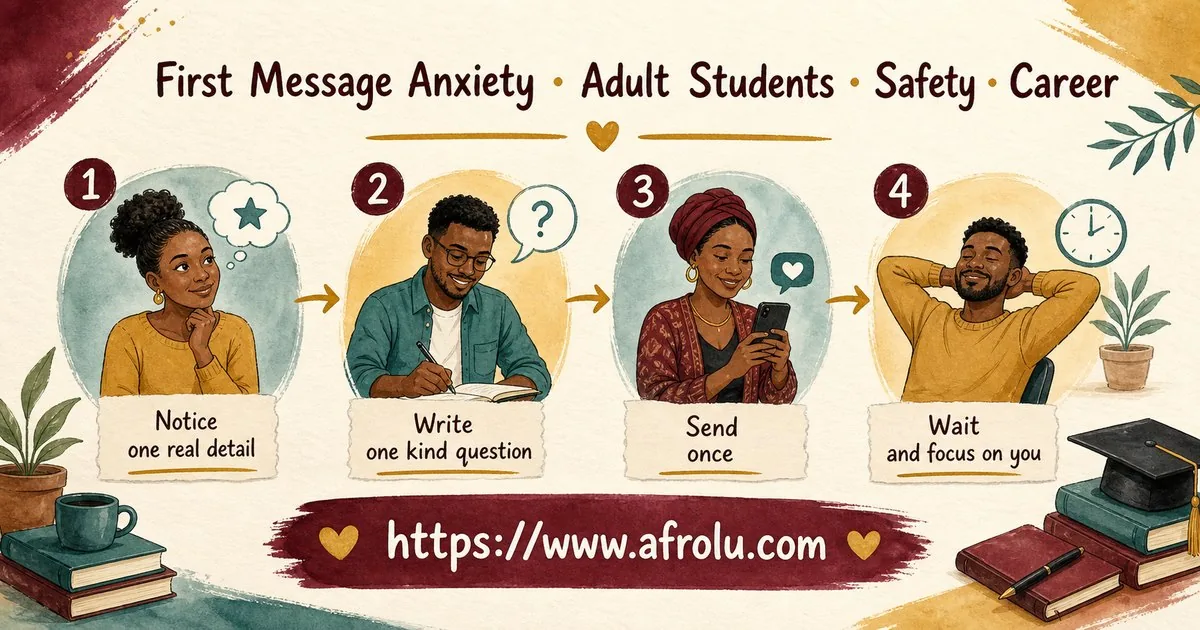
Created for Afrolu: https://www.afrolu.com. Use this overview illustration with the nearby advice before choosing your next step.
Written and edited by Nia Kato · Profile Advice Editor
Ben can begin with the guitar shown on the profile and keep both study and work systems closed. He asks one music question from his personal account after the internship day. A friendly answer permits another ordinary exchange, not access to a campus, employer, calendar, or device. Silence needs no follow-up through another channel. Any offer of money for credentials ends the conversation. Ben saves the request, blocks the profile, reports it, and contacts official security if an account may be exposed. Here, Adult Student refers only to someone aged 18 or older who dates other adults.
Messaging · Students
How can I write a specific, answerable first message without performing, oversharing, or tying my worth to the reply? For students, what changes when the goal is safety and emotional stability?
First-message anxiety can make Ben treat a guitar question like a test of his confidence. He is an adult student, aged 23, dating other adults while balancing an internship and evening classes. A public instrument photo gives him enough for one personal greeting. It gives nobody entry to his school, employer, timetable, device, or accounts. A pleasant music reply may support another message. A paid credential request instead ends contact, followed by saved evidence, blocking, reporting, and official security help.
Ben is 23, completing an internship while attending evening classes. He opens the dating app after submitting his work log and sees a photo of a worn acoustic guitar. The caption mentions learning songs by ear. Ben writes, “Which song first made practice feel enjoyable?” He does not name his employer, course room, supervisor, or usual route home. The match answers the next afternoon and describes a favourite highlife record. Their music exchange stays relaxed for several messages. Later, the match offers cash for temporary access to an internship system. Ben does not open the attached link or debate the request. He takes a screen capture, reports the profile, blocks further contact, and alerts the approved security desk. His first message was reasonable; the later conduct created the danger.
adult students · safety around work
A personal music hello outside protected systems
Ben's guitar question belongs to his personal life. Internship trust, academic access, and precise locations never become proof that he is genuinely interested.
Use the detail published inside the app. Send from a personal device after work, then return to study. Keep schedules and credentials private. Refuse access requests, preserve the messages, report and block the sender, and notify official support.
Ask about the learning song
The guitar provides a cheerful subject without exposing Ben's employer, campus, or route home.
Send after the internship closes
A dating account remains separate from office email, class groups, student portals, and professional networks.
Let class continue without pursuit
An unanswered opener stays inside the app while Ben gives evening study his full attention.
Stop when paid access appears
Ben refuses credentials, keeps evidence, blocks and reports the profile, and alerts the proper institution.
The visible clue
Let the guitar carry the first hello
A public guitar photograph gives Ben enough material for one specific message. Music is personal without exposing the systems that support his studies and internship. He can sound interested without performing professional success for a stranger.
The useful question stays close to the picture: which song made learning enjoyable? It permits a title, a memory, or a polite silence. Nothing in it asks the match to prove talent, income, education, or immediate availability.

Created for Afrolu: https://www.afrolu.com. Use this real-life scene with the nearby advice before choosing your next step.
Personal space
Keep career systems outside dating
Ben uses his personal dating account after the workday ends. He does not move the greeting into office email, a student portal, or a class group. Those channels involve people who never agreed to enter his dating life.
A match may ask what field he studies in broad terms. Ben decides how much to share and can remain general. Employer names, room numbers, live timetables, staff contacts, and internal documents are unnecessary for getting acquainted.

Created for Afrolu: https://www.afrolu.com. Use this signal checklist with the nearby advice before choosing your next step.
A working student's day
Allow the answer to wait outside class
Internship tasks and evening lessons make Ben's phone quiet for long periods. The same may be true for the person he contacts. A slow music answer says little about character until a wider pattern exists.
He does not send reminders through LinkedIn, school groups, or another social account. That restraint protects the match's choice and keeps professional networks free from unwanted dating contact. One unanswered opener can simply remain unanswered.
Music before status
Build only on the answer actually given
A response about an old song provides one small piece of shared interest. Ben can ask what the person enjoys playing now or name a style he likes. Neither adult needs to turn that exchange into a résumé discussion.
Warmth does not establish trust in devices, files, or institutions. It only shows that this conversation about music is mutual for the moment. Further contact remains optional, and each person can leave without giving a professional reason.

Created for Afrolu: https://www.afrolu.com. Use this conversation example with the nearby advice before choosing your next step.
The safety break
Treat paid access as a security incident
A stranger who offers money for a work login has left ordinary dating conversation. Ben refuses the request and does not open links, enter codes, or test whether the offer is genuine. Charm before the request does not reduce the risk.
Relevant messages become evidence for the platform report before Ben blocks the account. If any credential may have been exposed, he uses the official support channel named by his employer or school. A threat to his safety calls for trusted and urgent help.

Created for Afrolu: https://www.afrolu.com. Use this practical takeaway with the nearby advice before choosing your next step.
Observed conduct
Move from opener nerves to red-flag action
First-message anxiety asks whether Ben's greeting sounded good enough. Dating red flags concern behaviour he can observe, such as pressure for protected access or attempts to isolate him from official help. These are different questions.
He can calm ordinary uncertainty without explaining away a real security concern. Once access pressure appears, improving the opener is irrelevant. The safer response is a clean stop, a platform report, and appropriate institutional support.
Three clear ways to use this advice
Use these page-specific summaries for a safety check, a decision, and one reminder worth saving.


Three ways this can show up

The match replies after Ben's class
The match names a song learned from an older cousin and asks what Ben listens to while studying. The reply stays with music. It does not ask where he studies, which company hosts him, or when he travels home.
Ben answers the following evening with a favourite genre and one question about live music. He shares no timetable or workplace detail. Their pace remains voluntary, and the delayed exchange fits around two adult lives rather than interrupting either one.A broad hobby question is safer than research
Another profile contains only a general interest in learning. Ben cannot find a natural specific clue inside the app. Searching campus directories or professional pages would cross a privacy line before conversation begins.
He either skips the profile or asks what the person enjoys learning away from work. The broad wording is honest about the limited information available. It creates no excuse to identify a school, employer, colleague, or physical location.The internship day proceeds without a chase
No answer arrives before Ben's next shift. He feels the familiar urge to search for another account and check whether the message was seen. That urge reflects uncertainty, not permission to widen contact.
Ben leaves the thread alone and prepares for class. He does not use work email, a campus group, or a second profile. The match keeps a free choice about replying, while Ben keeps his attention for the responsibilities already in front of him.The music chat becomes an access attempt
After several pleasant messages, the match promises quick money for temporary entry to Ben's internship portal. Ben refuses the request and will not open the unfamiliar link. The attempt could harm his placement, colleagues, and people whose information the system contains.
Ben will not open the link or share any credential. He saves the messages, reports the profile, and blocks the sender. Official security receives the evidence. If threats continue elsewhere, he seeks urgent help instead of replying.What to notice before you react
The guitar appears on the dating profile, so Ben can mention it without searching elsewhere.
His question invites a short music answer and reveals no academic or professional location.
The match accepts delayed replies while Ben completes work and evening study.
Requests for credentials, paid access, or private campus details bring an immediate exit and report.
Read the moment without overbuilding the story
| Situation | What it may mean | What to do next |
|---|---|---|
| The profile openly shows an acoustic guitar. | The photograph supports a music question. It reveals nothing reliable about the person's job, campus, finances, or willingness to keep talking. | Ben mentions the instrument and asks about learning a song. He does not add facts gathered from outside the dating profile. |
| A thoughtful music reply arrives the following afternoon. | The match chose to answer one topic at a comfortable time. That is enough evidence for another modest message, but not for access or personal verification. | He continues with music if he wants to. Study plans stay intact, and no immediate response is demanded from either adult. |
| The original question receives no response. | The reason is unknown. The person may be busy, uninterested, or away from the app, and Ben needs no invented explanation. | He lets the thread rest without searching for another channel. His internship and class work continue on their normal schedule. |
| A payment is offered in exchange for protected access. | The request is a security risk rather than romantic interest. It may threaten Ben's accounts, placement, colleagues, or academic standing. | He refuses, preserves the message, reports and blocks the profile, then contacts the proper security team. Threats receive urgent support and no further reply. |
Three calm ways to start the conversation
“I noticed the guitar in your photo. Which song first made practice enjoyable?”
“What do you enjoy learning when work and study are finished?”
“I am heading into evening class, so I will leave the music question here.”
“I will not share work or campus access. I am ending and reporting this contact.”
Know the difference
A music opener is not a red-flag investigation
Ben asks which song made guitar practice enjoyable. The question invites ordinary contact and leaves protected systems outside dating.
Red-flag guidance fits observed conduct involving fraud, coercion, unwanted pursuit, threats, money, or institutional access.
Calm the worry around a normal greeting, but act decisively when a later request creates concrete risk.

Created for Afrolu: https://www.afrolu.com. Use this nearby concept comparison with the nearby advice before choosing your next step.
Compare the closest dating types before choosing a label
| Type or dimension | What it describes | Best next question |
|---|---|---|
| Guitar photograph | The posted instrument supports one music question and no claim about the player's workplace or campus. | Mention the guitar without adding facts found elsewhere. |
| Adult study time | Internship work and evening lessons can delay Ben's answer without signalling rejection or disrespect. | Reply during a personal break and keep the timetable private. |
| Ordinary music reply | A relevant answer shows willingness to discuss the visible hobby, not trust with accounts or locations. | Continue with another light music topic if interest remains. |
| Credential request | Payment tied to protected access threatens Ben, his placement, and people whose information sits inside the system. | Refuse access, preserve the evidence, and close all contact. |
| Official response | Platform reporting handles the profile, while the institution can protect any account or network placed at risk. | Block the sender and notify the authorised security desk. |
A simple plan you can use today
Begin with what was volunteered
The guitar is visible inside the profile, so it is fair material for curiosity. Ben needs no search through school or work pages to write an attentive greeting.
Protect the edges of student life
Broad study interests may be shared by choice. Live schedules, room numbers, transport habits, class groups, and account details stay outside an untested conversation.
Separate warmth from system trust
A pleasant exchange can support more personal conversation. It does not make a stranger eligible for devices, documents, work networks, or protected online spaces.
Let delay remain ordinary
Adult students often combine employment, classes, travel, meals, and rest. A healthy opening allows that full life to continue without constant explanations.
Escalate the security issue
Ben ends a paid access request, saves evidence, reports the profile, and uses official support. He never investigates an unknown link or bargains with the requester.
Four mistakes that make this harder
Searching for the musician's campus
Outside research creates false familiarity and may expose a location the person never chose to share. The profile clue is already sufficient.
Explaining every work delay
Ben can answer after his responsibilities without submitting a timetable. Constant status updates give a new match unnecessary access to his day.
Treating a paid favour as flirting
Money tied to protected access is a security problem. Continuing the banter could obscure the need to preserve evidence and end contact.
Keeping the incident private
Official teams may need to protect accounts and other people. Ben reports the attempt promptly instead of managing a system threat alone.
Use a reviewed resource that matches the decision
This guide focuses on the relationship decision, so it does not rank dating apps. Check current prices, safety tools, and local availability before choosing a service.
Explore the guide library
Show more related guides
Continue with Afrolu
Show more Afrolu guides
Sources used for this guide
Afrolu reviewed these health, research, safety, or public guidance resources while editing this page. They support the behaviour and safety guidance; they do not diagnose any individual described by a reader.
Safer First Messages for Adult Students While Dating Around Work Questions
What guitar opener can Ben send?
He can write, “Which song first made practice enjoyable?” The question uses a public detail, invites an easy answer, and keeps his internship and campus private.
Should he mention his internship?
No specific employer detail is needed. Ben may broadly say he is working and studying, but internal contacts, schedules, locations, and credentials remain unavailable.
Why stay inside the dating app?
The app keeps reporting and blocking controls close while the person is still unknown. It also prevents an opener from entering school or professional channels.
Must Ben reply during work or class?
No. Ben can wait for a personal break and answer only if he wants to continue. Respect leaves his calendar and response timing under his own control.
What if money is offered for access?
Ben refuses to share or enter credentials, saves the message, reports the profile, and blocks the sender. He also alerts the official security team.
Which student details stay private?
Room numbers, live timetables, transport habits, class groups, assignments, student accounts, and access codes stay out of a new dating conversation.
What works on a sparse profile?
Ben may ask what the person enjoys learning outside work. He can also pass. A thin profile never requires research through campus or employer records.
Should he send another message after silence?
He should leave the original opener alone. Contact through another profile, class group, or work network would remove the recipient's freedom to ignore it.
When is the issue bigger than anxiety?
Concrete pressure for money, credentials, locations, or continued contact creates a safety problem. Ben responds to the conduct, not to worries about sounding impressive.
When should Ben use the red-flags guide?
That guide helps evaluate fraud, coercion, threats, or disregard for consent. Ben ends and reports unsafe conduct; an ordinary delayed music reply needs no such conclusion.
One thing to do now
Turn the lesson into a better match pool
A safe opener uses information the match chose to publish and asks for nothing private. Ben keeps his internship, timetable, classmates, work files, and campus locations outside the chat. Interest never turns a password, access code, assignment, payment, or precise location into a dating favour. He ends contact as soon as that boundary is tested.