Safety-first · Steady Pace
Safer Date Payments for Faith-Led Daters in Casual Dating
Faith-Led Daters: safer date payments in casual dating. Four examples, scripts, safety steps, and ten picture lessons show the next move.

Created for Afrolu: https://www.afrolu.com. Use this overview illustration with the nearby advice before choosing your next step.
Written and edited by Clarisse Uwimana · Dating Culture Editor
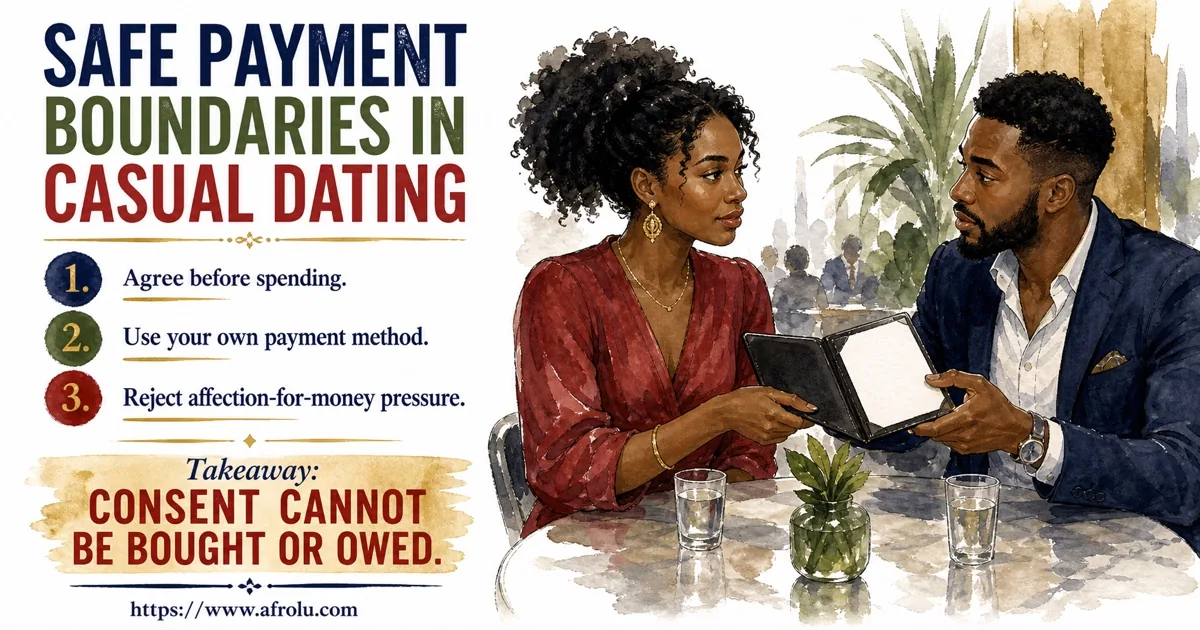
Name the comfortable budget before choosing an expensive place. Count food, activity, care, and safe travel home. Agree whether each adult pays a part or one freely offers. Faith can guide the talk, but it cannot assign debt. Payment buys no touch, private access, loyalty, or future date. Every later yes stays separate. Choose one backup option before the bill is shown so exits stay clear. Keep one safe recovery step for when one adult feels pressured.
Dating etiquette · Faith-Led Daters
How can two adults settle a date cost so that the budget is workable, the offer is genuine, the agreement is clear, and nobody owes romance in return? For faith-led daters, what changes when the goal is safety and emotional stability?
Who pays on a date is a coordination question about the cost of a shared activity. A healthy answer combines five tests: a workable budget, a voluntary offer, an explicit agreement, no romantic or sexual obligation, and a dignified way to adjust when circumstances change. For faith-led daters, the useful question is how this pattern changes when honest no-pressure alignment and safety and emotional stability both matter.
Two faith-led adults plan a casual coffee date after worship. They choose a place that both can afford and discuss the bill before ordering. Consent means a free yes to one choice, and it can be taken back. Paying does not buy touch, private access, or another meeting. Their faith may guide values, but each adult still speaks for themselves. The casual label only describes the present relationship scope. It does not make money pressure less serious. Each adult keeps enough fare for a separate journey home. A gift is accepted only without romantic debt. If a payment link asks for account access, they stop. The account is blocked, reported, and protected.
Dating clinic
Make the advice usable in a real conversation for faith-led daters
The same dating pattern can require a different response when you are prioritising faith and integrity. Here, honest no-pressure alignment and safety and emotional stability shape the advice.
Use one sentence, one boundary, and one behaviour check instead of a long speech.
Who this is for
An adult planning or finishing a date who wants a fair payment arrangement without gender guessing, embarrassment, hidden debt, or pressure. this version is tuned for prioritising faith and integrity.. Use the parts that match your situation and leave any rule that ignores your actual life.
Casual-But-Honest Dating
Factor in honest no-pressure alignment; timing and practical limits can change what a workable next step looks like.
Safety-first
Judge the next move by whether it protects safety and emotional stability, not by whether it keeps a match alive at any cost.
Steady Pace
The suggested move should still work at a calm pace: clear enough to act on, calm enough to avoid panic.
Settle one shared expense
Date Payment is a plan for cost, not affection
A payment agreement names what the date costs and who will cover each part. It can use a split, separate items, or a free offer. Every option needs agreement.
Faith may shape how adults view kind offers and dating roles. Adults can understand the same belief differently. Ask what each person wants instead of assigning a rule.

Created for Afrolu: https://www.afrolu.com. Use this real-life scene with the nearby advice before choosing your next step.
Protect the lower budget
A fair plan leaves both adults financially steady
The comfortable amount matters more than matching spending power. Nobody must reveal income or account balances. A cheaper meeting can still support a good conversation.
Count the journey, activity, food, data, and care needs. Each adult should keep return money and account control. A free exit belongs inside the cost plan.

Created for Afrolu: https://www.afrolu.com. Use this signal checklist with the nearby advice before choosing your next step.
Pause at the costly menu
Embarrassment should not choose the order
The prices are higher than one adult expected. They still need fare home and food tomorrow. Staying quiet would turn discomfort into a bill they cannot carry.
They name a modest amount without explaining their income. The pair can choose one item, move elsewhere, or end early. Each answer preserves adult choice.
Remove debt from the offer
Say what is paid and what is never owed
A clear offer names the cost it covers and allows a different split. It does not hint at touch, sex, loyalty, or another meeting. A kind offer must remain free.
When an offer changes into pressure, refuse it plainly. Do not debate faith or casual dating terms. Pay only what was freely agreed, then leave safely.

Created for Afrolu: https://www.afrolu.com. Use this conversation example with the nearby advice before choosing your next step.
Check the payment method
Use a known bill and keep control of every account
Settle the real venue cost through a method you understand. Review the amount before confirming. No normal date bill needs a password, code, or gift card.
Stop when a strange link or urgent transfer appears. Block and report the contact. Protect the bank account through its trusted app, number, or branch.

Created for Afrolu: https://www.afrolu.com. Use this practical takeaway with the nearby advice before choosing your next step.
Keep the wider limits visible
Dating Boundaries cover more than the bill
Date Payment handles one agreed expense. Dating Boundaries cover contact, privacy, time, touch, money, and ending. The bill cannot silently decide those wider limits. Keep a plan for safe return before a second exchange.
A person may accept coffee and refuse another meeting. They may split the bill and still leave early. Every choice remains separate, even in casual dating.
Three clear ways to use this advice
Use these page-specific summaries for a safety check, a decision, and one reminder worth saving.


Three ways this can show up
The first venue costs too much
One adult can afford the plan, while the other cannot. Neither person needs to explain their income. A cheaper meeting keeps the choice honest. Faith language does not decide who must spend more. Both adults can protect tomorrow's needs.
Tell them what you can comfortably spend. If needed, choose a simpler public activity within reach. Leave if the other person uses shame or pressure. Keep emergency and return money untouched.Travel home matters beside the café bill
One person can pay for coffee but still needs fare home. The date is not affordable if safe travel is lost. Each adult should keep control of return money. Data, care, and entry costs may also matter. The bill at the table shows only one part.
Count food, activity, and travel before agreeing. Choose a split that leaves both adults a safe way home. Do not ask for bank proof or an income story. Change the activity when the full plan does not fit.Payment becomes a demand for another date
A person offers to cover the bill, then asks for touch in return. That changes a gift into pressure. Faith and a casual label do not weaken the right to refuse. The adult did not agree to that exchange. Their exit must remain open.
Say no, pay only any amount you freely agreed to, and leave safely. Ask staff or a trusted person for help if you are blocked from leaving. Do not continue the date to calm the other person. Safety comes before settling a romantic disagreement.The bill request uses a gift card and login link
The person asks for a code to settle an urgent cost. A normal date bill does not require account access. The request may be fraud. The gift card also prevents a normal payment check. Urgent language tries to shorten careful thought.
Stop the payment, block and report the account, and protect your bank login. Contact the payment provider at a trusted number if you shared anything. Change exposed passwords from a safe device. Save the request for any fraud report.What to notice before you react
A budget mismatch calls for a cheaper date.
Safe travel home belongs inside the whole cost.
Payment tied to touch shows pressure, not a kind offer.
Gift cards or login links are direct reasons to stop.
Read the moment without overbuilding the story
| Situation | What it may mean | What to do next |
|---|---|---|
| The planned date is above one adult's budget. | The place must change before both people can choose without money pressure. | Suggest a simple place both adults can afford. If no choice feels fair, end the plan without blame. |
| Travel, food, care, and activity costs fall unevenly. | The table bill alone does not show what each adult spends to attend safely. | Discuss the whole cost and protect each return journey. Shift the plan to a route that keeps both adults safe without income pressure or a hidden price. |
| An offer to pay is tied to touch, sex, or another date. | Money is being used to pressure consent rather than settle an expense. | Refuse the demand, leave the date, and get immediate help if your exit is blocked. |
| A payment asks for a gift card, password, code, or strange link. | The request may expose money and account access to fraud. | Stop, block and report the contact, protect the bank account, and call the provider through a trusted channel. |
Three calm ways to start the conversation
“That place looks good. My comfortable budget is about this amount; would that work for you?”
“I am trying to keep this calm pace and honest, especially because honest no-pressure alignment matters right now.”
“For me, safety and emotional stability matters more than guessing. What pace feels realistic to you?”
“”
Know the difference
Generosity vs Obligation
Payment is offered freely and respectfully.
Money is used to create debt or control.
A good date should not turn the bill into leverage.

Created for Afrolu: https://www.afrolu.com. Use this nearby concept comparison with the nearby advice before choosing your next step.
Compare the closest dating types before choosing a label
| Type or dimension | What it describes | Best next question |
|---|---|---|
| Serious Dating: Turn Intention Into Evidence Before Commitment | Both sit near dating etiquette, but this page is reading the pattern through honest no-pressure alignment and the related guide uses a different signal mix. | Use this guide first for safety and emotional stability, then compare with Serious Dating: Turn Intention Into Evidence Before Commitment if the label still feels uncertain. |
| Long Distance Dating: Make Distance Real, Safe and Sustainable | Both sit near dating etiquette, but this page is reading the pattern through honest no-pressure alignment and the related guide uses a different signal mix. | Use this guide first for safety and emotional stability, then compare with Long Distance Dating: Make Distance Real, Safe and Sustainable if the label still feels uncertain. |
| Dating Boundaries | Both sit near dating etiquette, but this page is reading the pattern through honest no-pressure alignment and the related guide uses a different signal mix. | Use this guide first for safety and emotional stability, then compare with Dating Boundaries if the label still feels uncertain. |
| Dating Red Flags | Both sit near dating etiquette, but this page is reading the pattern through honest no-pressure alignment and the related guide uses a different signal mix. | Use this guide first for safety and emotional stability, then compare with Dating Red Flags if the label still feels uncertain. |
A simple plan you can use today
Name the budget
Share a comfortable amount without showing income or bank proof. Invite a lower-cost place when needed.
Count the full date
Include food, activity, fare, care, data, and the return journey. Keep emergency money untouched.
Choose a clear split
Agree on separate items, equal parts, or one free offer. Allow either adult to suggest another plan.
Remove romantic debt
State that payment buys no touch, access, loyalty, or future date. Every later choice needs its own yes.
Check the method
Use a known bill and trusted payment path. Refuse codes, gift cards, logins, and unfamiliar links.
Four mistakes that make this harder
Choosing from embarrassment
Silence can create a cost one adult cannot carry. Name the budget before ordering or booking.
Counting only the bill
Fare, care, and the return trip also matter. A meal is not affordable when home becomes unsafe.
Assuming a faith rule
Shared belief does not guarantee one payment view. Ask what each adult freely prefers.
Accepting an offer with strings
Payment tied to touch or access is pressure. Refuse the trade and leave the date.
Use a reviewed resource that matches the decision
This guide focuses on the relationship decision, so it does not rank dating apps. Check current prices, safety tools, and local availability before choosing a service.
Explore the guide library
Show more related guides
Continue with Afrolu
Show more Afrolu guides
Sources used for this guide
Afrolu reviewed these health, research, safety, or public guidance resources while editing this page. They support the behaviour and safety guidance; they do not diagnose any individual described by a reader.
Safer Date Payments for Faith-Led Daters in Casual Dating Questions
When should we discuss the date budget?
Talk before booking an expensive place or activity. A simple amount helps both adults choose freely. Early words prevent pressure at the bill.
Does faith decide who must pay?
People understand faith and dating roles in different ways. Ask each adult what they prefer instead of assuming. A shared label gives no fixed answer.
What costs belong in the plan?
Count the activity, food, travel, care, and safe trip home. Keep emergency money under your own control. Include every cost needed to leave safely.
Is splitting the bill always fairest?
Not always, because total costs and budgets may differ. Choose a clear share that both adults accept. Fairness can use different amounts.
Can I suggest a cheaper date?
Yes, offer a lower-cost place or a free public activity. Money strain is enough reason to change the plan. No income proof is needed.
Does paying create a duty to meet again?
No, payment settles only the agreed cost. It buys no touch, loyalty, private access, or future date. Later choices need separate consent.
What does consent mean when money is involved?
Consent is a clear and freely chosen yes to one act. A gift, bill, faith claim, or casual label cannot replace it.
Which payment requests are unsafe?
Refuse requests for passwords, codes, gift cards, or unknown links. Stop contact, block, and report the account. Protect every exposed login.
What if someone will not let me leave?
Move toward staff, other people, or a safe exit. Call a trusted person or local emergency help when needed. Leave the money dispute for later.
How is Date Payment different from Dating Boundaries?
A payment plan handles one agreed expense. Dating boundaries cover wider limits around contact, privacy, money, and touch. The bill decides none of those rights.
One thing to do now
Turn the lesson into a better match pool
Start with the budget that feels safe, then count every part of the journey. Keep payment separate from consent, faith, and later contact. Stop any request for codes, logins, gift cards, or forced access.