Low-pressure · Steady Pace
Easy First-Date Questions for Returners in Casual Dating
Returners: easy first-date questions in casual dating. Four examples, scripts, safety steps, and ten picture lessons show the next move.
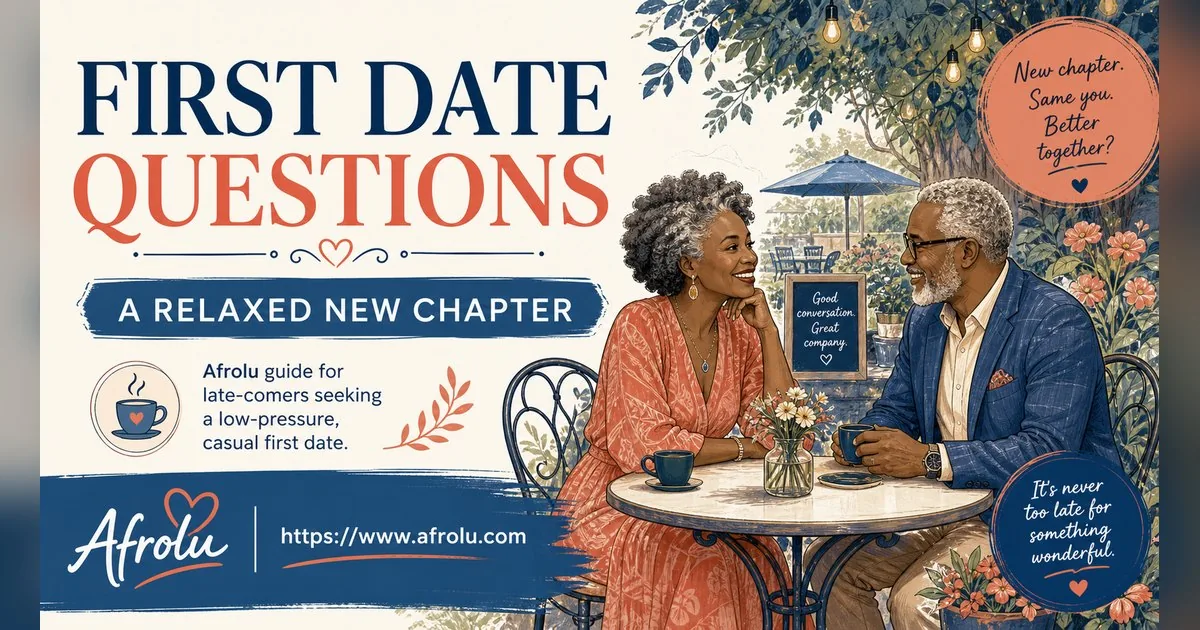
Created for Afrolu: https://www.afrolu.com. Use this overview illustration with the nearby advice before choosing your next step.
Written and edited by Grace Mutiso · Kenya Guides Editor
Ask what casual dating means in each adult's life now. One person may want occasional public dates, while another expects regular contact. Speak plainly about other partners, safer sex, privacy, messages, and endings before intimacy. Either adult may decline a topic or stop the date. Past relationships do not need a full history. Do not use money, app access, or sexual pressure to prove ease. A casual agreement remains important, specific, and open to change.
First dates · Late Entrants
How can adults dating again ask clear first-date questions about a low-pressure casual connection?
A low-pressure first-date question gives two adults time to describe what they want without forcing agreement or history. In casual dating, contact, other partners, safer sex, privacy, intimacy, and endings are separate choices. Each one needs plain words and current consent. The agreement may change or stop. Casual never permits account access, sexual pressure, money demands, or unwanted pursuit.
Ruth is an adult dating again after a long break. She meets Ben at a public garden café for an early drink. Both use the word casual, but Ruth asks what it means to him now. Ben wants occasional dates and does not expect daily messages. Ruth agrees about contact, then says she needs direct conversation about other partners and safer sex before any intimacy. Ben answers without asking about her former marriage. They choose one daytime museum visit and make no promise after it. Either may cancel or end the connection with clear words. The agreement feels low pressure because important choices are named, not hidden.
Dating clinic
Make the advice usable in a real conversation for late entrants
Ruth and Ben are adults returning to a dating world that feels less familiar. Their café conversation translates the casual label into current choices without opening every part of the past.
Separate message rhythm, other partners, intimacy, health boundaries, and endings. Keep each answer voluntary. Use direct closing language and move to safety actions when unwanted contact continues.
Turn casual into ordinary examples
Dates, messages, other partners, and emotional expectations can be discussed without pretending the future is settled.
Ask again before intimacy
A prior date or kiss cannot decide touch, sex, photos, an overnight stay, or another meeting.
Keep past stories owned
An adult can name present needs while divorce, loss, health, family, and former partners remain private.
Close pursuit after the ending
Repeated messages, new accounts, threats, or tracking require stopping replies, blocking, reporting, protection, and help.
Open the label
Casual should describe conduct, not hide it
Ask how often dates or messages might happen and whether other dating is expected. Two adults can use the same label while imagining very different contact, intimacy, and emotional care.
Keep the first answer current and modest. No one has to promise a long future or act indifferent. Warmth and honesty can exist inside a limited agreement.

Created for Afrolu: https://www.afrolu.com. Use this real-life scene with the nearby advice before choosing your next step.
Do not bundle consent
A casual yes does not answer every intimate question
Agreement to a date is not agreement to touch, sex, an overnight stay, photos, or another meeting. Each choice needs a current willing yes and can stop at any time.
Discuss other partners, barriers, testing, and health boundaries before sexual activity. Either adult may decide not to continue. Consent cannot be traded for attention or reassurance.

Created for Afrolu: https://www.afrolu.com. Use this signal checklist with the nearby advice before choosing your next step.
Let the past arrive slowly
Dating again does not require a complete personal history
An adult may describe being out of dating for years without explaining a divorce, loss, former partner, or private health event. That depth can wait for trust and relevance.
A curious match can ask once and accept the boundary. Focus on what the adult wants today, which limits matter, and how the next date should feel.
Use plain closing words
Low pressure includes a clear way to change or end
One adult may later want exclusivity, more contact, less contact, or no further dates. Say the change before acting as though the old agreement still applies.
An ending can be brief: the connection no longer fits, and contact should stop. The other adult may feel disappointed. They still must respect the decision.

Created for Afrolu: https://www.afrolu.com. Use this conversation example with the nearby advice before choosing your next step.
Close unsafe contact
Casual never means available for access or pursuit
Do not share an app password, payment code, intimate image, home access, or money to prove trust. Refuse sexual acts when consent is absent or uncertain. Leave the situation safely.
After the clear ending, give no more replies to unwanted messages. Report the profile and block further contact. Preserve useful evidence, secure exposed records, and seek urgent help for threats.

Created for Afrolu: https://www.afrolu.com. Use this practical takeaway with the nearby advice before choosing your next step.
Identify the real problem
First-Date Anxiety helps when worry blocks the meeting
First-Date Questions helps returning adults discuss contact, privacy, safer sex, and endings. First-Date Anxiety focuses on fear, body tension, travel worry, and attending the meeting.
Choose the anxiety guidance when nervous feelings make it hard to arrive, listen, or remain present. Choose this question plan when the conversation itself lacks clear agreements.
Three clear ways to use this advice
Use these page-specific summaries for a safety check, a decision, and one reminder worth saving.


Four low-pressure moments for adults dating again
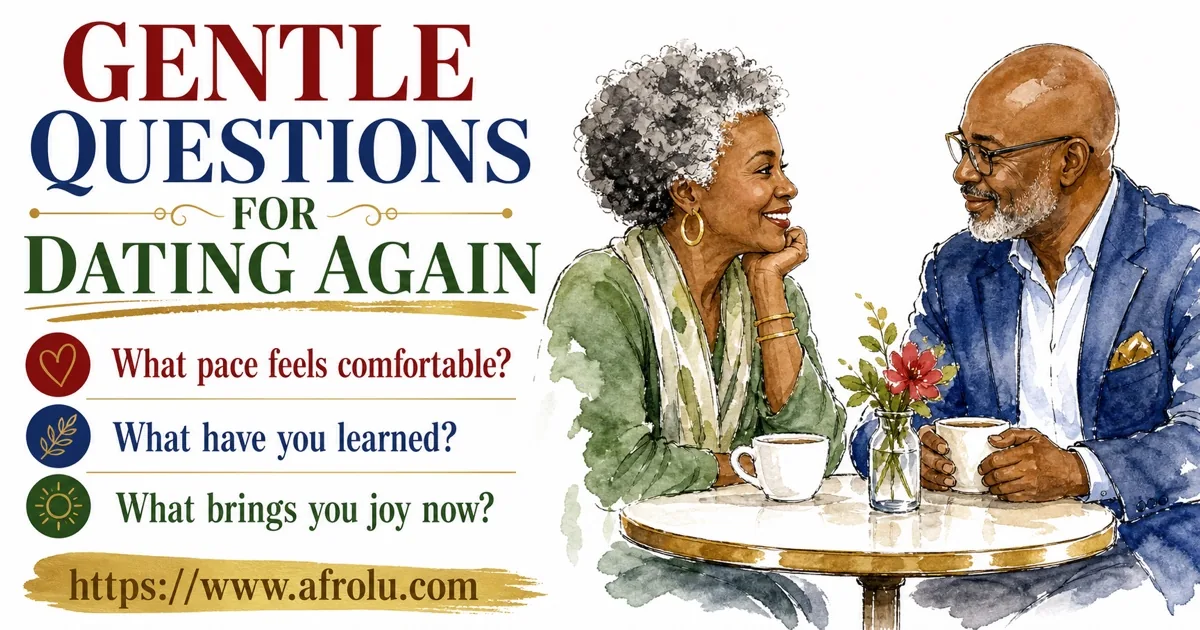
Two versions of casual need translation
Ruth thinks casual means an occasional public date without daily contact. Ben imagines frequent messages and regular weekends. Neither meaning is automatically wrong. The mismatch matters before either adult grows more involved. A plain question allows them to compare frequency, other dating, privacy, and possible intimacy.
Each person describes the next few weeks in ordinary terms. Name what is included and what remains undecided. Continue only where the two current agreements genuinely overlap.Safer sex needs its own adult conversation
A later date becomes physically close. Ruth pauses before any sexual activity. She asks about other partners, barriers, testing, and the limits each adult wants. Ben is willing to talk, but one answer leaves Ruth uncertain. She decides not to continue that night. The casual label does not weaken her choice.
Stop physical contact when consent or health information feels unclear. Talk in plain words without demanding private documents. Either adult may leave, wait, or decline future intimacy.A former marriage remains private
Ben asks why Ruth stayed away from dating for years. She says that the history is personal and she will not discuss it now. She can still explain her present contact preference and boundaries. Ben changes the subject. Respecting the closed story gives more useful evidence than hearing every old detail.
Accept the answer without guessing or investigating. Ask about today only if invited. Let later trust, relevance, and the owner's choice decide whether history becomes more specific.Repeated messages continue after a clear no
Ruth writes that the connection no longer fits and asks Ben not to contact her again. Messages continue from his account and then another profile. This is unwanted contact, not low-pressure casual dating. She does not owe another explanation or a final meeting. Safety now outranks politeness.
Stop responding. Block and report every contacting account. Keep relevant evidence in a safe place, protect exposed location or account details, and seek urgent help if threats or stalking begin.What a clear casual agreement actually shows
Both adults define contact and dates without pretending to promise more.
Consent, other partners, and safer sex receive separate direct answers.
Past history can stay private without being treated as dishonesty.
A change or ending can be spoken without chasing, shame, or punishment.
Choose one present answer without hidden promises
| Situation | What it may mean | What to do next |
|---|---|---|
| Both adults give different meanings for casual dating. | The label is too broad to support a shared plan by itself. | Discuss contact, other partners, intimacy, privacy, and endings separately. Keep only the parts both adults freely choose. |
| Sexual activity becomes possible before health limits are clear. | The current information and consent are not enough to continue. | Pause physical contact. Discuss barriers, testing, other partners, and boundaries, then accept any decision not to proceed. |
| A past relationship question receives a private answer. | The adult can discuss the present without opening old personal history. | Leave the subject closed. Ask about current preferences only when welcomed, and never request names, files, or proof. |
| Messages continue after contact was clearly ended. | The boundary is being ignored and the interaction may be unsafe. | Stop replying, block and report each account, preserve useful evidence privately, and seek urgent support if risk grows. |
Four lines for meaning, health, privacy, and endings
“What does casual dating mean in your life right now?”
“I can answer first. How should we discuss other partners and safer sex?”
“My past relationship history can wait. Which present detail would help?”
“If either adult ends this, which words would make the ending clear?”
Know the difference
Returning to casual dating: conversation help versus anxiety help
Use these tools to define contact, other partners, intimacy, privacy, safer sex, changes, and endings.
Use the anxiety guidance when fear, body tension, travel worry, or attending the date is the main barrier.
Clear the agreement when meaning is missing. Calm or shorten the meeting when worry prevents a useful conversation.

Created for Afrolu: https://www.afrolu.com. Use this nearby concept comparison with the nearby advice before choosing your next step.
Conversation clarity and date anxiety need different help
| Type or dimension | What it describes | Best next question |
|---|---|---|
| Casual meaning | Explains the present scope without a future promise. | Compare dates, messages, partners, and intimacy. |
| Safer sex | Keeps adult health and consent choices direct. | Talk before intimacy and accept any pause. |
| Private history | Leaves former relationships under their owner's control. | Focus on present needs and close the old story. |
| Changed agreement | Requires new words before behavior changes. | Ask again and allow disagreement or an ending. |
| Unwanted pursuit | Begins when contact continues after a clear no. | Stop replying, block, report, protect details, and seek help. |
Five checks before agreeing to another casual date
Translate the casual label
Use everyday examples about dates, messages, other partners, and intimacy. A practical description reveals differences that one comfortable label can hide.
Keep consent in the present
Consent applies to a specific action at a specific time. Agreement to one date or kiss cannot decide later touch, sex, images, overnight stays, or future meetings.
Discuss safer sex directly
Adults should talk about barriers, testing, other partners, and health boundaries before sexual activity. A private medical record is not owed, and uncertainty can mean stopping.
Let history remain owned
Dating again may follow divorce, loss, illness, caregiving, or another private change. The returning adult decides which story is relevant and when it can be shared.
Make the exit understandable
A brief closing message can state that dating will not continue and contact should stop. Repeated pursuit after that point is a boundary problem, not romance.
Four ways a casual label can hide pressure
Assuming casual has one meaning
Adults may expect very different contact or intimacy. Translate the label before relying on it.
Bundling all consent together
A date, touch, sex, image, and overnight stay are different choices. Ask and listen each time.
Pressing for the old story
Past pain and relationships belong to the returning adult. Current preferences can be discussed without a full history.
Leaving the ending vague
Silence can create avoidable confusion. State the end clearly, then use safety tools if contact continues.
Use a reviewed resource that matches the decision
This guide focuses on the relationship decision, so it does not rank dating apps. Check current prices, safety tools, and local availability before choosing a service.
Explore the guide library
Show more related guides
Continue with Afrolu
Show more Afrolu guides
Sources used for this guide
Afrolu reviewed these health, research, safety, or public guidance resources while editing this page. They support the behaviour and safety guidance; they do not diagnose any individual described by a reader.
Common questions from adults dating again
What should casual dating mean?
It should mean the specific dates, contact, other partners, intimacy, privacy, and ending rules both adults freely understand together now.
Must I share why I stopped dating?
No. You may keep former relationships and private events closed. Explain only the present preferences needed for a fair agreement.
How do we discuss other partners?
Ask directly before intimacy and whenever the situation changes. Use the answer to make your own health and consent choice.
What safer-sex questions belong before intimacy?
Discuss barriers, testing, other partners, relevant risks, and boundaries. Either adult may stop at that point without supplying private medical files.
Does one kiss mean consent to more?
No. Each intimate act needs its own current willing agreement. Stop as soon as either adult declines or becomes uncertain.
Can casual dating become serious?
It can if both adults want a new agreement. Raise the change directly, and accept that the other person may decline.
How should I end a casual connection?
Say plainly that dating will not continue and whether contact should stop. A brief respectful message alone is usually enough.
What if messages continue after the ending?
Stop responding, block and report each account, and protect private details. Seek urgent help if threats, tracking, or stalking appear.
Should I share an app password with a helpful match?
Never share a password, login code, payment access, or account screen. Use official app support from your own trusted device.
When does First-Date Anxiety fit better?
Use it when worry, body tension, travel, or attending blocks the date. Use these questions when the agreement itself is unclear.
One thing to do now
Keep the agreement clear enough to change or end
Choose the smallest agreement both adults understand today. Keep consent active, health and history chosen, and the ending easy to say. Revisit the agreement before behavior changes.