Clarity-first · Steady Pace
Clear First-Date Questions for Professionals in Long-Distance Dating
Professionals: clear first-date questions in long-distance dating. Four examples, scripts, safety steps, and ten picture lessons show the next move.

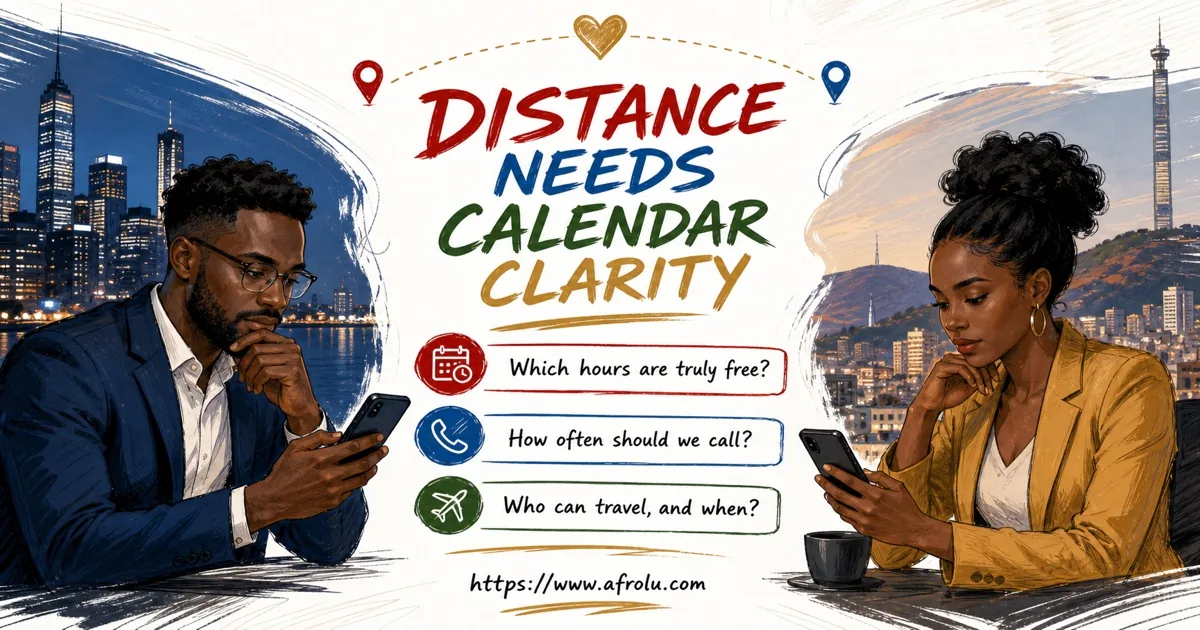
Created for Afrolu: https://www.afrolu.com. Use this overview illustration with the nearby advice before choosing your next step.
Written and edited by Grace Mutiso · Kenya Guides Editor
Start with the hours both adults can use without losing sleep or breaking work duties. Share a broad call window, not a calendar screen. Ask what steady contact means across the two time zones. Keep client names, workplace systems, home addresses, travel documents, and account details private. A good call can support one later conversation. It does not confirm a visit, relocation, or serious future. Clarity should make today's choice easier.
First dates · Professionals
How can two busy professionals ask clear first-date questions across time zones without exposing work or travel records?
A useful long-distance question turns current hours, energy, and expectations into one manageable choice. It welcomes a brief answer and balanced sharing. For working adults, clarity must protect sleep, client confidentiality, workplace systems, travel documents, money, and independent decisions. Every call, question, and possible visit still needs a current yes from both adults.
Lena finishes a late client call in Johannesburg as Malik begins his morning in Toronto. They planned a video date, but both look tired. Malik asks which call hours can work without cutting into sleep. Lena offers a broad weekday window and one Sunday option. She does not open her company calendar. Malik shares his own limits and suggests trying Sunday for thirty minutes. They also discuss how to repair a missed call: one factual message, no guilt, and a new time only when it exists. A possible visit comes up. They list the facts that would matter later, then return to the current call. Neither adult sends money, documents, or proof of work.
Dating clinic
Make the advice usable in a real conversation for professionals
This page follows two adults whose workdays happen on different clocks. Their immediate task is a respectful video date. A future visit remains a separate problem with legal and financial facts.
Ask about sustainable contact, missed-call repair, and the limits of visit talk. Prefer spoken ranges over screens. Measure clarity by calmer choices, not by access to another person's systems.
Protect both ends of the day
A realistic call window leaves room for sleep, commuting, meals, and work that cannot be discussed.
Use one factual update
A missed plan can be repaired without screenshots, repeated apologies, or an immediate replacement.
Keep a visit unbooked
Entry rules, leave, budget, lodging, and return transport must be checked by each adult.
Close document and login pressure
Passport images, fees, codes, and workplace links require refusal, account protection, blocking, and reporting.
Begin with usable time
Let two daily schedules meet without opening either one
Long-distance professionals may speak at opposite ends of the day. Ask which broad windows protect work and sleep. Exact calendars, meeting titles, and client names are unnecessary.
A short answer such as weekday evenings or Sunday mornings gives enough direction. Treat it as a starting range. Confirm each call again when real work facts are known. Write the agreed window in your own local time before a rushed workday makes the detail easy to forget.

Created for Afrolu: https://www.afrolu.com. Use this real-life scene with the nearby advice before choosing your next step.
Name the present agreement
Clarity describes what happens next, not the whole future
Ask how often each adult genuinely wants to speak and what a delayed reply means. Different rhythms can work when expectations are spoken instead of guessed.
Do not turn a preferred pace into constant availability. A work deadline, poor connection, or need for rest may change the plan without changing anyone's worth.

Created for Afrolu: https://www.afrolu.com. Use this signal checklist with the nearby advice before choosing your next step.
Plan a simple repair
One missed video date needs facts, not a loyalty test
A client emergency or transport delay can erase a call window. The adult who knows first should send one short message. Private work details can remain closed.
The other adult may feel disappointed and still respond without accusation. A later conversation can review the pattern. One disruption alone cannot prove dishonesty or cancel consent.
Keep travel hypothetical
Discuss a visit without funding or booking it
A future trip needs verified dates, legal documents, a personal budget, safe lodging, and independent return travel. None of those items belong to tonight's decision.
Each adult should control their own passport, account, and booking. A warm video call does not justify sending fees or revealing document numbers to anyone.

Created for Afrolu: https://www.afrolu.com. Use this conversation example with the nearby advice before choosing your next step.
Protect professional systems
Interest never requires access to a workplace
A job can be described through broad duties, meaning, or daily rhythm. Passwords, internal links, client files, and company calendars stay outside dating from the start.
If a person sends a login page or requests a code, end the call. Secure any exposed account through a trusted device and notify workplace support.

Created for Afrolu: https://www.afrolu.com. Use this practical takeaway with the nearby advice before choosing your next step.
Separate stages
Talking Stage covers the wider pattern between calls
First-Date Questions helps adults hold one balanced conversation. Talking Stage examines the broader period before a relationship has a shared name or agreement between both adults.
Choose the wider guide when the real issue is mixed signals across many calls. Stay here when the immediate need is one fair question, boundary, or plan.
Three clear ways to use this advice
Use these page-specific summaries for a safety check, a decision, and one reminder worth saving.


Four cross-zone moments for working adults
The first question protects sleep
Lena has just finished client work, while Malik must soon commute. Both want the call, but neither has much energy. Asking about usable windows recognises their real lives without demanding calendar evidence. A tired answer can remain brief without becoming rude.
Choose a short end time before the deeper talk begins. Offer two broad windows and invite another option. Finish as agreed even when the conversation feels warm.Work removes the promised video hour
A late client problem keeps Lena offline. She sends one plain update before the call. Malik does not demand a screenshot or repeated apology. Disappointment remains possible without becoming punishment. Repair starts with what each person can do now.
State the delay briefly, then pause before discussing a new time. Suggest Sunday only if the window is real. Otherwise, leave the next contact undecided until both adults can check.A future trip needs more than enthusiasm
Malik wonders whether Lena might visit in several months. They do not choose flights. Time off, entry rules, lodging, cost, and a return plan are still unknown. Each fact needs independent checking. Family excitement cannot complete that work for either traveler.
Write down the categories without sharing document numbers. Keep savings and bookings separate. Return to the next call rather than treating travel as proof of commitment.A date requests a passport image and fee
The person says a travel agent needs documents immediately. A payment link follows, then another account repeats the request. This is a fraud and privacy risk, not visit planning. Urgency is part of the pressure.
Do not send the image, money, login, or code. End contact, block and report every requesting account, and protect exposed records through official support. Seek urgent help if threats begin.Signs that clarity protects both lives
A shared call window respects both workdays and both sleep cycles.
Broad schedule information is enough without screenshots or client facts.
A missed call receives one calm update instead of blame or surveillance.
Future travel stays separate from today's video conversation.
Choose one current communication step
| Situation | What it may mean | What to do next |
|---|---|---|
| Both adults name broad hours that protect sleep. | A repeatable call rhythm may be possible without exposing work. | Choose one trial window, agree on an ending, and confirm it again near the day in both local time zones. |
| A work change cancels the planned video date. | The schedule changed; the reason may remain professionally private. | Send one factual update and offer a real alternative. Do not request proof, tracking, constant replies, or private work details. |
| The conversation turns toward an in-person visit. | Interest exists, while important legal, financial, and safety facts remain open. | Separate the future idea from today's choice. Verify travel independently before any personal booking, payment, or document share. |
| A passport, fee, code, or workplace login is requested. | Private records or money may be under direct attack. | Refuse the request, stop the conversation, block and report the account, and secure every affected system through official support. |
Four direct lines for time, repair, and travel
“Which call window works without cutting into sleep or paid work?”
“I can share my limits first. What contact pace could we both maintain?”
“I keep calendars and client details private. Can we use broad time ranges?”
“What facts would each of us verify before considering a visit?”
Know the difference
A clear call plan comes before the Talking Stage review
Use these tools for one video date: what to ask, how to share, which facts stay private, and what happens next.
Use that guide for the broader period of repeated contact before both adults agree on a relationship direction.
Solve the live call first. Review the wider pattern only after enough contact exists to show a real trend.

Created for Afrolu: https://www.afrolu.com. Use this nearby concept comparison with the nearby advice before choosing your next step.
One call and the Talking Stage are different scopes
| Type or dimension | What it describes | Best next question |
|---|---|---|
| Call window | Balances two time zones with work and rest. | Test one short slot and agree on its ending. |
| Missed plan | Needs a factual update without workplace proof. | Offer a replacement only after checking reality. |
| Visit idea | Raises legal, financial, and personal safety questions. | Keep documents, payments, and bookings individually controlled. |
| Client privacy | Protects people and systems outside the date. | Speak broadly and keep every internal screen closed. |
| Account risk | Begins when access, codes, files, or fees are requested. | Stop contact, report the account, and secure records. |
Five checks before sharing a schedule
Compare usable hours
Time zones affect sleep, work, meals, and transport. A broad window is more useful than access to a full calendar. It also reduces mistakes about which local day was meant.
Define reply expectations
Say what delay is normal during busy periods. Clarity removes guessing without turning a phone into a tracking device. Each adult can still step away from the agreed pace.
Repair with facts
A short update can name the changed plan while keeping clients and workplace information protected. The response shows whether disappointment can be handled without control.
Keep travel separate
A future visit needs independent research, personal money, safe lodging, and a return route before either person commits. Trusted local support should also be identified.
Close access requests
No dating goal needs a password, passport image, payment code, or company link. Treat those requests as risks. End the exchange before trying to verify the stranger's explanation.
Four long-distance work errors to avoid
Displaying a private calendar
A screen may expose clients, links, or locations. Speak about broad windows instead.
Reading delay as rejection
Time zones and work can slow replies. Use the agreed expectation before assigning a motive.
Booking from one warm call
Travel includes legal, financial, and personal safety choices. Let each fact be checked first.
Proving trust with documents
Passport images and account access can cause lasting harm. Refusal is the safe response.
Use a reviewed resource that matches the decision
This guide focuses on the relationship decision, so it does not rank dating apps. Check current prices, safety tools, and local availability before choosing a service.
Explore the guide library
Show more related guides
Continue with Afrolu
Show more Afrolu guides
Sources used for this guide
Afrolu reviewed these health, research, safety, or public guidance resources while editing this page. They support the behaviour and safety guidance; they do not diagnose any individual described by a reader.
Questions from professionals dating across distance
What is a useful first long-distance work question?
Ask which call windows protect sleep and paid duties. The answer can stay broad and should not require a calendar screenshot.
How often should two busy professionals call?
Choose a pace both adults can maintain. Test one week, review energy and work impact, then change the rhythm without blame.
What does clarity mean before a second call?
It can mean a known time, expected duration, and update process. A relationship label and travel promise remain separate choices.
How should we handle a missed video date?
Send one factual message and acknowledge the change. Offer a new window only when it exists, without exposing client information.
May I keep my work calendar private?
Yes. Share a broad range in words. Client names, meeting links, addresses, and internal schedules should remain closed throughout the date.
When is it reasonable to discuss a visit?
Wait until several calls show reliable updates and accepted work limits. Keep the visit on paper while both adults check every practical fact.
Should one person pay another adult's travel fee?
No early dating goal requires sending travel money. Each adult should research official costs and control personal payments independently from the start.
What if a passport image is requested?
Do not send it. End the request, block and report the account, and secure any identity information that was already exposed.
What if a work-login link appears in the chat?
Do not open or enter information. Stop contact and notify workplace security if the link or any code was used.
How is this different from the Talking Stage?
This guide improves one first-date exchange. Talking Stage examines the wider pattern before two adults share a clear relationship agreement.
One thing to do now
Confirm the next call, not the whole future
Use current time, energy, cost, and privacy facts. Name one next contact point that either adult can change. Keep travel money and documents under separate personal control.