Kenya · Dating guide · For adults
Accessible first dates in Kenya: choose a plan that works for both
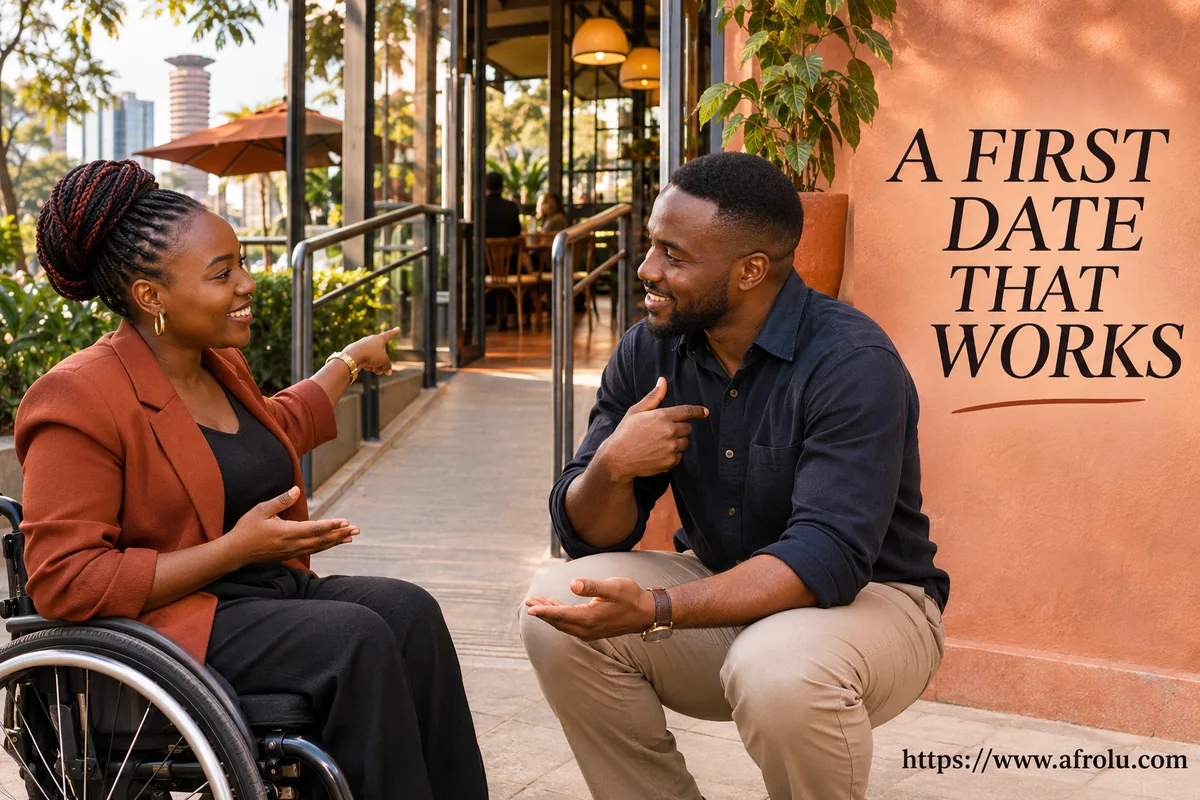
The short answer
Choose a public place that both adults can enter, use and leave comfortably. Check the details that matter to the person who needs them; do not ask them to explain their medical history. Agree on a short meeting and separate ways home. If the place cannot answer a practical access question, choose another place or another day.
Assigned editorial profile: Grace Mutiso · Kenya Guides Editor. Meet the editorial team
A café can look welcoming in a photo and still have a step at the door, a narrow toilet entrance or music that makes conversation hard. Neither person needs to guess or apologise. You can ask a few useful questions before leaving home.
Ask about the place, not the person's body
Try: ‘Would a quiet table and a step-free entrance work for you? I can check those before we decide.’ The other adult can name a different need, suggest a place, or say they would rather make the call themselves. An access request is enough; a diagnosis is not the price of being invited.
Imagine Akinyi uses a wheelchair and likes a café near a public meeting point. Her match sees a photo of a ramp and assumes the whole venue works. Akinyi asks about the entrance and toilet. The café confirms the entrance but cannot describe the toilet doorway, so they choose a different café that can answer both questions. The change is planning, not a failed date.
For questions that leave the other person room to answer, see first-date conversation ideas
Check the full journey
A venue's own website can be out of date. Call or message it with concrete questions: Is the entrance step-free today? Is there enough room at the table? Is the toilet on the same level? Can we sit away from loud music? Ask only about the features relevant to your plan, and check again if you change the time or room.
Each person should know how they will arrive and leave. Keep the first meeting short enough that either adult can end it without arranging a new ride together. If a route, lift or space becomes unavailable, treat the new plan as a fresh choice. No one has to continue because the other person travelled.
If the meeting place changes at the last moment, use the Kenya plan-change guide
If planning the meeting feels overwhelming, make one small first-date plan
An invitation that leaves room for an answer
You might write: ‘I would enjoy meeting for tea on Saturday afternoon. I found a public place that says it has a step-free entrance and quiet tables. Would that work for you, or would you prefer somewhere else?’ It gives information without deciding on behalf of the other person.
If the suggested venue is wrong, ask what would make the meeting easier. If the person is not ready to meet, accept that too. Access planning works best when both people can say yes, propose a change, or decline without a test of interest.
Use a clear boundary when the place or pace does not work for you
Questions you may have
Do I need to ask what disability someone has?
No. Ask about the practical features of the proposed plan. The person may choose to share more, but does not owe you a diagnosis.
Does a venue's access symbol mean every part works?
No. Ask about the particular entrance, space, toilet or noise level you need and check its current details.
What if the place cannot answer?
Choose another place or another day. A vague assurance is not a reason to make someone take a difficult journey.
Sources and their limits
These links support specific points above. The advice about your own choice is Afrolu's editorial guidance.
NCPWD mandate and accessibility
National Council for Persons with Disabilities
The Council describes access to buildings and public spaces as part of its disability-rights work.
Limit: This does not certify any café, route or date venue; check the place itself.
Safety tips
Tinder
The provider recommends public first meetings and control of one's own transport.
Limit: General provider guidance does not guarantee safety or accessibility in Kenya.