Faith-led dating · long-distance clarity
Faith-Led Long-Distance Situationship Clarity
For faith-led adults in a long-distance situationship, turn values into clear choices, set a steady rhythm, protect consent and privacy, and respond safely.
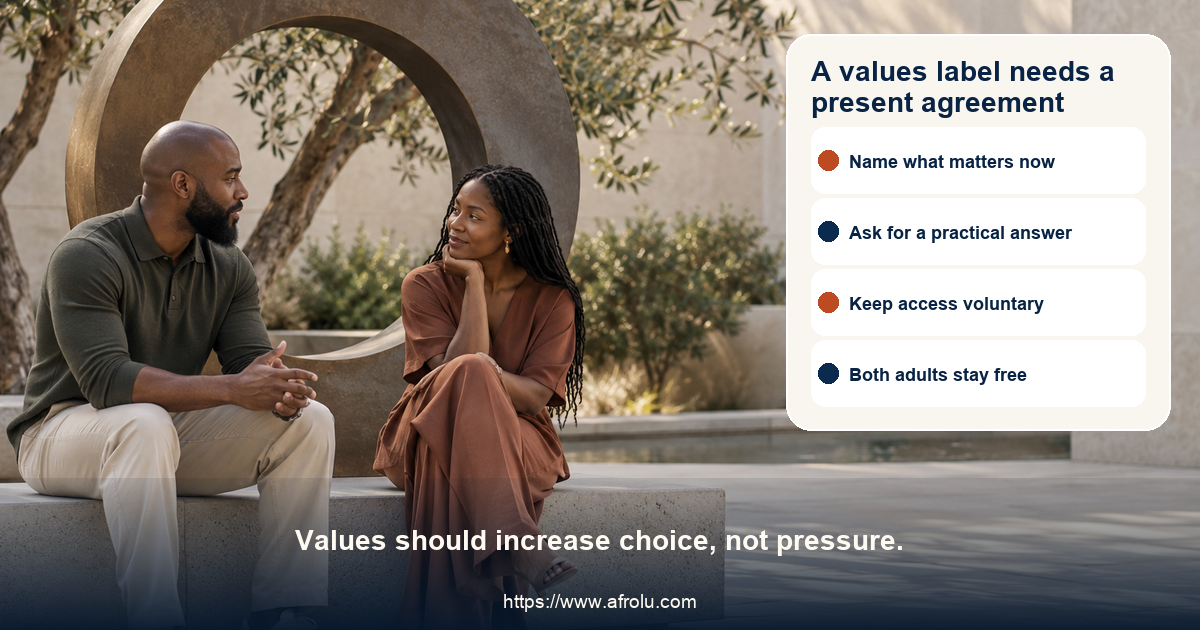
Values work when they guide present choices.
Written and edited by Samira Benali · Faith and North Africa Editor
Translate your values into current choices rather than assuming a shared label settles the relationship. Agree only to a contact rhythm, level of access, intimacy, exclusivity, and future possibility you can freely sustain. Keep private systems separate and let a values mismatch remain honest. If financial pressure, monitoring, coercion, threats, image abuse, repeated pursuit, or fear appear, reduce access and use support.
Relationship clarity · Faith-Led Daters
Is this a mutual values-led connection, a distance-and-capacity mismatch, an intimacy or exclusivity question, a privacy boundary, a future story without a present plan, a money request, unwanted pursuit, or conduct that makes me feel unsafe?
A faith-led long-distance situationship is recurring romantic or intimate contact between adults who may draw on personal convictions in dating but have not reached a fully shared commitment. Its quality depends on present agreement, voluntary boundaries, a sustainable rhythm, and room for either adult to redesign or leave.
Dalia and Noor describe their values as important to dating, yet their long-distance connection has no shared definition. Dalia asks what each person can offer now, proposes a call rhythm that protects her rest, keeps her private details gradual, and asks about exclusivity before more intimacy. Their answers make a respectful smaller arrangement, pause, or ending possible without treating either person's values as a verdict.
faith-led dating · long-distance clarity
Dalia turns personal values into a usable long-distance situationship agreement without asking a label to do all the work
This guide separates values-led exploration, mutual long-distance dating, different values, vague future language, current intimacy, gradual privacy, financial pressure, unwanted pursuit, and fear—without prescribing a single way to date or believe.
Name your standard, ask for a practical answer, build a sustainable rhythm, keep intimacy and future hope separate, layer access, protect independent systems, and switch to protection when freedom narrows.
Make them practical
Personal convictions help when they guide a present choice.
Protect capacity
Distance needs coordination, not constant proof of care.
Keep access voluntary
Home, routine, accounts, and social circles remain gradual.
Change the response
Pressure, money requests, monitoring, and fear need protection.
faith-led dating · personal values
Values help only when they become a clear present choice rather than a label another adult must decode
A long-distance situationship can make broad words carry too much weight. Two adults may both describe themselves as faith-led and still mean different things about exclusivity, sex, dating others, privacy, family disclosure, communication, or what a serious future would require. Shared language may be meaningful, but it is not an agreement until each person says what it changes today.
Begin with your own practice rather than an accusation. You might say that you prefer to move slowly with intimacy, want to discuss exclusivity before a certain kind of closeness, need honesty about other dates, or do not want a future story to replace a workable present rhythm. That tells someone what you are choosing without claiming that your preference is the only faithful or ethical option.
Invite a reciprocal answer. Ask what values shape their availability, disclosure, boundaries, and hopes, then listen for whether the answer can guide actual conduct. A sincere difference may be compatible with a smaller arrangement, a pause, or an ending. What matters is that neither adult has to hide a core preference to keep access to the connection.
Do not use values language to make uncertainty sound virtuous. If a person cannot answer a direct question, cancels every attempt at clarity, or asks you to accept conduct that feels misaligned with your own boundaries, you can take that information seriously. Respect for another adult includes letting them offer something different without trying to persuade yourself it is the same.
distance · capacity · ordinary life
A considerate long-distance rhythm protects rest and independent life instead of grading devotion through instant access
When adults are apart, messages can become the relationship's main evidence. A delayed reply, missed call, or quiet weekend may feel larger because there is no ordinary shared life to put it in context. That makes it tempting to seek certainty through all-day contact, location sharing, read receipts, or emotional accounting. None of those tools can replace a clear agreement.
Ask what is realistic now. You may prefer one planned call, a message window, or a lower-contact week when one person is carrying more obligations. A workable arrangement says when a conversation will happen or how a change will be communicated. It does not require either adult to surrender sleep, work, friendships, health, or privacy in order to demonstrate care.
Distinguish capacity from indifference by looking for usable alternatives. Someone may be genuinely busy and still offer a different time, acknowledge a missed plan, or say honestly that they cannot sustain the connection at the level you want. Repeated warmth with no follow-through is also information, even when the explanation sounds sympathetic.
You are allowed to prefer a connection with more local consistency, to keep a remote arrangement casual, or to end it because the rhythm does not meet your needs. That decision does not judge the other adult's distance, values, or sincerity. It recognises that a relationship must fit present life before it can responsibly be asked to carry future hopes.
consent · exclusivity · future
Careful intentions do not remove the need to discuss what is happening before intimacy or a more serious expectation begins
Long-distance contact can blur the line between emotional closeness and agreement. Two people may exchange deeply personal messages, make plans for a later stage, or describe a connection as special without ever agreeing whether they are exclusive, what physical boundaries apply, or what either person is free to do in the present. Silence leaves each adult to fill the gap privately.
Use a proportionate question. 'Before we go further, are we both dating other people?' or 'I need to understand what kind of contact and intimacy fits your values right now' gives an adult a chance to answer without being asked to promise a lifetime. If information about sexual health or images changes your decision, name that decision directly.
Future interest deserves its own scale. You can ask whether someone is open to a more serious relationship, a future in-person meeting, or a different rhythm without turning an early connection into a binding plan about housing, work, citizenship, family, money, or sacrifice. A future hope is meaningful only when both people remain free to revise it as reality becomes clearer.
If a person responds with guilt, uses values to shame your boundary, avoids the question while expecting access, or treats a disagreement as proof that you lack commitment, step back. You can choose a slower pace, keep the arrangement non-exclusive with explicit limits, or end contact. Clarity succeeds when it protects voluntary choice, not only when it produces alignment.

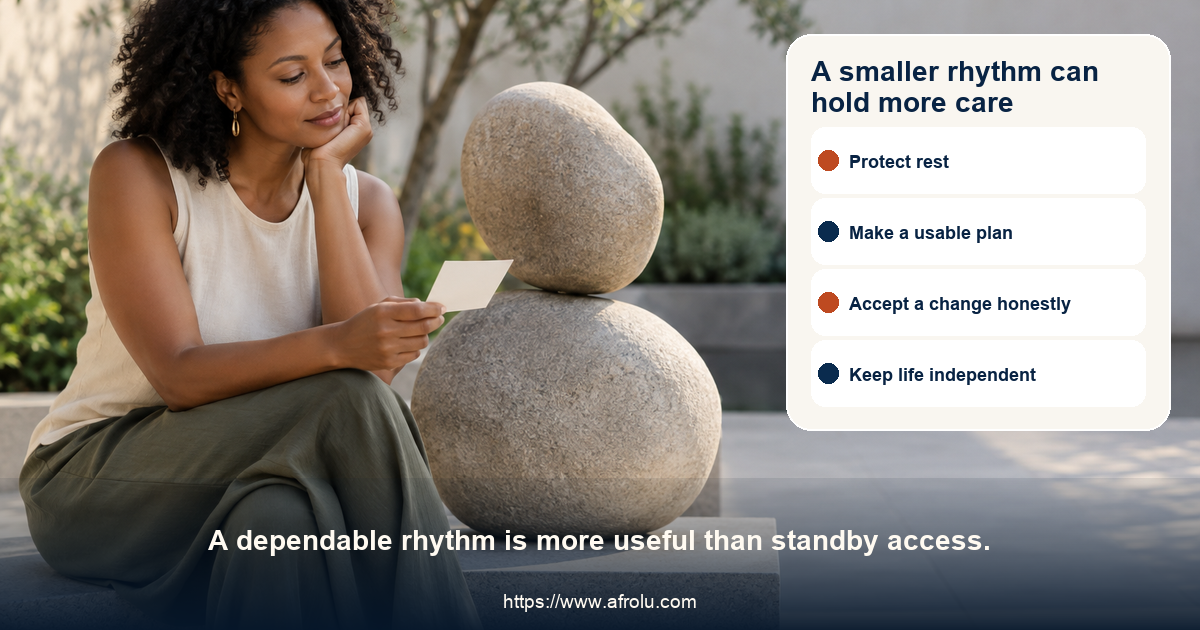
A rhythm should leave both adults rested and free.
privacy · disclosure · digital boundaries
A values-led connection does not entitle someone to your home, routine, devices, social accounts, contacts, or private community
When distance makes a connection feel less tangible, people sometimes seek proof through private access. A person may ask for live location, account passwords, a home tour, personal documents, contact lists, private images, or rapid introductions to friends and relatives. None of those requests is made safe by warm language, a shared faith identity, or a stated hope for the future.
Choose information in layers. Keep your address, routine, finances, accounts, codes, social profiles, and support network under your control. You can communicate through a channel you can leave, decline to join every group or video call, and decide if or when a connection appears in your wider life. These choices make trust possible without making exposure the price of interest.
Do not use privacy as a way to control the other adult either. You can set your own limits without demanding access to theirs, monitoring their activity, or insisting that they make a disclosure to prove sincerity. Mutual trust is built through consistent voluntary conduct, not through mutual surveillance or a competition over who reveals more.
If a boundary leads to anger, repeated requests, guilt, threats, or a search for alternate ways to reach you, the issue is no longer merely different comfort levels. Reduce access, use platform tools, preserve information only if safe, and seek support. A respectful connection has room for privacy without retaliation.
possibility · proportion · independent choice
A hope for later can be sincere without obliging either adult to make a rushed commitment, sacrifice, or financial exception today
Distance often gives future language special emotional force. A conversation about eventually meeting, living nearer, or building a life together can feel like proof that the connection is serious. It may be a genuine hope. It still does not answer whether both adults can make a modest plan, maintain a sustainable rhythm, or respect a no in the present.
Keep practical systems separate from attraction. Do not send money, receive funds, share a code, open an account, provide identity documents, sign anything, host someone, or keep a request secret because a story is urgent or because refusing is framed as a failure of care. Verify consequential claims through independently found official channels, not through a contact supplied by the person asking.
A future meeting or change in circumstances should have ordinary safeguards: time to consider it, independent transport and lodging when wanted, public options, a separate budget, and the freedom to withdraw. The details do not need to be romantic in order to be respectful. They protect both adults from being carried into a bigger commitment by momentum or pressure.
If someone treats delay as betrayal, makes their emergency your responsibility, or asks you to prove trust through a transaction or private access, pause. Compassion can coexist with a boundary. You do not need to prove a story false before deciding that your money, identity, home, and independent movement stay outside a situationship.

Keep values, consent, privacy, and systems separate.
difference · discernment · endings
A values mismatch can call for a smaller arrangement or an ending; neither adult has to be corrected into compatibility
After you ask, listen for the difference between uncertainty that is honestly named and ambiguity that keeps asking you to wait without a plan. A person may say they cannot offer exclusivity, do not want regular contact, have different boundaries around intimacy, or are not ready to be visible in a shared circle. Those answers may disappoint, but they can still be treated with respect.
You can respond by changing the scale: keep the connection casual with explicit limits, reduce contact, wait before intimacy, set a review point, or step away. There is no virtue in accepting an arrangement that conflicts with your own values merely because you do not want to appear demanding. Your boundaries are not a referendum on another person's character.
Avoid trying to interpret someone into the relationship you want. Repeated declarations, spiritual language, affection, or a compelling reason for delay do not outweigh conduct that repeatedly leaves you without a usable answer. Let the pattern tell you whether the present arrangement gives you enough freedom and peace to continue.
An ending can be short and compassionate: 'This does not fit what I am choosing, so I am stepping back.' You do not need to continue a debate about whether your preference is justified. If direct contact feels unsafe or a boundary is ignored, reduce access and choose the safety response that gives you the most control.

Ask what changes in the present.
next connection · autonomy · safety
A values-led standard should make you more able to choose connection, not more likely to endure ambiguity or pressure
Choose one question or boundary to use early: what does this connection mean in the present, what rhythm can you sustain, are either of us dating others, what access is private for now, or what would make a future possibility genuinely voluntary? A good practice does not guarantee another person's conduct. It gives you timely information before you have reorganised your life around hope.
Make room for people whose values differ from yours. Difference does not automatically mean disrespect, and agreement on a label does not automatically mean safety. Look for observable behaviour: clear answers, an accepted boundary, a workable plan, responsible repair after a change, and space for both adults to leave without punishment.
Keep your existing life active. Rest, work, study, friendships, care responsibilities, private reflection, community, and solitude can all matter without becoming proof that someone owes you a particular kind of relationship. A healthy long-distance connection sits alongside those parts of life rather than demanding that you make it your only measure of devotion.
Where contact includes coercion, financial manipulation, unwanted pursuit, threats, monitoring, image pressure, blackmail, or fear, make protection the next practice. Limit access, use report and block tools, preserve information only when safe, and seek local or specialist help. Your safety does not require a final explanation or a perfect moral conclusion.
Eight faith-led long-distance situationships where values, rhythm, intimacy, privacy, money, or safety change the next move
Values mean different things
Two adults both describe themselves as faith-led but have not discussed exclusivity, intimacy, or contact expectations.
Translate the label into present choices.Silence becomes a test
One person treats delayed messages as evidence of weak commitment and asks for constant access.
Offer a sustainable rhythm instead of a reply grade.Possibility is mistaken for agreement
A hopeful conversation about later begins to replace a clear answer about the connection now.
Return to the present plan and boundaries.Closeness is treated as continuing consent
A person expects images or sexual contact because earlier conversations felt emotionally serious.
Name the current boundary and slow the interaction.Privacy is framed as distrust
Someone wants home details, social accounts, or introductions before the other adult is ready.
Keep information layered and refuse the particular request.Care becomes a transaction
An urgent personal story asks for money, a code, documents, or secrecy.
Decline and verify independently.A mismatch becomes pressure
One person wants regular exclusive dating while the other can offer only occasional contact.
Choose a smaller arrangement or end it without persuasion.Values language hides pursuit
After a clear no, messages multiply, new accounts appear, or disclosure is threatened.
Reduce access and seek support rather than debating.Fourteen observable signs that a values-led long-distance situationship remains mutual, vague, pressuring, controlling, or unsafe
Personal values are translated into current behaviour rather than left as a broad label.
Both adults can name the contact rhythm they can realistically sustain.
A delayed reply does not become a demand for passwords, live location, or constant proof.
Exclusivity, other dates, intimacy, sexual health, and images are discussed before assumptions form.
A future hope is separate from a present agreement about time, access, and boundaries.
Address, routine, accounts, documents, codes, and social circles remain gradual.
A values difference can be heard without shame, correction, or an attempt to force compatibility.
A changed plan leads to notice or repair rather than an emotional accounting exercise.
Independent transport, lodging, money, and decision time remain possible for any later meeting.
No urgent transfer, account access, document share, or secret financial action enters the connection.
Privacy is respected without either adult monitoring the other.
A clear ending remains valid even if the other person disagrees with it.
Affection and future language are matched by modest present conduct.
Threats, monitoring, image pressure, coercion, repeated pursuit, or fear require protection.
A proportionate decision map for values, distance, consent, exclusivity, future hopes, privacy, money, endings, and safety
| Situation | What it may mean | What to do next |
|---|---|---|
| You share a values label | The words may conceal different practical expectations. | Ask what the label changes in the present arrangement. |
| Calls disrupt rest | The rhythm may be too costly for one adult. | Offer a smaller repeatable window or reduce contact. |
| They ask for constant proof | Distance may be getting used to justify surveillance. | Keep privacy and independent routines intact. |
| You are considering intimacy | A current decision needs current information. | Discuss consent, other dates, boundaries, and health directly. |
| A future is discussed | Hope may be outrunning the present agreement. | Ask what can actually be offered now. |
| They want private access | Disclosure may be moving faster than trust. | Layer information and decline the specific request. |
| They ask for money or a secret favour | The connection has entered a risk category. | Decline and verify any claim independently. |
| Values differ | Compatibility may be limited without either person being wrong. | Choose a smaller arrangement, pause, or ending. |
| They return after an unclear gap | Familiarity may be replacing evidence of repair. | Ask for a present plan rather than accepting intensity. |
| They ignore a boundary | Freedom may be getting treated as negotiable. | Reduce access, use platform tools, and seek support. |
Twelve complete lines for values, a contact rhythm, intimacy, disclosure, a future hope, money, a mismatch, and an ending
“My values mean I need a clear conversation before I offer more access.”
“What does faith-led dating change for you in the present?”
“I can sustain this call window; I cannot be available all day.”
“Before we go further, are either of us dating other people?”
“I want to talk about boundaries before we continue physically or share images.”
“I keep my home, routines, accounts, and private contacts to myself for now.”
“I can discuss a future possibility, but I need a workable arrangement now.”
“I do not transfer money, share codes, or provide documents in dating connections.”
“That does not fit what I am choosing, even though I respect your answer.”
“What can you offer now that is different from the earlier pattern?”
“This arrangement does not fit my values or capacity, so I am stepping back.”
“I asked you not to contact me again. Do not contact me further.”
Know the difference
Faith-led long-distance dating can be clear and voluntary, or it can become a values-labelled pressure system
Both adults can name their present boundaries, contact rhythm, privacy choices, and room to revise or decline.
One adult uses broad values, distance, future language, or guilt to avoid clear terms and seek more access.
Values should help adults choose honestly, not make ambiguity or pressure look meaningful.

Values should make choice clearer, not smaller.
Keep mutual values-led contact distinct from pressure framed as devotion, privacy pressure, financial manipulation, and conduct that reduces freedom
| Type or dimension | What it describes | Best next question |
|---|---|---|
| Values-led exploration | Personal convictions guide pace without assuming agreement. | Discuss what each person can offer now. |
| Intentional long-distance dating | A sustainable rhythm and boundaries accompany future interest. | Keep plans modest and reviewable. |
| Mutual casual connection | Both adults can name limits, other dates, and current consent. | Keep the agreement explicit when circumstances change. |
| Different values | Preferences differ without a need to shame or correct either adult. | Choose a smaller arrangement or a respectful ending. |
| Future-story ambiguity | Possibility is used instead of a usable present plan. | Return to current conduct and boundaries. |
| Privacy pressure | Accounts, location, home, or social contacts are treated as proof. | Layer disclosure and reduce access after pressure. |
| Financial manipulation | Urgency and intimacy seek money, codes, documents, or secrecy. | Decline and independently verify any claim. |
| Unwanted pursuit | A no, silence, or block is followed by new contacts or threats. | Report, block, and seek support as needed. |
| Coercion or fear | Monitoring, image pressure, threats, or isolation reduce free choice. | Prioritise safety planning over relationship repair. |
A simple plan you can use today
Values need an action
A label becomes useful only when it changes how both adults make present choices.
Distance needs a rhythm
A smaller dependable contact pattern can protect more care than constant proof-seeking.
Consent remains current
Closeness, earlier messages, and future hope do not decide access today.
Privacy can be principled
Gradual disclosure protects both adults' opportunity to choose freely.
Future hope needs proportion
A possibility for later cannot replace a workable arrangement or independent systems now.
Difference can be honest
A values mismatch can lead to a respectful no without turning either adult into a problem.
Questions organised by purpose and depth
Choose a few prompts that fit the moment. This is a reference library, not a list to complete.
Personal values
Use before assuming a shared label creates a shared agreement.
- What does this value change in my behaviour now?
- What does the other adult actually offer?
Distance rhythm
Use when contact begins to feel like a proof system.
- What rhythm protects both adults' real lives?
- What usable alternative exists after a missed plan?
Intimacy and future
Use before a connection takes on more access or expectation.
- What information changes my next decision?
- What future hope is separate from today's agreement?
Safety and exit
Use when pressure or a request makes free choice harder.
- Would I share this access or money outside dating?
- What action returns control to me now?
What deserves a closer look
Make a personal standard practical
Describe how your convictions affect pace, intimacy, disclosure, exclusivity, and care.
Evidence limit: Your standard cannot define another adult's choices.
Build contact around real capacity
Choose a window, plan, or pause that protects both adults' independent lives.
Evidence limit: Availability cannot be demanded as proof.
Ask before assumptions form
Make consent, other dates, sexual-health decisions, images, and pace current conversations.
Evidence limit: A conversation never creates obligation.
Keep access voluntary
Layer home, routine, accounts, location, social profiles, and contacts.
Evidence limit: Privacy should not become control of another adult.
Hold hope without rushing systems
Keep money, documents, work, housing, movement, and any later meeting independently chosen.
Evidence limit: No future story verifies an urgent request.
Change tactics when freedom narrows
Use platform tools, trusted support, and safety planning for pursuit, threats, monitoring, coercion, or fear.
Evidence limit: Protection does not require a diagnosis.
Shortcuts that turn values or distance into pressure, unwanted access, financial risk, or fear
Treating a shared label as agreement
Personal values can overlap while boundaries and relationship expectations differ.
Measuring care through constant access
A reply score cannot replace a sustainable contact plan.
Assuming future hope settles the present
A possibility for later does not establish exclusivity, privacy, or access today.
Using values to shame a boundary
A personal preference should not be turned into leverage over another adult.
Sharing systems to prove trust
Money, documents, accounts, codes, and location are not evidence of sincere care.
Debating an ignored no
Repeated pressure calls for reduced access and support, not a better moral argument.
Keep consent current, interpret a mixed pattern, or assess emotional availability
Choose the guide that fits your immediate decision. An editorial resource can help you name a preference, but it cannot promise another adult's honesty, availability, or conduct.
Explore the guide library
Show more related guides
Continue with Afrolu
Show more Afrolu guides
Sources used for this guide
Afrolu reviewed these health, research, safety, or public guidance resources while editing this page. They support the behaviour and safety guidance; they do not diagnose any individual described by a reader.
Questions about faith-led long-distance situationships
Can two faith-led adults want different kinds of situationship?
Yes. Shared values language does not automatically settle exclusivity, intimacy, privacy, or future plans. Discuss the present terms directly.
How do I raise values without making a test?
Speak from your own choices and ask what the other adult can offer now. The goal is a usable answer, not proof of worthiness.
Does long distance require constant messaging?
No. Choose a rhythm both adults can sustain without losing rest, privacy, work, friendships, or the right to be offline.
Should I assume exclusivity because the connection feels serious?
No. Ask before a decision that needs the information. Emotional closeness and future language do not create an unspoken agreement.
Can I change my mind about intimacy or images?
Yes. Consent and access remain current choices. Earlier messages, affection, or a shared values label do not settle the next step.
Is privacy inconsistent with a values-led connection?
No. Gradual disclosure can be an ethical boundary that protects voluntary choice. You can keep home, routine, accounts, and social circles private.
Should I make a financial exception for a serious long-distance connection?
Keep money, accounts, codes, documents, transfers, and urgent requests separate. Verify consequential claims independently.
What if our values differ?
A difference can be honest and still mean the arrangement does not fit. You can choose a smaller connection, a pause, or a respectful ending.
What if they use guilt or values language after I set a boundary?
Treat pressure as information. Repeat the boundary once if safe, reduce access, and seek support if pursuit, threats, monitoring, or fear continue.
How can I end it without attacking their beliefs?
State that the arrangement does not fit what you are choosing and step back. You do not need to debate anyone's character or convictions.
One thing to do now
Choose the next connection that lets your values and freedom remain visible together
Choose the smallest next action that protects your rest, private life, money, accounts, documents, current consent, independent movement, support network, values, and ability to revise or end the connection without being shamed, monitored, financially pressured, or made afraid.