Professional adults · serious and casual clarity
Ghosting for Professionals: Serious or Casual Dating
Editorial guide for professionals after ghosting: distinguish serious intent from casual honesty, set practical plans, preserve privacy, and respond safely.

Status is not an agreement.
Written and edited by Tariro Ncube · Diaspora Dating Editor
Do not use professional status to explain a quiet connection for someone else. Name the actual offer, protect your calendar with a confirmation and release point, and ask whether serious, casual, or exploratory dating has a rhythm both adults can choose. A returning message may earn a small public conversation, not automatic access to your work, money, private information, time, or body. If someone pressures, monitors, threatens, bypasses a no, asks for money or access, or makes you afraid, reduce contact and seek appropriate support.
Dating behaviour · Professionals
Was this a quiet gap, a compatible busy period, an honest casual offer, observable serious interest, vague availability, a repair worth testing, a request for private or professional access, repeated unwanted contact, or conduct that makes me feel afraid?
Professional ghosting is a reduced or ended dating conversation experienced by an adult whose work shapes availability or how others read their status. It is not proof that a busy person is serious, a polished person is reliable, or casual dating is careless. The useful distinction is between one quiet gap, workable capacity, an honest casual offer, observable serious intent, vague coordination, repair, access pressure, unwanted pursuit, and fear.
Joel enjoys several thoughtful dates with someone whose job seems demanding. When an unconfirmed dinner falls through without a message, the person returns with an apology, a late private invitation, and a request to use Joel's professional contact. Joel releases the evening, declines the work request, asks what the person is realistically open to, and decides that any restart would need a short public plan and room for a direct answer.
professional adults · serious and casual clarity
Joel replaces a career story with a usable dating agreement
This guide separates one quiet thread from a workable busy period, honest casual dating, serious follow-through, vague availability, work or money access pressure, unwanted contact, and fear.
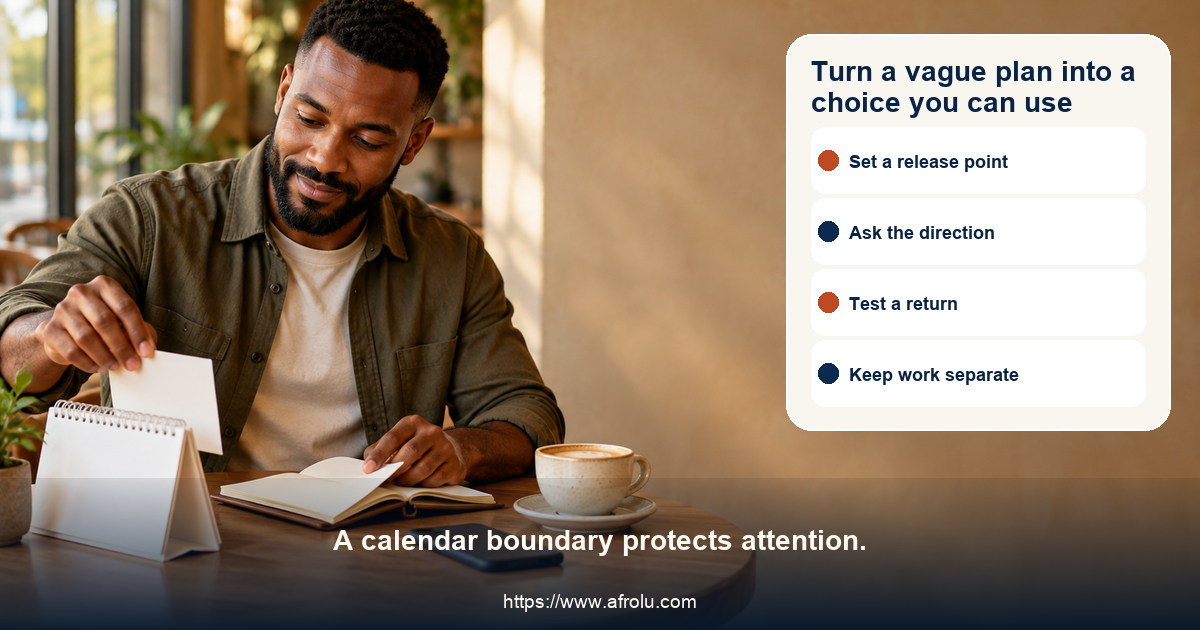
Name the actual offer, confirm or release a plan, ask about direction, test a return proportionately, keep professional systems private, protect current consent, and choose the action that restores your attention.
Name the direction
Serious and casual labels need present-tense meaning.
Release the slot
An unconfirmed plan does not own your evening.
Keep systems private
Work, money, accounts, and routes are not romantic proof.
Protect choice
Pressure and fear require more than a better script.
professional adults · serious and casual clarity
a job title cannot tell you whether a quiet connection was serious or casual
When a dating conversation goes quiet, people often reach for a story that feels legible: they are successful, busy, senior, ambitious, travelling for work, or unusually hard to reach. Those details can make silence feel more respectable than it is. They still do not show whether the connection was meant to be exploratory, casual, serious, exclusive, or simply unfinished. Start with the actual exchanges and plans rather than the status you have assigned to the other adult.
Serious dating is not proved by long messages, expensive venues, professional polish, declarations about the future, or a claim to be too busy for ordinary communication. Casual dating is not dishonest merely because it is casual. The practical question is whether both adults can state what they are open to, make plans that fit, and revise the arrangement without hiding behind attractive ambiguity. A quiet thread may reveal a mismatch; it does not grant either person an imaginary contract.
You can be disappointed and still be precise. Perhaps you hoped for a committed path while the other person wanted occasional company. Perhaps they wanted more ease than your timetable permitted. Perhaps neither of you had said enough. The useful response is not to audit who was more impressive or more deserving. It is to identify the minimum clarity you need before you invest another evening, private detail, or piece of emotional attention.
Avoid treating work as evidence that someone should be excused from basic consideration. A complex shift, deadline, client responsibility, or period of travel can be real. A respectful adult can still release a plan, name a next opening, or say that they cannot offer a rhythm that works for you. The same standard applies to you. You do not have to present a résumé, justify your rest, or accept a permanent standby arrangement because someone sounds important.
intention · practical evidence
replace labels with small observable agreements
Intent is often discussed as a declaration, but it works better as a series of small agreements. If someone says they are looking for something serious, ask what that means in the present: regular public dates, a realistic rhythm, honest notice when capacity changes, gradually learning about one another, or eventually talking about exclusivity. If someone prefers casual dating, the same practical detail matters: what contact, plans, boundaries, and openness to others should each person expect? Clear does not mean rigid; it means neither adult must invent the rules privately.
A quiet period can be a chance to check whether the stated direction had any operational meaning. Did plans happen? Were changes communicated before you had already rearranged your life? Could either person say that they were not available without being punished? Did someone make you feel that asking a simple question was too needy because their work mattered more? A serious connection can have limited capacity. A casual connection can be conscientious. What matters is whether the pattern matches what was offered.
Use questions that leave room for an honest answer. You might ask, “I enjoy seeing you. Are you looking to build something with a regular rhythm, or are you keeping this more occasional?” You are not demanding a forecast. You are asking whether your choices are being made with compatible information. If the answer remains grand but vague, or warm but evasive, treat that as information rather than a puzzle you must solve with more availability.
It is also reasonable to revise your own offer. You may learn that you want less intensity, more direct scheduling, slower disclosure, or a casual arrangement with clearer expectations. A change of preference is not a failure of professionalism or sincerity. The important part is to name it before other adults make plans around an assumption you no longer share. Clarity protects a serious path and an honest casual path equally.

Look for the pattern, not the polish.
time · coordination
do not let an unconfirmed plan borrow your whole evening
Professionals often manage calendars that look more stable from outside than they feel from within. A date might compete with a late project, a shift change, a commute, recovery time, family obligations, or the simple need to have an evening that belongs to nobody else. That reality is not an excuse to communicate vaguely. It is a reason to use plans that are clear enough for both adults to arrange their lives without one person carrying all the coordination.
A workable plan has a place, time, confirmation point, and an easy way to release it. “I can confirm by four; otherwise please make your own plans” is more useful than a stream of updates that leaves someone waiting. If a person goes quiet after suggesting a date, you can decide when the slot returns to you. You do not need to wait beside your phone, cancel a class, skip dinner, or decline other plans because a possible date might reappear at the last minute.
Watch for asymmetry. It is not automatically wrong if one adult has less free time, prefers shorter dates, or needs to reschedule. It becomes a problem if their uncertainty regularly becomes your labour: you suggest every alternative, travel farther, accept only late invitations, or make yourself available around a schedule they never disclose enough to coordinate with. That pattern can be incompatible even when no one has intended harm.
You can set a simple standard without turning dating into a workplace performance review. Offer the window you genuinely have, confirm when you can, and release what you cannot. If a date is important to the other person, they can help make it real. If it stays theoretical, treat the evening as yours. That is not a punishment for being busy; it is a refusal to outsource your rest and attention to an undefined possibility.
returns after silence · measured repair
a returning message can reopen a question, not automatically restore access
A person may return with a credible workload, a personal disruption, embarrassment about disappearing, or a friendly attempt to resume where you left off. You need not rule on every detail of the explanation before setting a boundary. Watch what follows it: acknowledgment of the missed contact, a concrete option, acceptance that your interest may have changed, and room for a smaller restart. Those actions say more than a polished account of why they went quiet.
A proportionate restart keeps the decision reversible. You might choose a twenty-minute call, a daytime coffee in a public place, or a direct conversation about whether each person is dating seriously or casually. Do not rush from an apology to private access, an overnight plan, exclusive assumptions, money discussions, work introductions, or a promise that you will always be available. A returning match may be sincere and still not be ready for the type of connection you want.
Serious intent should make room for your caution. Casual intent should make room for your refusal. If someone becomes offended that you need clarity, calls you demanding for asking whether a plan is real, or uses professional status to imply you should trust their word without evidence, the reaction tells you something. You can end the conversation because the communication pattern does not suit you. You do not need a courtroom case against the other person.
If the return includes pressure for a private setting, location, money, documents, images, work access, secrecy, or contact after a clear no, stop treating it as a dating-repair question. Keep your information and route under your control, use platform tools where useful, and seek support if a person becomes persistent, coercive, threatening, or frightening. There is no professional etiquette requirement to keep negotiating a boundary that has already been stated.
privacy · professional systems
work can be part of your life without becoming a dating shortcut
Some ghosting returns are made more confusing by a request that sounds ordinary: a referral, invitation, business opinion, work number, company address, colleague introduction, document review, or help with a payment. Because it arrives alongside warmth or apology, it can feel impolite to say no. But early dating is a poor reason to cross a professional boundary. A compatible person can get to know you without receiving the systems that help you earn, travel, communicate, or make decisions.
Keep both your visible and hidden work details proportionate. You can mention a broad field without naming clients, sharing a badge, connecting a private account, revealing a routine, forwarding a message, or offering a workplace meeting. You do not have to prove that your work is real by providing access. If you decide to share more later, let it follow trust built through time and mutual consent, not pressure after silence or a request framed as a small favour.
Financial requests deserve the same separation. Do not lend, receive, transfer, invest, hold funds, share authentication codes, provide documents, or solve an account problem for a dating contact. Someone can sound organised, vulnerable, successful, or convincing and still be asking for something that does not belong in a new connection. If a claim needs verification, use independent official channels rather than the relationship itself as evidence.
Privacy is not a verdict on another person's character. It is a condition that lets you leave or continue freely. A respectful date will not demand your regular route, live location, home, private number, passwords, or a workplace introduction to prove sincerity. When a limit becomes a debate, someone searches for other channels, or your work identity is used as leverage, close the access that protects you and draw on support if the behaviour persists.
casual dating · honest boundaries
casual can be thoughtful; serious can be slow
Casual dating is often unfairly treated as a lesser version of serious dating, while serious dating is treated as proof that every ambiguous action should be forgiven. Both ideas hide the practical work. A casual connection can involve clear plans, mutual enjoyment, direct communication, public first meetings, safer-sex conversations, privacy, and an uncomplicated ending. A serious connection can develop slowly and still leave each person free to revise their interest. Neither label removes the need to ask what is actually being offered now.
After ghosting, be especially wary of an arrangement that changes only when one person wants access. A returning match may say they do not want anything serious while expecting immediate replies, private availability, emotional reassurance, or exclusivity from you. Or they may say they want commitment while avoiding every conversation about frequency, boundaries, and follow-through. These contradictions do not need a diagnosis. They are a reason to make your own offer clear and decide whether the pattern feels mutual.
Consent remains present-tense in every kind of dating. A previous date, a flirtatious message, a gift, a late-night conversation, or an earlier agreement to keep things casual does not purchase another meeting, touch, image, location, or personal disclosure. You can slow down, choose a public setting, use your own transport, decline a private invitation, or end a connection without proving that your reason is sufficiently impressive.
Consider writing down the conditions that let casual or serious dating feel good to you: how plans are confirmed, whether people can date others, how often you want contact, what privacy you need, when a quiet thread becomes a release, and how you prefer to end things. This is not a contract you impose on strangers. It is a way to recognize a compatible rhythm before ambiguity becomes a place where your needs disappear.

Clarity is not a performance review.
next move · adult attention
choose the smallest action that lets you return to your own life
If a conversation has simply faded, you can let it fade. Archive it, release the proposed slot, make the plan you wanted for yourself, and stop using professional busyness as a mystery you must decode. If you prefer to close the loop, try a concise decision: “This rhythm is not workable for me, so I am leaving it here.” The aim is not a perfect line; it is to stop granting an unanswered thread decision-making power over your day.
If you want more information, ask one question with a practical answer. “Are you interested in meeting next week, and are you looking for something serious, casual, or still unsure?” Then let the answer—and whether it arrives—inform your next action. You do not need to bargain someone into a category that makes you comfortable. Their willingness to name a real offer is part of the information you are seeking.
If you choose to restart, keep it proportionate. A short public meeting, a specific confirmation point, and a direct discussion of pace can reveal more than a long apology. Notice whether the person follows through, respects your answer, and handles a changed plan without making your calendar their backup resource. You can decide later that the arrangement is not a fit even if no overtly harmful thing happens.
When conduct includes coercion, repeated unwanted contact, monitoring, threats, blackmail, financial manipulation, pressure for images, or fear, put safety ahead of relational neatness. Do not meet privately to provide closure. Block or report as appropriate, keep only material that is safe to keep, and contact support that matches the urgency. This guide can name options; it is not a substitute for immediate help when you believe you may be at risk.

Choose the action that gives time back.
Eight professional dating moments after quiet contact
An impressive career becomes a story about why silence is acceptable
A dater keeps a weekend open because the other person seems important and said their schedule is exceptional.
Release the unconfirmed time; professional status does not create a claim on your calendar.Future talk appears without a workable present rhythm
Someone says they want commitment but repeatedly avoids confirming ordinary plans or answering direct questions about pace.
Ask what serious dating means in the next two weeks, then assess the practical answer.A person names occasional availability without pretending otherwise
A match says they prefer something light, confirms dates clearly, and accepts that you may want something different.
Decide whether the actual offer suits you instead of trying to upgrade it through patience.Every suggestion becomes a last-minute maybe
One adult sends warm messages but lets the other adult organise, wait, and rearrange their evening around uncertain plans.
Set a confirmation point and let any unconfirmed plan return to your own life.An apology arrives with a request for immediate private time
After disappearing, a match says work was overwhelming and expects a late private meeting as proof that you understand.
Offer a small public restart, postpone, or decline; urgency is not a substitute for repair.Romance becomes a route into a professional network
A returning person asks for an introduction, event invitation, workplace detail, or help with a business problem.
Keep work access separate and refuse the request without creating an argument.A supposedly low-stakes connection treats your no as negotiable
A person calls the arrangement casual but keeps pressing for images, location, sex, or late access after you decline.
Restate the limit once, reduce access, and use support if pressure becomes persistent or frightening.A clear ending is followed through other accounts or work contacts
After you step back, the person reaches out through a professional platform, a colleague, or multiple new profiles.
Treat the pattern as unwanted contact, protect your information, and use platform or local support.Signals about availability, intention, plans, professional access, money, consent, privacy, and safety
They name a real window or release a plan instead of treating your calendar as permanently flexible.
They can explain what serious, casual, exploratory, or exclusive means to them in present-tense behaviour.
They do not use career prestige, travel, workload, income, or status to make ordinary clarity seem unreasonable.
They confirm changes early enough for you to use your time rather than waiting for a last-minute decision.
They accept that an apology may earn a smaller restart, not immediate private access or renewed trust.
They do not ask for employer names, client details, credentials, referrals, office access, or a professional introduction.
They keep money, investment ideas, codes, documents, transfers, and account issues outside the dating connection.
They respect your preference for a public plan, independent transport, and paced disclosure.
They can hear that a casual arrangement still needs consent, honesty, safer boundaries, and a respectful ending.
They do not expect exclusivity, emotional labour, or instant replies that they have not openly discussed.
They do not turn a question about direction into a criticism of your ambition, maturity, or professional identity.
They can accept a no, a delay, or an ending without contacting you through alternate accounts or work channels.
They make their interest visible through follow-through rather than profile polish or future promises.
They never use pressure, monitoring, threats, intimate material, blackmail, or fear to keep you engaged.
Choose a proportionate next move
| Situation | What it may mean | What to do next |
|---|---|---|
| A message is unanswered after a promising exchange | There is a gap, not yet a complete explanation or agreement. | Keep your day intact and choose whether one direct check-in would serve you. |
| A person says they are serious | The label needs a practical definition before it can guide your decisions. | Ask what frequency, plans, pace, and honesty would look like in the near term. |
| A person says they want casual dating | They may be offering a lighter path, not necessarily an unsafe or careless one. | Decide whether their actual availability and boundaries fit your own preference. |
| A date remains unconfirmed | The plan may not be real enough to own your evening. | Set or use a release point and make another plan. |
| A work explanation comes with a specific alternative | Capacity may be limited but still compatible with your desired rhythm. | Accept, decline, or offer another time without needing more workplace detail. |
| A return includes an apology and clear public plan | There may be room for a measured repair. | Choose a small test, ask a direct intent question, or decline. |
| A return demands instant access | The person may be seeking the benefits of reconnection without respecting your choice. | Slow the pace, insist on a setting you control, or end the exchange. |
| Someone asks for work, money, or account help | The request crosses into systems that should remain independent. | Say no, do not transact or share access, and verify any claim elsewhere. |
| A boundary is bypassed through a professional channel | The concern may have shifted from dating disappointment to unwanted pursuit. | Reduce access, document only if safe, and seek support as needed. |
| You feel frightened, coerced, monitored, or threatened | This needs a safety response rather than another discussion of intent. | Prioritise safety and use trusted or urgent local help appropriate to the situation. |
Twelve lines for direction, calendars, repair, work privacy, money, consent, mismatch, and endings
“I enjoyed talking with you. Are you still interested in making a plan, or should I release this?”
“I am open to getting to know someone, and I want to be clear about whether this feels serious, casual, or still exploratory for you.”
“If we are both interested in something serious, I need plans and communication that we can both realistically sustain.”
“I can consider something casual, but I still want clear plans, current consent, and no assumptions about availability.”
“I have not heard back, so I am making other plans for tonight. Take care.”
“I hear that you were busy. If we restart, I would prefer a short public coffee and a clearer sense of what we are both open to.”
“I keep my employer, clients, work accounts, and network separate from dating.”
“I do not lend, transfer, receive, invest, or handle account issues in a new connection.”
“I am not sharing my home, regular route, private number, or live location at this stage.”
“That does not work for me. A previous date or message is not permission for this now.”
“I am looking for a different rhythm, so I am going to step back rather than keep this ambiguous.”
“I have asked to end this. Do not contact me through other accounts or professional channels.”
Know the difference
A quiet gap, workable capacity, casual honesty, serious follow-through, ambiguity, access pressure, and fear need different responses
A person can name their availability, explain what serious or casual means to them, confirm or release a plan, accept a public pace, and keep work, money, privacy, and consent separate from a return.
Status-based vagueness, standby expectations, pressure for private access, requests for work or money, repeated channel bypasses, monitoring, coercion, threats, blackmail, and fear make a connection less freely chosen.
The useful distinction is not impressive versus unimpressive; it is clear, compatible, and free versus ambiguous, pressuring, or unsafe.

Different patterns deserve different actions.
Separate a quiet gap, workable capacity, casual honesty, serious conduct, ambiguity, pressure, and fear
| Type or dimension | What it describes | Best next question |
|---|---|---|
| One quiet gap | A message or plan has not happened, with no broader pattern yet. | Wait, ask once, or release the thread. |
| Busy but workable | Capacity is named alongside a specific option or an honest release of the plan. | Decide whether the rhythm suits your life. |
| Casual and honest | The connection is lighter, but expectations and consent remain clear. | Choose it only if the actual offer works for you. |
| Serious and observable | Interest is paired with practical planning, curiosity, and a pace both adults can sustain. | Continue gradually and keep reviewing fit. |
| Ambiguous availability | Warmth or status is present, but one adult carries the coordination and waiting. | Set a release point or step back. |
| Return with repair | A missed contact is named and the next agreement is more reliable. | Use a small public test or decline. |
| Access request | Dating is used to seek work, money, documents, codes, or private information. | Keep systems separate and do not transact. |
| Boundary bypass | Contact resumes through new accounts or professional channels after a clear no. | Reduce access and seek support if it persists. |
| Fear or coercion | Conduct involves threats, monitoring, pressure, blackmail, or fear. | Prioritise safety over further dating discussion. |
Keep work, serious or casual intent, privacy, and choice clear after ghosting
Status is not intent
A career story cannot tell you whether someone has offered a compatible dating arrangement.
Serious needs a rhythm
Commitment language matters more when it is paired with feasible plans and mutual follow-through.
Casual can be ethical
A lighter connection can still include honesty, boundaries, current consent, and respectful endings.
Calendars reveal fit
An unconfirmed plan is not entitled to the time you need for work, rest, and relationships.
Repair is smaller than access
A returning message can earn a short conversation; it does not automatically earn private information or trust.
Safety changes the task
Pressure, access requests, unwanted pursuit, and fear require protection rather than better dating analysis.
Questions organised by purpose and depth
Choose a few prompts that fit the moment. This is a reference library, not a list to complete.
Name the actual offer
Replace career-based assumptions with what has been said and done.
- What did we each say we were open to?
- What plans or follow-through supported that?
- What am I currently assuming without evidence?
Check the calendar
Make uncertainty visible before it uses your whole evening.
- When should this plan be confirmed?
- When will I release it?
- What will I do with that time if it remains vague?
Check serious or casual fit
Ask whether the practical rhythm suits you, not whether one label is more worthy.
- What contact and pace work for me?
- What privacy and consent boundaries matter now?
- Can I accept their actual offer without trying to change it?
Check protection
Separate dating uncertainty from conduct that asks for access or removes choice.
- Has anyone asked for work, money, codes, or private information?
- Has a no been respected?
- Who can support me if contact becomes persistent or frightening?
Look more closely at intent, calendars, repair, casual care, private systems, and escalation
Turn serious and casual labels into usable information
Ask about practical availability, communication, exclusivity expectations, pace, and what either adult can change honestly.
Evidence limit: No one owes a commitment because you asked a clear question.
Use confirmation and release points to prevent standby dating
A specific plan lets both adults use their time; a vague maybe can be released without resentment.
Evidence limit: A busy schedule is not bad character, but it may be incompatible with your needs.
Test a return through the next arrangement
An apology is more informative when it is followed by a smaller, clear, public plan that respects your answer.
Evidence limit: A test is optional and does not oblige you to continue.
Keep career systems out of romantic proof
You can share a broad picture of work without offering referrals, credentials, routes, devices, or a network.
Evidence limit: Privacy cannot guarantee safety; it preserves more options.
Keep current consent and ending clarity in a lighter connection
Casual arrangements work best when people can state what is on offer without relying on implication or pressure.
Evidence limit: Honesty does not remove the possibility of disappointment or mismatch.
Recognise when dating uncertainty becomes unwanted or unsafe contact
Repeated channel bypasses, monitoring, financial pressure, coercion, threats, blackmail, and fear call for protective choices.
Evidence limit: Seek local urgent help if you think you are in immediate danger.
Shortcuts that let career stories, vague plans, or access pressure take more from you than they have earned
Mistaking career polish for reliability
An impressive profile can obscure the absence of a clear plan, a compatible rhythm, or respectful follow-through.
Making a serious label do all the work
A claim to want commitment without present coordination still leaves you guessing about the actual arrangement.
Calling casual a reason to ignore consent
A lighter connection never erases your right to set pace, privacy, setting, and ending boundaries.
Leaving every evening open
Standby time turns another person's uncertain schedule into a cost borne only by you.
Trading professional access for closeness
Referrals, networks, accounts, and workplace details can create pressure or risk without building trust.
Meeting privately to settle a pressured return
A person who will not respect a simple boundary has not earned a setting where your exit is harder.
Use a focused guide to discuss serious dating, casual dating, or relationship direction
Choose one resource to turn an ambiguous pattern into a practical conversation. A guide can clarify choices but cannot make another adult offer a compatible pace or respect a boundary.
Explore the guide library
Show more related guides
Continue with Afrolu
Show more Afrolu guides
Sources used for this guide
Afrolu reviewed these health, research, safety, or public guidance resources while editing this page. They support the behaviour and safety guidance; they do not diagnose any individual described by a reader.
Questions about professional ghosting and serious or casual dating
Does a busy professional schedule make ghosting understandable?
It may explain limited capacity, but it does not create an obligation for you to wait indefinitely. A clear release or specific alternative is more useful than status-based assumptions.
How can I tell serious intent from a polished dating profile?
Look for present behaviour: direct answers, feasible plans, respectful changes, curiosity about mutual fit, and room for you to decline or slow down.
Can casual dating still have clear expectations?
Yes. You can discuss plans, contact, other dating, privacy, safer choices, consent, and endings without turning a casual connection into a commitment.
Should I ask whether someone wants serious or casual dating after they return?
You can ask once if the answer will guide your choice. Keep the question practical and let an evasive or incompatible answer be information.
What if someone says my work makes me too demanding?
Wanting confirmed plans and a rhythm that fits your life is not a professional flaw. The issue is whether the connection is compatible, not whether you can lower your needs enough.
Should I give a returning date my workplace information?
No. Early dating does not require employer details, clients, workplace access, referrals, credentials, or regular routes.
What should I do if a match asks for money or business help?
Do not lend, transfer, receive, invest, share codes, provide documents, or turn dating into a professional favour. Verify any legitimate claim independently.
Can I decline a restart even if the explanation seems genuine?
Yes. You can believe that a difficult period happened and still decide the prior communication rhythm does not work for you.
When should I treat contact as a safety concern?
Treat repeated unwanted contact, channel bypasses, monitoring, coercion, threats, financial manipulation, image pressure, blackmail, or fear as safety concerns rather than intent questions.
How do I end a quiet connection cleanly?
You can send one short closing sentence or take no further action. If someone does not respect an ending, prioritise reduced access and support over further explanation.
One thing to do now
Choose the grounded next move that gives your attention back
Choose the smallest next action that protects your calendar, work and financial systems, private information, independent movement, current consent, support relationships, and ability to end contact without negotiation.