Faith-led daters · serious distance and choice
Long-Distance Ghosting for Faith-Led Daters Seeking Serious Love
A serious guide to long-distance ghosting for faith-led daters: name expectations, keep travel, money, privacy and consent choices yours, and leave safely.
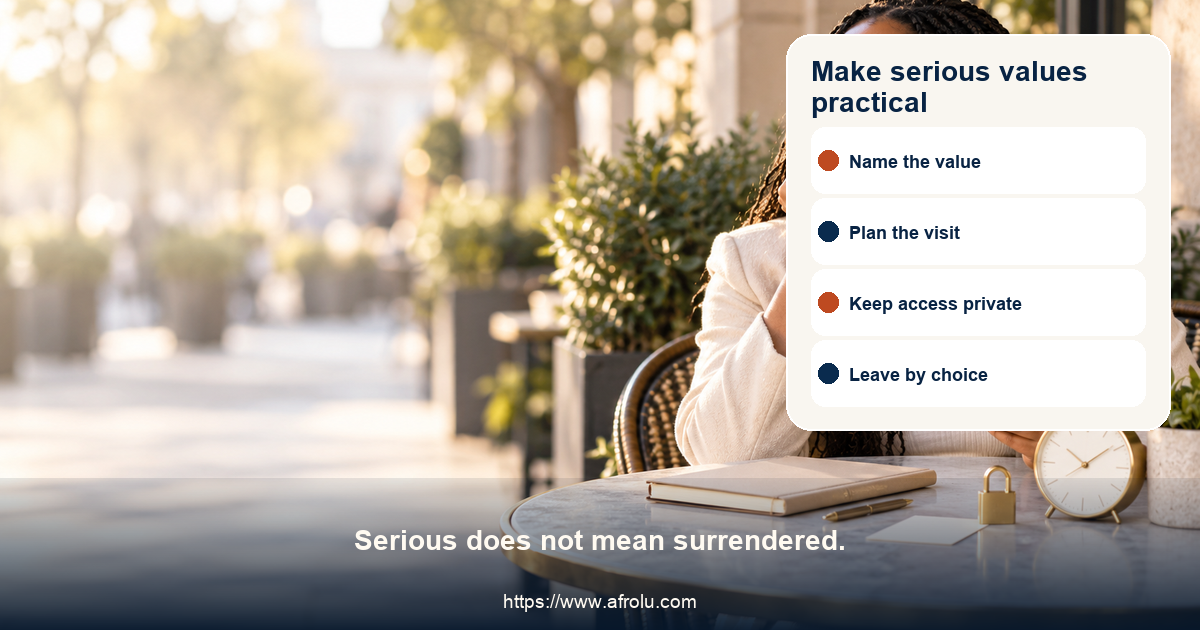
Let values make choice larger.
Written and edited by Amina Wanjiru · Senior Dating Apps Editor
A serious value should make honesty and choice larger, not make a boundary smaller. Confirm a call or visit or release the expectation, use no more than one useful check-in, and keep travel, money, documents, accounts, privacy, and current consent under your control. A future promise, a ticket, a shared value, or a return after silence does not require a trip, intimacy, a transfer, or extra disclosure. If contact becomes repeated, coercive, financially urgent, threatening, monitoring, image-based, or frightening, reduce access and seek appropriate support.
Dating behaviour · Faith-Led Daters
Is this a missed call, a clear pause, a serious-distance mismatch, a practical repair, a return after silence, or conduct that uses values language, travel, money, documents, private access, repeated contact, coercion, monitoring, threats, blackmail, or fear to reduce your choice?
Faith-led long-distance ghosting is a reduced or ended serious dating conversation that leaves contact, calls, or a future visit unclear. It is not a judgement about anyone’s beliefs, practice, or worth. The useful distinction is between a missed call, a clear pause, a practical repair, a mismatch in pace, pressure around travel, money, private data, or intimacy, repeated unwanted contact, coercion, threats, monitoring, blackmail, or fear.
Noor has been discussing serious hopes with a long-distance match who values a deliberate relationship. When a scheduled call is missed, Noor sends one practical note and continues with the week. The match returns with a promise to visit immediately but asks for travel money and a private place to stay. Noor separates affection from logistics, keeps a public independent plan as the only possible restart, and sees that serious intent is shown through respectful choices, not urgency.
faith-led daters · serious distance and choice
Noor keeps serious long-distance hope tied to practical plans, current consent, and a free exit
This guide separates ordinary long-distance uncertainty from patterns that make a faith-led dater’s values, travel, money, privacy, body, community, or ending less freely chosen.
Use values to name a practical standard, make distance plans optional, communicate without surveillance, keep travel and money separate, keep consent current, end without intermediaries, and choose the next move that restores freedom.
Make hope practical
Shared values should support honesty, dignity, and a no that remains fully available.
Plan visits reversibly
Public, independent, and financially manageable plans keep distance from becoming pressure.
Keep logistics separate
Tickets, documents, money, and lodging are not proof of serious intention.
Keep every yes current
No promise, prayer, date, or trip settles the next intimate request.
values can guide a serious connection without becoming a test
faith-led dating deserves language for honesty, care, autonomy, and a clear no—not pressure to tolerate uncertainty
Faith-led daters may enter a serious conversation with meaningful hopes about commitment, family, intimacy, time, generosity, and a future. Those hopes can make ghosting feel especially disorienting. A person may have spoken warmly about values, prayed or reflected with you, introduced a serious tone, or described a future visit, then gone quiet. Your disappointment is valid. It is still safer and fairer to look at the present behaviour than to let spiritual language explain, excuse, or intensify every gap in contact.
A value is most useful when it guides your own choices. You may value honesty, patience, hospitality, responsibility, service, privacy, sexual boundaries, or a deliberate pace. You can express those preferences without asking another adult to prove their character on demand. For example, you might say that you prefer a confirmed call over an open-ended promise, that you do not travel alone to meet someone new, or that you do not send money in a dating relationship. Clear boundaries can be an expression of care for both people.
Avoid treating faith as a risk score or a guarantee. A person can use familiar language sincerely, clumsily, or strategically; you cannot know which from a profile or a single conversation. Watch what they do when you set a limit. Can they accept a public meeting, a delayed visit, a no to intimacy, a refusal to send money, or a decision to end contact? Can they acknowledge a missed call without saying that your boundary shows a lack of trust or grace? Respect for choice is more informative than a performance of compatibility.
Long distance adds room for imagination. A message can seem more intimate because it crosses time zones or a difficult schedule, while practical decisions about travel, money, documents, location, and privacy remain unresolved. A serious connection should make those decisions clearer, not rush them. Let your values help you choose a smaller next action: a scheduled call, a public meeting plan, a pause, a clear no, or a support conversation if the contact has become pressuring or frightening.
make distance plans concrete enough to be optional
a future visit, call, or trip should give both adults room to accept, decline, change, or leave
Long-distance dating often begins with words: a late call, a video conversation, a shared interest, a future idea. Words can be meaningful, but they should not replace a plan that both people can genuinely choose. If you discuss meeting, name a broad date, a public setting, independent arrival and departure, lodging that does not depend on the other person, and a point when the plan is confirmed. A plan that leaves you able to change your mind is not less serious; it is more respectful.
A missed call or quiet period may be ordinary life, a time-zone mix-up, changed interest, illness, work pressure, or avoidance. You may not get a satisfying explanation. One practical message—“Are we still planning to talk Sunday, or should we choose another time?”—can be enough. After that, stop trying to turn silence into certainty through repeated calls, tracking activity, contacting relatives, or searching for details. The distance does not give either person a right to investigate the other’s private life.
If a person asks you to make a trip quickly, book travel before you are comfortable, stay at their home, send a copy of a document, meet in a remote place, or rearrange work and family commitments without a clear plan, slow down. You can say that you only travel when the plan is public, independently booked, financially manageable, and fully voluntary. A response of guilt, spiritual pressure, insults, or urgency is useful information. You do not have to prove seriousness by giving up the conditions that make a visit safer.
Keep a visit smaller than the fantasy. Choose your own transportation and accommodation when possible, retain the funds and documents you need, tell a trusted person a broad plan if useful, and do not make intimacy a condition of travel. A ticket, gift, long call, religious conversation, or future promise does not buy access to your body, devices, accounts, private location, or time. Current consent and a route out matter wherever two adults first meet.
use communication standards that do not become surveillance
a serious connection needs reliability, but reliability is not built by monitoring, testing, or demanding constant proof
Decide what level of contact actually supports the kind of serious relationship you want. You might prefer a weekly video call, a message after a planned work trip, a confirmation before a visit, or an honest note when someone needs space. Those preferences are not a demand for constant access. They give you something to compare with the actual pattern so that you do not have to rely on hope, read receipts, online status, or silence as the only evidence of care.
State a preference once in ordinary language. “I am comfortable with distance when calls are confirmed and changes are named” is clearer than testing whether someone remembers your schedule. If the person cannot or does not want to meet that standard, you can decide the connection is not a fit. Repeated reminders, surprise calls, shared passwords, location tracking, interrogating friends, or demanding screenshots will not transform an unreliable pattern into trust. They can also make both adults less free.
A repair after ghosting should create a different next step. Someone might acknowledge a missed call, explain briefly, propose a realistic time, and accept that you may not want to restart. That is different from returning with intense future talk, promises to visit tomorrow, pressure to stay on a long private call, or a demand that you demonstrate faith, loyalty, or seriousness by being immediately available. Listen to the action being offered, not only the emotional urgency around it.
When a return involves repeated unwanted messages, new accounts, pressure for visual intimacy, tracking, threats, or fear, stop treating it as a communication-style difference. Narrow access, use platform tools, tell people you trust, and seek relevant support. A serious dating value does not require you to remain in a conversation that makes you feel watched, indebted, or unsafe. You are allowed to end contact without a debate about your moral character.

Read conduct, not promises.
keep travel, documents, and money outside the proof of seriousness
distance can create real costs, but a developing relationship should not make you financially or digitally exposed
A long-distance match may say a trip cannot happen without help with a ticket, a visa fee, a passport issue, a booking, an emergency, a delayed salary, an investment, or a transfer. Some stories may be genuine, and you can still keep your boundary. Do not send, receive, lend, invest, hold, or route money for someone you are dating. You do not need to become an investigator before saying no. Direct the person to their own bank, carrier, employer, family, official service, or local support instead.
Keep documents and account access private. A passport photo, visa record, booking confirmation, boarding pass, recovery code, banking screenshot, live location, travel calendar, or device can reveal enough detail to create a longer route to you. A person who wants to build a relationship can make a call, respect a public plan, and wait for information you freely choose to share. You do not need to exchange sensitive data to prove that you are genuine or committed.
Do not let a trip become a consent contract. If you choose to travel, you can change the itinerary, leave a venue, decline a room, refuse intimacy, book another place, or return home. If someone says that the cost or effort of travelling means you owe them access, that is pressure, not romance. A compatible partner may be disappointed, but they can accept your current no and your independent decisions without making you responsible for their expense or mood.
Where money requests combine with guilt, religious language, a promised future, a crisis, threats, sexual pressure, or a demand for secrecy, treat the pattern as more serious than an awkward long-distance conversation. Reduce access and seek independent support if you are worried about fraud, coercion, blackmail, or safety. Generosity is not measured by how much risk you accept from someone you are still getting to know.

A clear boundary can honour care.
keep values and consent in the present tense
a shared wish for seriousness does not settle the pace of sex, images, calls, visits, disclosure, or emotional access
Faith-led adults may have personal boundaries around sex, images, alcohol, cohabitation, disclosure, or the timing of physical intimacy. You do not need to defend those boundaries with a detailed explanation or turn them into a test for another person. A simple statement—“I am not comfortable with that” or “I am not sharing images”—is enough. A respectful match can accept the boundary without saying that you are withholding trust, failing to be open, or ruining a future they have imagined.
Long-distance conversations can become intense quickly because privacy and screen time make it easy to talk late, disclose deeply, or feel pressure to compensate for physical distance. Keep your own stopping point. You can end a call, decline a video request, turn off a camera, avoid sending images, or say that you need time before discussing a visit. Intimacy that is worth building does not depend on exhaustion, secrecy, guilt, a religious argument, or fear that the person will disappear if you slow down.
If a person returns after ghosting and asks for sexual images, a private video call, a hotel visit, or an immediate trip as proof that you are serious, take the request at face value. You can decline. A romantic apology cannot make a new request safe, consensual, or welcome. Do not send an image or make a private plan in hopes that it will secure a more dependable relationship. It may only increase the access a person has to pressure you.
Where someone threatens to expose messages or images, uses shame, invokes shared values to make you comply, or refuses to stop after you say no, reduce access and seek support. You do not have to solve the theological or emotional argument before protecting yourself. Values are meant to support dignity and agency, not to make a person’s boundaries negotiable.
end a serious-distance mismatch without making yourself answerable forever
a concise boundary can honour your values more than a prolonged attempt to make someone understand them
For an ordinary quiet connection, you may choose to stop initiating. If you want words, keep them clear: “I am looking for a more reliable and respectful way of building a connection, so I am moving on.” That sentence states your decision without diagnosing the other person’s faith, motives, mental health, or character. You do not need to list every missed call or persuade them that your needs are reasonable before you can leave.
If the person returns with a heartfelt explanation, decide whether you want to hear it before you respond. You can say that you are not reopening contact, ask for one brief written explanation, or choose a small public conversation only if you genuinely want one. Avoid a rushed trip, a private meeting, a long late call, or a conversation that makes you disclose more just to demonstrate compassion. You can be kind without handing over more time or access.
Keep mutual religious, family, work, and friendship spaces out of private dating pressure. Do not ask people to persuade, investigate, shame, or deliver messages for either side. If you share a community, you can be courteous while limiting personal contact. Ask trusted people for support, not intervention. A public reputation does not require private availability, and a shared value system does not erase your right to an ending that feels safe.
If the contact includes repeat messages, new accounts, monitoring, financial manipulation, threats, blackmail, unwanted sexual material, coercion, or fear, use a safety-led exit. Preserve evidence only if safe, use reporting tools, tell people you trust, and seek appropriate local or urgent support. You do not need to meet, travel, forgive, or continue a call in order to prove that you are compassionate or faithful.

Values work best when choices stay visible.
let values help you choose a serious connection that is still free
the goal is not a perfect explanation for silence; it is a relationship path where honesty, faith, care, and autonomy can coexist
Look at the actual pattern over time. Can a person confirm or release a call? Can they discuss a visit without making travel, hospitality, or money a test of love? Can they accept a boundary around images, sex, accommodation, time, or disclosure? Can they acknowledge a missed plan and offer a realistic repair? Do they let your values guide your choices, or do they use values to make you feel guilty for having limits? These questions keep seriousness tied to conduct rather than rhetoric.
Notice what you are giving up to preserve the connection. Are you losing sleep to late calls, postponing your own plans, sharing documents, spending beyond your means, hiding contact from support people, agreeing to privacy levels you do not want, or feeling that a no will be treated as a moral failure? Those experiences do not mean you have failed at faith or at dating. They may mean the connection needs a slower pace, a clearer limit, a break, or an ending.
Choose one value-shaped action for the next week. You might set a call confirmation rule, plan a public and independently booked visit, remove a location share, decline money or a document request, keep a conversation on the app, say no to images, ask for a concrete repair, speak with a trusted person, or archive a quiet thread. Small actions can be deeply aligned with care because they protect the conditions under which your yes can be real.
Faith-led dating does not require you to trade autonomy for hope. A connection worthy of serious attention will respect your ability to think, ask questions, slow down, make practical plans, seek support, and leave. Let your values make you more honest with yourself and more protective of your freedom—not more vulnerable to silence, pressure, or a promise that has not become action.
Eight faith-led long-distance moments after quiet contact

A regular long-distance conversation goes quiet
Two faith-led adults have planned a weekly video call, but one does not show and sends no message until days later.
Use one practical check-in or let the missed call be information; do not begin monitoring or contacting relatives.A promising trip remains undefined
A match talks warmly about visiting but does not settle dates, public plans, accommodation, or confirmation, then becomes quiet.
Treat the visit as an idea until it is concrete and independently workable.A person names limited capacity
A dater says they need space because work and family are demanding, offers a realistic future time to talk, and accepts that you may not wait.
Consider whether the pace works for you without turning the pause into a moral test.A return after silence includes money pressure
Someone says a ticket or document fee is all that prevents them from visiting and asks for a transfer before a rapidly approaching deadline.
Do not send money or documents; keep logistics and financial risk separate from affection.Travel is used to pressure intimacy
A match says the effort of travelling means they should stay at your home or that you owe them a private night together.
Keep accommodation and intimacy separate from a visit, or decline the plan.A boundary is called a lack of faith or trust
After you decline images or a late private call, a person says a serious, values-led connection should not need those limits.
Restate the boundary once and notice whether your choice is respected.Shared contacts are asked to reopen the connection
After an ending, a person asks a mutual faith leader, friend, or family contact to tell you they deserve a final conversation.
Ask others not to mediate private dating contact and keep support separate from pressure.Distance becomes a route for monitoring and threats
A person uses new accounts, mentions private routines, threatens exposure, and says they will contact people close to you if you do not respond.
Reduce access, preserve what is safe, use reports and support, and seek urgent help if you feel at risk.Signals about values, calls, travel, money, privacy, consent, community, and safety
They can discuss serious hopes without treating them as proof that you owe time, travel, intimacy, money, or a future.
They respect a defined call, a change of plan, and a no to constant contact without demanding surveillance or proof.
They accept that a future visit needs a public, independent, financially manageable, and freely chosen plan.
They do not use shared values, faith language, guilt, or a promised future to pressure images, sex, private calls, or travel.
They keep documents, codes, location, booking records, devices, accounts, and money outside early long-distance trust-building.
They can acknowledge a missed call or quiet period and offer a practical repair without asking you to rescue their feelings.
They do not treat hospitality, a ticket, a gift, a long call, or a trip as a contract for access or intimacy.
They accept a boundary around alcohol, images, sex, accommodation, family contact, or disclosure without debate or shame.
They do not ask mutual faith, family, work, or friendship contacts to persuade or investigate you.
They do not turn a refusal to lend money or provide travel help into a test of generosity or compassion.
They leave you free to speak to trusted support people and make practical plans without secrecy.
They do not use new accounts, repeated calls, location information, or public channels to bypass an ending.
They respond to a no without spiritual accusation, manipulation, threats, blackmail, or emotional punishment.
They leave you with your own money, private context, travel choices, consent, and ability to leave intact.
Choose a proportionate next move
| Situation | What it may mean | What to do next |
|---|---|---|
| A planned call is missed | A delay, changed interest, or practical disruption may have occurred. | Send one practical check-in or let the silence inform your next choice. |
| A future visit stays vague | Warm future talk has not yet become a plan that either person can freely accept. | Do not book, pay, travel, or reorganise life until details are concrete. |
| They name a respectful pause | Capacity may be limited, and they are giving you information rather than asking you to wait indefinitely. | Decide whether the stated pace fits your serious-dating needs. |
| They return with intense future talk | Emotional urgency may be replacing a practical repair or present reliability. | Ask for a small, answerable next step or decline the reopening. |
| They ask for travel money or documents | Affection and urgency are becoming a route to financial or identity exposure. | Do not transact or share sensitive records; use independent official help if worried. |
| They insist on private accommodation | Travel effort is being used to reduce your choice around lodging or intimacy. | Keep accommodation independent, meet publicly, or decline the trip. |
| They invoke values to challenge a no | A shared language is being used to make your boundary feel morally deficient. | Restate the limit once and reduce access if pressure continues. |
| They ask mutuals to mediate | Community or family access is being used to reopen a private dating boundary. | Keep support separate from intervention and ask others not to relay messages. |
| They use new accounts or threats | Repeated contact or monitoring can be more than a communication mismatch. | Reduce access, report relevant channels, and seek trusted support. |
| You feel afraid | Threats, coercion, blackmail, monitoring, or fear shift the priority to safety. | Use a protected exit and urgent local assistance if immediate danger is possible. |
Twelve lines for calls, travel, money, privacy, consent, returns, and endings
“Are we still planning to talk Sunday, or should we choose another time?”
“I am open to distance when calls and changes are handled clearly.”
“I only make travel plans that are public, independently booked, and fully workable for me.”
“I do not share travel documents, codes, account access, or live location with someone I am dating.”
“I do not send, receive, lend, or move money in a dating connection.”
“If I travel, I arrange my own place to stay.”
“I am not comfortable with that call, image, visit, or plan.”
“If we restart, I need a realistic plan and a steadier way to handle changes.”
“I am not reopening this connection. I wish you well.”
“Please do not ask friends, family, or community contacts to speak to me about this.”
“Do not use new accounts or other people to contact me.”
“I am not discussing this further. I am taking steps to protect my privacy.”
Know the difference
Values, a missed call, a serious mismatch, a repair, pressure, and fear need different long-distance dating responses
A person can discuss values, confirm or release calls, plan a public independent visit, keep money and data separate, accept current consent, and respect a no.
Values pressure, travel urgency, money stories, document requests, private-access demands, community shortcuts, repeated contact, monitoring, coercion, threats, blackmail, and fear make the connection less freely chosen.
Seriousness is not proved by urgency. It is shown by practical care for each adult’s autonomy.

Compare the plan before the promise.
Separate values, a missed call, repair, pressure, and fear
| Type or dimension | What it describes | Best next question |
|---|---|---|
| A values conversation | Two adults discuss hopes and boundaries while leaving each person free to choose. | Keep values tied to present conduct and practical plans. |
| A missed call | A planned contact did not happen, but the reason may remain unknown. | Use one optional check-in or release the expectation. |
| A clear pause | A person names limited capacity and does not ask you to remain indefinitely available. | Decide whether their pace works for you. |
| A practical repair | A missed plan is acknowledged and replaced with a realistic, pressure-free next step. | Observe the new pattern before investing more trust. |
| A vague return | Future promises return without a concrete plan, reliability, or respect for your present capacity. | Ask once for specifics, slow down, or decline. |
| A travel or money request | Affection becomes linked to tickets, documents, lodging, loans, codes, or urgent payments. | Keep logistics and finance separate. |
| A values-based pressure | Faith language is used to challenge a boundary around sex, images, privacy, money, or a visit. | Restate your choice and reduce access if pressure continues. |
| Community pressure | Mutual contacts are asked to persuade, shame, investigate, or reopen a private ending. | Keep the network out of dating pursuit. |
| A safety concern | Repeated contact, monitoring, threats, blackmail, coercion, or fear appear. | Use a safety-led response and relevant support. |
Handle long-distance ghosting without trading serious hopes for access or pressure
Let values enlarge choice
A serious value should make honesty, autonomy, consent, and a clear no more available, not less.
Make distance answerable
A call or visit needs enough practical detail that each adult can accept, decline, or change it.
Avoid surveillance as reassurance
Passwords, screenshots, tracking, mutuals, and repeated calls do not create the trust a reliable pattern lacks.
Keep travel independent
Public plans, separate transport, accommodation, funds, documents, and an exit protect a first visit.
Keep money outside romance
Tickets, transfers, loans, investments, codes, and account access do not prove seriousness.
Escalate for conduct
Pressure, shame, threats, monitoring, blackmail, repeated contact, or fear need more protection than a values discussion.
Questions organised by purpose and depth
Choose a few prompts that fit the moment. This is a reference library, not a list to complete.
Name the value
Choose the value that should guide your next practical action.
- What value do I want to protect?
- Does this plan make consent and choice larger?
- What would an honest, small next step be?
Map the distance plan
Separate future talk from an actual optional plan.
- What date, place, route, and confirmation are known?
- Can either adult change or leave it?
- What costs or documents remain private?
Check pressure
Notice whether a value or future promise is being used to shrink a boundary.
- Can I say no without guilt?
- Is travel, intimacy, or money being made urgent?
- What access do I want to keep?
Check escalation
Separate a communication mismatch from conduct that needs protection.
- Has someone used new accounts, mutuals, money, threats, or monitoring?
- Do I feel watched or afraid?
- Who can support my next safe step?
Look more closely at values, calls, visits, money, consent, and escalation
How to use values without pressure
State your own standards for honesty, privacy, intimacy, money, and travel while leaving another adult free to decide whether they fit.
Evidence limit: Values are not a tool for judging or controlling someone.
How to handle a missed long-distance call
Use one practical check-in or release the plan; do not add surveillance, repeated calling, or mutual contact to obtain certainty.
Evidence limit: A missed call alone cannot explain a person’s private life.
How to plan a first long-distance meeting
Keep the meeting public, transport and lodging independent, costs manageable, documents private, and every part optional.
Evidence limit: A public plan cannot guarantee safety; leave if your choice becomes constrained.
How to answer a romantic urgent request
Keep tickets, transfers, loans, codes, documents, investments, and account access outside dating and use independent official support if worried.
Evidence limit: Do not send a payment to prove trust or recover an earlier payment.
How to keep seriousness in the present tense
Decline images, private calls, intimacy, travel, or disclosure whenever they do not feel freely chosen, even after earlier warmth or future talk.
Evidence limit: A no does not need a spiritual or emotional defence.
How to recognise when this is no longer ghosting
Repeated unwanted contact, monitoring, threats, blackmail, coercion, financial manipulation, or fear need reduced access and relevant support.
Evidence limit: Choose actions that are safe for your particular situation.
Shortcuts that let a quiet serious connection take more access than it has earned
Treating values as a guarantee
Shared language or serious intentions do not substitute for respect, reliability, and current consent.
Using faith as a risk score
A person’s beliefs, community, or practice cannot explain every quiet message or predict conduct.
Booking before a plan is real
A vague future visit should not require travel, cost, or private access before both adults choose it.
Letting travel buy access
A ticket, distance, accommodation, or effort does not create consent for intimacy or disclosure.
Sharing documents for reassurance
Identity records, codes, bookings, and account data can expose more than a new connection needs.
Staying to prove compassion
A clear boundary or safety-led exit can be deeply compassionate to yourself and still be final.
Use one focused resource for distance plans, serious intentions, or a present relationship conversation
Use a long-distance guide to make visits and communication more practical, a serious-dating guide to clarify hopes, or a relationship-definition guide when future talk needs a present conversation.
Explore the guide library
Show more related guides
Continue with Afrolu
Show more Afrolu guides
Sources used for this guide
Afrolu reviewed these health, research, safety, or public guidance resources while editing this page. They support the behaviour and safety guidance; they do not diagnose any individual described by a reader.
Questions about ghosting in faith-led long-distance dating
Does shared faith mean a long-distance match is serious?
It can be meaningful, but it does not substitute for reliable plans, respect for boundaries, current consent, and freedom to say no.
Should I send a message after a planned call is missed?
One practical check-in can be useful. Repeated calls, tracking, or contacting mutuals are unlikely to create the reliability you want.
How should we plan a first long-distance visit?
Keep it public, independently booked, financially manageable, and easy for either adult to change or leave.
Do I need to travel because someone has made an effort?
No. A ticket, distance, gift, or future promise does not make a visit, accommodation, intimacy, or private plan something you owe.
Can I refuse to share documents or a live location?
Yes. A developing connection does not need your documents, codes, account access, booking details, or precise location to make a respectful plan.
What if a match asks for travel money?
Do not send, receive, lend, invest, hold, or route funds. Use independent official help if you suspect fraud or a risky transaction.
What if they say my boundary shows a lack of faith or trust?
Your boundary is still valid. A respectful adult can disagree or feel disappointed without pressuring, shaming, or trying to make you prove yourself.
Do I owe a final long call for closure?
No. You can use a brief message, a written response, no response, or platform tools depending on what feels right and safe.
Can shared contacts mediate the ending?
It is usually better to ask trusted people for support rather than use them to persuade, investigate, or deliver messages.
When should I seek safety support?
When repeated unwanted contact, monitoring, threats, blackmail, coercion, financial pressure, image-based abuse, or fear appear, use a more protected exit and relevant support.
One thing to do now
Let values help you choose a serious connection that is still free
Choose the smallest next action that protects your values, communication standard, public and independent travel, money, privacy, current consent, support, and ability to end contact without negotiation.