Casual now, clear choices
A Clear Faith-Led Casual Long-Distance Agreement
Faith-aware casual dating guidance on structure, serious intent, consent, community, travel and money.

Name the connection, separate money, verify identity and plan visits safely.
Written and edited by Samira Benali · Faith and North Africa Editor
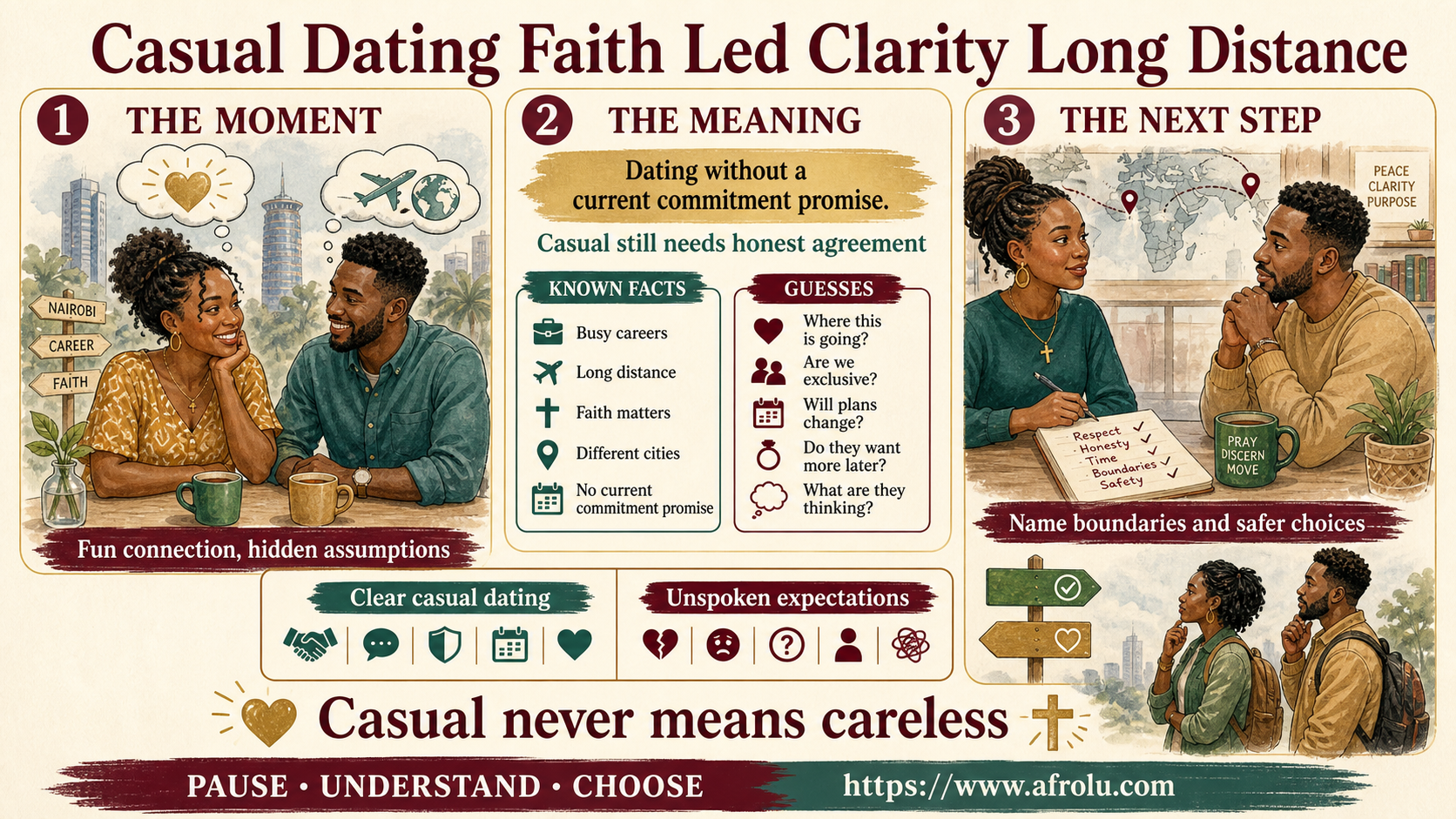
Shared faith can guide conduct in a long-distance casual connection, but it does not create exclusivity, marriage intent, community access, or permission to control another adult. Name the present relationship, decide how values shape boundaries, design visits with independent lodging and money, and keep religious leaders in a counsel role rather than using them to enforce a yes.
Dating styles · Faith-Led Daters
Are shared beliefs being mistaken for commitment or access?
Faith-led casual long-distance dating is a limited adult romantic agreement shaped by religious values while the adults live apart. Faith identity and relationship status are separate facts. The agreement needs direct answers about exclusivity, physical and digital boundaries, community disclosure, visits, lodging, money, and whether either adult is genuinely open to commitment.
Samira and Idris meet through a faith community and begin weekly video calls between Cape Town and Mombasa. Prayer and family stories create quick closeness. Idris starts referring to Samira as his future wife, although they have never agreed to exclusivity or met offline. Samira slows the language down. She says shared belief is important to her, but their current agreement is casual and their first visit will use public plans and separate lodging.
Belief and agreement
Honour faith by making consent more visible, not less necessary
Shared practice may reveal values and community ties. It does not reveal whether two adults want the same relationship now.
Separate belief, present status, conduct boundaries, community involvement, and future intention. Ask a direct question in each area instead of letting one answer stand for all five.
Shared faith is meaningful context
It can shape choices without proving compatibility or commitment.
A moral rule does not erase free choice
Each adult still decides contact, physical boundaries, images, travel, and relationship status.
Counsel is different from enforcement
A trusted adviser may help one person think, but should not be recruited to pressure the other.
Marriage language needs practical evidence
Values, location, family, money, law, and ordinary conduct all belong in the decision.
Direct agreement
Put ordinary relationship words beside spiritual language
Words such as prayer, blessing, purpose, or destiny may carry deep meaning but still leave status unclear.
Add direct questions about exclusivity, contact, physical boundaries, community disclosure, and future intention.
Clarity does not weaken faith. It prevents each adult from privately assigning a different promise to the same moment.

Name the connection, separate money, verify identity and plan visits safely.
Authority boundary
Keep guidance supportive and consent personal
A leader, elder, friend, or relative can help someone reflect on values and risk.
They should not announce a relationship, demand contact, or turn one adult's no into a spiritual failure.
When advice becomes pressure, restore privacy and make the decision directly between the people involved.

Name the connection, separate money, verify identity and plan visits safely.
Visit ethics
Plan a visit that honours belief and preserves freedom
Public plans, separate lodging, independent transport, and protected money support consent across distance.
Family hospitality can be appreciated without becoming the only available sleeping or meeting arrangement.
A respectful connection can tolerate a plan that protects both adults before offline trust is complete.

Name the connection, separate money, verify identity and plan visits safely.
Future path
Let commitment grow through practical compatibility
Marriage-focused dating needs more than shared identity. Compare daily practice, family expectations, location, finances, conflict, law, and the pace each adult can freely sustain.
Do not share identity or financial documents through informal romantic pressure.
If the future requires one adult to abandon every boundary, it is not yet a mutual plan.

Name the connection, separate money, verify identity and plan visits safely.
Three ways this can show up
Prayer calls become a label
Regular spiritual conversations feel intimate, and one adult begins announcing a committed future. The other asks to return to the casual agreement they actually made.
Name present status before allowing community language to enlarge it.A leader is asked to convince
One adult shares a private disagreement with a leader who then contacts the other person. The recipient says counsel is welcome only when invited and ends third-party pressure.
Keep direct relationship choices between the adults; seek separate support without outsourcing consent.Hospitality is treated as duty
A visitor is told separate lodging would insult the host family. They keep the hotel and choose public daytime meetings instead.
Respect culture and faith without surrendering privacy, rest, or exit options.Fare becomes a faith test
A ticket request is framed as evidence of trust in the relationship. The other adult declines and waits for a plan each can fund independently.
Do not let religious language bypass affordability and verification.What to notice before you react
Both adults can state the present relationship without hiding behind spiritual language.
Values and physical boundaries are discussed without shame, threats, or assumed permission.
Community or family disclosure happens by mutual choice rather than surprise announcement.
A faith leader offers counsel without contacting or pressuring the other adult.
Visits use public plans, independent lodging, transport, money, and return travel.
Marriage language appears only when both adults are ready to discuss a real commitment path.
Read the moment without overbuilding the story
| Situation | What it may mean | What to do next |
|---|---|---|
| Shared worship is described as commitment | Spiritual closeness is carrying a relationship decision that has not been made. | Ask what status, exclusivity, and future intention each adult chooses now. |
| A leader or relative is recruited to persuade | Community authority is being used to reduce free choice. | Decline third-party enforcement and return to direct consent or step away. |
| A visit requires private lodging or financial dependence | Hospitality expectations may reduce practical freedom. | Use separate lodging, independent funds, public plans, and a private return route. |
| Both adults want marriage-focused dating | The casual agreement may be ready to end and a serious one may begin. | Discuss exclusivity, location, family, law, finances, and pace before changing the label. |
Three calm ways to start the conversation
“Our shared faith matters to me, and I still want us to name the relationship directly. What are we agreeing to now?”
“You may seek advice from someone you trust, but I do not agree to anyone contacting me to change my answer.”
“I will keep separate lodging and transport. We can honour our values through public plans that leave both of us free.”
“If we want marriage-focused dating, let us make a new agreement about exclusivity, location, family, and pace.”
Know the difference
Shared faith vs shared relationship agreement
The adults identify with related beliefs or practices.
The adults directly choose the same present status, boundaries, and direction.
Belief can inform the agreement, but it cannot stand in for the agreement.

Name the connection, separate money, verify identity and plan visits safely.
Compare the closest dating types before choosing a label
| Type or dimension | What it describes | Best next question |
|---|---|---|
| Faith connection | Shared belief or community creates interest and context. | What do we know about conduct and compatibility beyond identity? |
| Casual faith-led dating | Values guide a limited present romantic agreement. | What are our status, conduct, disclosure, and community boundaries? |
| Exclusive faith-led dating | Both adults stop dating others under a direct agreement. | What does exclusivity change, and what remains undecided? |
| Marriage-focused dating | Both adults assess a committed marital path. | How do faith, family, location, law, money, and daily life fit together? |
A simple plan you can use today
Name the present status
Use direct words for casual, exclusive, serious, or undecided rather than relying on spiritual closeness.
Compare conduct boundaries
Discuss contact, physical intimacy, images, disclosure, and how each adult handles a no.
Choose the community boundary
Agree who may know and ensure advisers do not become enforcers.
Design an independent visit
Keep lodging, transport, money, documents, and return travel under personal control.
Test the serious path
Compare location, family, practice, law, finances, and pace before changing the agreement.
Four mistakes that make this harder
Calling closeness a commitment
Shared worship or personal disclosure may feel serious while status and exclusivity remain unspoken.
Recruiting authority
A leader or relative can turn a relationship question into pressure that weakens free consent.
Making hospitality compulsory
Private lodging can reduce safety and exit options even when offered through respected custom.
Using faith to verify money
Religious language does not make a fare, emergency, or document request safe.
Use a reviewed resource that matches the decision
This guide focuses on the relationship decision, so it does not rank dating apps. Check current prices, safety tools, and local availability before choosing a service.
Explore the guide library
Show more related guides
Continue with Afrolu
Show more Afrolu guides
Sources used for this guide
Afrolu reviewed these health, research, safety, or public guidance resources while editing this page. They support the behaviour and safety guidance; they do not diagnose any individual described by a reader.
A Clear Faith-Led Casual Long-Distance Agreement Questions
Does shared faith mean we are serious?
No. Shared faith may support compatibility, but relationship status and serious intent require a direct mutual agreement.
Can faith-led dating be casual?
Adults may choose a limited relationship while following their values. They should name the structure honestly and discuss conduct, consent, and community expectations.
Should a faith leader approve the relationship?
That depends on personal tradition, but no leader can replace either adult's consent. Guidance should not become surprise contact or pressure.
Is separate lodging disrespectful?
No. It can preserve privacy, rest, and free choice. Explain the boundary early and choose respectful public plans.
Can my date ask me to pay travel as a faith test?
They can ask, but you should not treat payment as proof of belief or love. Keep finances independent and verify any claim.
How do we discuss physical boundaries?
Use direct, non-shaming language about what each adult freely chooses now. Consent remains specific and reversible regardless of shared values.
When should family know?
Agree together after identity, status, and purpose are clear. Avoid announcements that create public pressure before both adults choose them.
How can we move toward marriage-focused dating?
Make a new agreement about exclusivity, location, family roles, practice, finances, law, conflict, and pace. Use qualified guidance where needed.
One thing to do now
Turn the lesson into a better match pool
Ask whether faith is helping both adults act with honesty and free consent. If belief language is used to rush status, money, travel, secrecy, or obedience, stop and restore the choice. Advice from a trusted leader can support reflection; it cannot replace either adult's direct agreement.