New journey · long distance · steady pace
Keep Long-Distance Dating Light and Sustainable
A low-pressure long-distance guide: choose a contact rhythm, keep independent routines and plan visits without rushing commitment or travel decisions.
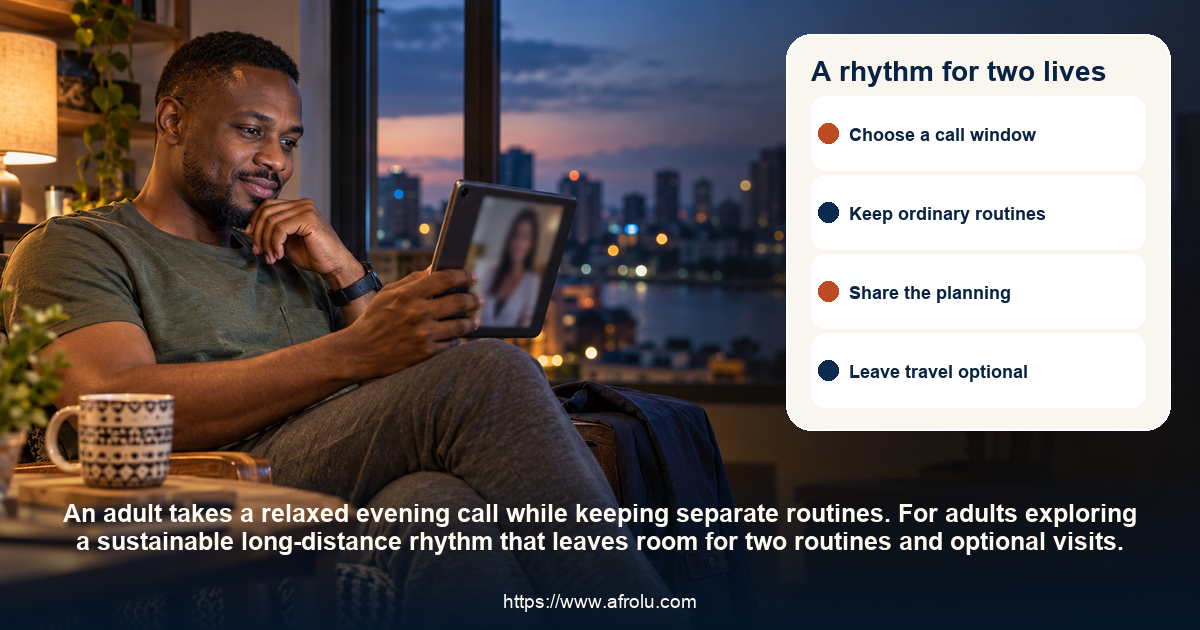
An adult takes a relaxed evening call while keeping separate routines. For adults exploring a sustainable long-distance rhythm that leaves room for two routines and optional visits. Afrolu:
Written and edited by Adwoa Boateng · Dating Safety Editor
Choose one communication routine that fits an ordinary week, make missed-call expectations explicit and protect time for separate lives. Share the planning rather than asking one person to carry every call or trip. A visit can remain tentative until dates, costs and accommodation are clear, and it does not settle commitment or exclusivity.
Attachment styles · New Relationship Starters
How can two adults build a long-distance dating rhythm that feels warm and dependable while leaving room for work, privacy and independent lives?
Low-pressure long-distance dating is a way of getting to know someone across geography without requiring constant availability. It combines planned contact, ordinary independent routines and practical decisions about travel that remain voluntary for each adult.
When Kofi begins dating someone who has moved to Mombasa, he enjoys their voice notes but starts to feel he must reply before the next message arrives. He wants to stay connected without watching his phone during work. He suggests a longer call each Sunday and lighter messages when either person has something to share. They agree that a missed call gets one update, not repeated apologies. After several weeks, they decide whether a visit is worth planning. Kofi keeps his other commitments and does not treat the routine as a promise about their future.
Begin lightly
Choose one routine instead of constant access
A new long-distance connection may invite a burst of attention: long calls, messages during every break and plans for an immediate trip. That pace can feel exciting and become difficult to sustain. Pick one dependable point of contact first. A weekly call or a shared time to exchange longer updates may be enough to learn whether conversation feels mutual.
Explain what the routine means in practice. Perhaps you can talk on Sunday afternoon but rarely answer while working. Ask the other person what their ordinary week allows. A plan made together can include flexibility for travel, caregiving or poor connectivity. It should not imply that a quiet day signals disinterest or that every gap needs to be repaired.
A low-pressure start does not mean avoiding meaningful questions. It means raising them in a way that respects time and attention. Choose one topic for a call, such as what each adult hopes to find this year. Leave unrelated questions for another conversation. You can be curious without demanding a complete relationship forecast from someone you have just met.
Try the proposed rhythm for a few weeks and notice its effect. Do you look forward to the call, or do you feel watched by a calendar reminder? Are both adults contributing to topics and timing? Adjust the schedule before resentment builds. If no rhythm feels comfortable, that is useful information about the fit rather than proof that either person has failed.
Keep messages useful
Do not turn a phone into a daily report card
Texting works well for small moments, short updates and questions that do not need an immediate answer. It can feel less helpful when one adult expects a conversation to continue all day. Set expectations about when you usually check messages and whether a time-sensitive call needs a separate signal. A message routine should fit the phone habits you actually have.
One online survey of emerging adults found an association between texting and relationship satisfaction among long-distance couples. The result does not establish that extra messages cause satisfaction, and it should not be treated as a contact prescription for older adults or early dating. Use the research as a reason to talk about communication, not as a benchmark to score a match.
If a message feels urgent because you are uncertain about the relationship, ask what information would resolve the uncertainty. A direct question about the next call may be clearer than sending several hints. If you want reassurance, name the need in plain terms and listen to the answer. The other adult can respond honestly without being required to stay continuously online.
Different preferences are easier to assess when they are stated kindly. You might say that you like a voice note after work but do not reply during meetings. Another person may prefer a short text at lunchtime. Try a pattern both people consent to, then reconsider if one side is doing all the adapting or feeling obliged to perform closeness.
Make calls comfortable
Use a conversation to learn, not to monitor
A video call can make distance feel more personal, especially when two people have not met in person. The screen also creates its own pressure: people may feel they have to be charming, disclose everything or stay online until they have solved every uncertainty. Decide how long the call will be and end when either person needs to return to their evening.
You might share a small story about your day, ask what a normal weekend looks like or talk about how each person likes to make plans. If a larger topic matters, ask whether it is a good time rather than bringing it up as a test. A considerate pace lets both adults think before answering and gives conversation room to develop.
Attachment language can sound convincing when someone appears quiet on camera or ends a call early. Those moments can have many explanations: work, fatigue, privacy or a wish not to continue. A screen cannot diagnose the person or reveal every motive. Ask whether they want to plan another conversation and use the response as one piece of information.
A call can support familiarity without verifying a person's full background. Avoid sending documents, passwords, verification codes or financial details as a way to make a distant match trust you. If a request feels unusual, take time to check independently. A respectful adult will not require private data as the price of keeping a conversation going.

A short map for setting a contact rhythm together. For adults exploring a sustainable long-distance rhythm that leaves room for two routines and optional visits. Afrolu:
Share the coordination
Let both adults carry part of the planning
Distance can make the person with more flexible work hours become the default organiser. Over time, one adult may choose every call time, pay for all visits and absorb every schedule change. Notice the pattern rather than assuming that the burden is fair because no one has complained. A direct invitation to plan the next call can show whether the other person is willing to participate.
Different resources can shape what feels equitable. One person may have more travel time, while the other can host a daytime call. Talk about the arrangements that matter instead of keeping a private tally. If costs are unequal, be clear about what you can afford. An invitation does not require you to spend beyond your budget or accept a debt.
Research on distance often examines couples who have already formed a relationship or university students living apart. Such samples cannot predict how an early match will coordinate, and they may not represent an adult with children, shift work or limited travel options. Your own arrangement is best assessed through the plans both people actually make.
A useful coordination question is whether the plan works when ordinary life intervenes. What happens if a shift changes, a train is delayed or a family commitment appears? Agree on how to update each other and when to reschedule. Flexibility is most useful when both adults can use it, not when one person repeatedly absorbs every inconvenience.

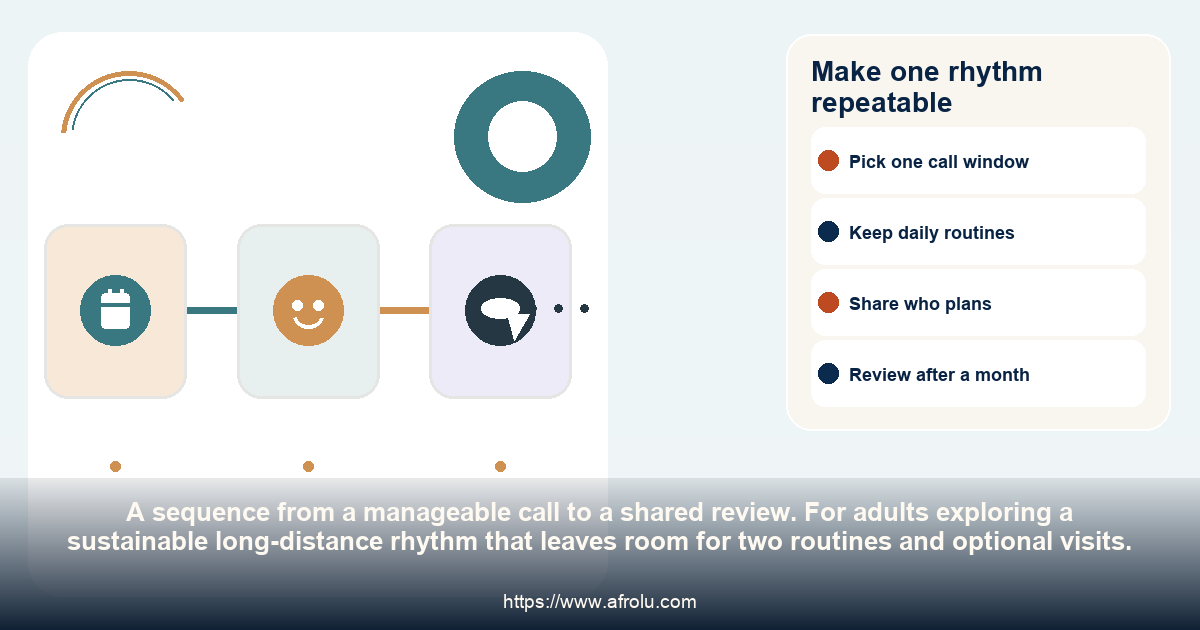
A pattern timeline for low-pressure long-distance coordination. For adults exploring a sustainable long-distance rhythm that leaves room for two routines and optional visits. Afrolu:
Keep visits optional
Plan travel only after the details are settled
A proposed trip can make online interest feel more serious than the two adults have agreed. Before spending money, confirm how long the visit would be, what each person expects and how either can change the plan. Discuss accommodation and local transport with enough detail that you remain comfortable even if the connection does not develop as hoped.
Choose an arrangement that respects your budget and privacy. You can book a room, meet in a public setting or postpone travel until you have talked more. Do not assume that accepting a visit means you have promised intimacy, exclusivity or a shared future. Consent remains specific to each activity, and either adult may change their mind.
An online romantic interest asking for urgent funds to reach you deserves a pause. Consumer protection guidance describes scams that use a distant admirer and a travel emergency to request money. Do not send cash or gift-card codes because a story feels persuasive. Verify claims independently and use the reporting route appropriate to your own country if you suspect fraud.
If one person wants to move faster than the other, name the decision that feels premature. Perhaps the issue is travel timing, who pays, where to stay or what the meeting will mean. You can suggest a smaller step, ask for time or decline. The other person may choose a different path, and neither choice creates an obligation to agree.
Let space stay ordinary
Respond to a quiet period without inventing a motive
When the messages slow, a person may reach for an explanation such as avoidant attachment. The label can briefly make uncertainty feel organised and still be inaccurate. Describe what you notice: the last call was missed, or the weekly exchange has not happened. Ask whether the person wants to continue the routine. A direct answer is more useful than a diagnosis.
You also get to choose how much uncertainty you are willing to carry. If one week without contact feels acceptable, you may wait. If a repeated gap disrupts your plans, ask for a clearer update or stop reserving time. There is no need to persuade yourself that a painful pattern is harmless, and no need to know the other person's exact motive before changing your own behaviour.
A repair can be short: the person acknowledges the missed plan, explains what they can share and suggests a new time. You can decide whether that response meets your needs. If neither adult can keep the schedule they selected, revise it together. If the other person refuses any conversation about expectations, that refusal is part of your current information.
People can need both closeness and time alone, and those preferences may change across work seasons. Notice whether both adults can talk about the change without blame. A low-pressure connection is not one where no one expresses needs; it is one where requests, boundaries and decisions can be heard without threats or repeated demands.
Review the rhythm
Keep the connection while it fits both lives
After a month, look at what the arrangement actually included. Did calls happen? Did both people suggest times? Were your other commitments protected? Did a trip stay an option rather than becoming a demand? These observations can guide a next step without proving that the relationship is destined to succeed or fail.
You may choose to keep the same routine, add one meeting, ask about exclusivity or pause while circumstances change. Separate each decision so that one yes does not get mistaken for every other yes. A call does not imply travel. A trip does not imply a move. A warm conversation does not establish the terms of dating.
If the current pace feels too light for one adult or too demanding for another, compare options rather than debating which person is right. A shorter call might work; a different day could help; a local connection may suit you better. If there is no comfortable overlap, an ending can be respectful and still acknowledge what you enjoyed.
Keep a practical next step that preserves choice: confirm a call, write down a travel budget, ask one question or tell the person you need a week. You do not need an attachment label to make that decision. Your time, money and attention are yours to allocate, and the other adult remains free to choose what works for them.

Four choices before turning online interest into a visit. For adults exploring a sustainable long-distance rhythm that leaves room for two routines and optional visits. Afrolu:
Eight decisions about a sustainable long-distance rhythm that leaves room for two routines and optional visits
A partner sends updates through every work break
Agree on a channel and time that fit both schedules. Consider how this applies to a sustainable long-distance rhythm that leaves room for two routines and optional visits.
Ask a practical question about a sustainable long-distance rhythm that leaves room for two routines and optional visits, then choose a response that protects your own time and agency.The only proposed call is very late for one person
Compare the next few weeks and rotate suitable windows. Consider how this applies to a sustainable long-distance rhythm that leaves room for two routines and optional visits.
Ask a practical question about a sustainable long-distance rhythm that leaves room for two routines and optional visits, then choose a response that protects your own time and agency.A person takes a day without checking in
Use the agreed plan rather than reading the gap as a verdict. Consider how this applies to a sustainable long-distance rhythm that leaves room for two routines and optional visits.
Ask a practical question about a sustainable long-distance rhythm that leaves room for two routines and optional visits, then choose a response that protects your own time and agency.One adult wants every conversation to be a video call
Offer another format if that would feel easier to sustain. Consider how this applies to a sustainable long-distance rhythm that leaves room for two routines and optional visits.
Ask a practical question about a sustainable long-distance rhythm that leaves room for two routines and optional visits, then choose a response that protects your own time and agency.A trip is mentioned as an immediate next step
Keep travel optional until both people confirm logistics. Consider how this applies to a sustainable long-distance rhythm that leaves room for two routines and optional visits.
Ask a practical question about a sustainable long-distance rhythm that leaves room for two routines and optional visits, then choose a response that protects your own time and agency.One person is expected to pay every fare
Discuss the budget and choose what each adult can afford. Consider how this applies to a sustainable long-distance rhythm that leaves room for two routines and optional visits.
Ask a practical question about a sustainable long-distance rhythm that leaves room for two routines and optional visits, then choose a response that protects your own time and agency.Calls start to crowd out separate plans
Protect independent time and change the rhythm together. Consider how this applies to a sustainable long-distance rhythm that leaves room for two routines and optional visits.
Ask a practical question about a sustainable long-distance rhythm that leaves room for two routines and optional visits, then choose a response that protects your own time and agency.A simple weekly routine stops working
Ask what changed before promising more contact. Consider how this applies to a sustainable long-distance rhythm that leaves room for two routines and optional visits.
Ask a practical question about a sustainable long-distance rhythm that leaves room for two routines and optional visits, then choose a response that protects your own time and agency.Look for patterns in communication and follow-through
Each adult can state what kind of dating they are open to now. Check how it appears during a sustainable long-distance rhythm that leaves room for two routines and optional visits.
Questions about personal history are answered without pressure. Check how it appears during a sustainable long-distance rhythm that leaves room for two routines and optional visits.
A public meeting plan includes a time and workable route. Check how it appears during a sustainable long-distance rhythm that leaves room for two routines and optional visits.
Both people contribute ideas instead of one person organising everything. Check how it appears during a sustainable long-distance rhythm that leaves room for two routines and optional visits.
A changed plan receives a practical update when possible. Check how it appears during a sustainable long-distance rhythm that leaves room for two routines and optional visits.
Work, rest, family and travel limits can be named plainly. Check how it appears during a sustainable long-distance rhythm that leaves room for two routines and optional visits.
A request for space or time is heard without punishment. Check how it appears during a sustainable long-distance rhythm that leaves room for two routines and optional visits.
Exclusivity is discussed rather than inferred from frequent contact. Check how it appears during a sustainable long-distance rhythm that leaves room for two routines and optional visits.
A visit is planned without treating the ticket as a promise. Check how it appears during a sustainable long-distance rhythm that leaves room for two routines and optional visits.
Personal information is shared at a pace each adult chooses. Check how it appears during a sustainable long-distance rhythm that leaves room for two routines and optional visits.
Consent is checked for each new activity. Check how it appears during a sustainable long-distance rhythm that leaves room for two routines and optional visits.
Both adults can revise an arrangement when life changes. Check how it appears during a sustainable long-distance rhythm that leaves room for two routines and optional visits.
A disagreement can be discussed without insults or threats. Check how it appears during a sustainable long-distance rhythm that leaves room for two routines and optional visits.
Either person can pause or end the connection without coercion. Check how it appears during a sustainable long-distance rhythm that leaves room for two routines and optional visits.
Move from an observable moment to your next choice
| Situation | What it may mean | What to do next |
|---|---|---|
| A match asks for a detailed dating history | Curiosity can be real while the information remains personal. The context is a sustainable long-distance rhythm that leaves room for two routines and optional visits. | Share only what helps the current decision, or set a limit. Decide from the answer and your own needs around a sustainable long-distance rhythm that leaves room for two routines and optional visits. |
| The word serious means different things | A broad label can hide separate expectations about time and exclusivity. The context is a sustainable long-distance rhythm that leaves room for two routines and optional visits. | Ask what the adult wants in the present. Decide from the answer and your own needs around a sustainable long-distance rhythm that leaves room for two routines and optional visits. |
| One person has less free time | Capacity can differ without proving a lack of interest. The context is a sustainable long-distance rhythm that leaves room for two routines and optional visits. | Compare actual availability and decide whether the overlap works. Decide from the answer and your own needs around a sustainable long-distance rhythm that leaves room for two routines and optional visits. |
| A public plan becomes private | The change may affect comfort, route and ability to leave. The context is a sustainable long-distance rhythm that leaves room for two routines and optional visits. | Keep the original arrangement or decline the revision. Decide from the answer and your own needs around a sustainable long-distance rhythm that leaves room for two routines and optional visits. |
| A call is missed | A single gap has more than one possible explanation. The context is a sustainable long-distance rhythm that leaves room for two routines and optional visits. | Ask whether the person wants to reschedule and notice the pattern. Decide from the answer and your own needs around a sustainable long-distance rhythm that leaves room for two routines and optional visits. |
| Travel is proposed before details are settled | An invitation can remain tentative while both adults plan. The context is a sustainable long-distance rhythm that leaves room for two routines and optional visits. | Confirm dates, cost, lodging and expectations first. Decide from the answer and your own needs around a sustainable long-distance rhythm that leaves room for two routines and optional visits. |
| A message delay triggers a label | Timing cannot establish attachment or intention by itself. The context is a sustainable long-distance rhythm that leaves room for two routines and optional visits. | Describe the event and ask for the information you need. Decide from the answer and your own needs around a sustainable long-distance rhythm that leaves room for two routines and optional visits. |
| One adult does all the planning | Different resources can still lead to an uneven burden. The context is a sustainable long-distance rhythm that leaves room for two routines and optional visits. | Name the pattern and invite one concrete shared step. Decide from the answer and your own needs around a sustainable long-distance rhythm that leaves room for two routines and optional visits. |
| A no leads to persuasion | Disappointment does not give another adult permission to keep asking. The context is a sustainable long-distance rhythm that leaves room for two routines and optional visits. | Restate the boundary, leave or seek support as appropriate. Decide from the answer and your own needs around a sustainable long-distance rhythm that leaves room for two routines and optional visits. |
| Interest changes after a date | A first meeting can clarify attraction without obliging a second one. The context is a sustainable long-distance rhythm that leaves room for two routines and optional visits. | Choose an honest follow-up or a brief ending. Decide from the answer and your own needs around a sustainable long-distance rhythm that leaves room for two routines and optional visits. |
Questions that make expectations easier to discuss
“I am open to a committed relationship, but I want to get to know someone at a steady pace. What are you looking for now?”
“I had other priorities for a while. I would rather talk about what I am looking for now; does that work for you?”
“When you say casual, do you mean a relaxed first date or a continuing arrangement?”
“I can meet one evening next week and I am not free on work nights after nine. What time suits you?”
“I do not check messages during work. I usually reply after dinner; what rhythm works for you?”
“Are we choosing to date only one another now, or have we not made that agreement?”
“I would like the first meeting to stay public and short. Would this daytime plan work?”
“I keep my exact address and workplace private early on. I can suggest a public meeting point instead.”
“I am interested in meeting, but I want to confirm dates, cost and lodging before booking anything.”
“I cannot make today after all. I can meet next Thursday if that still works for you.”
“I need a day to think about that question. Can I reply tomorrow evening?”
“I do not think our current expectations fit, so I am going to leave it here respectfully.”
Know the difference
Planned rhythm vs constant access
A call window that fits both lives.
An expectation neither person may be able to keep.
Build a connection that leaves room for independent routines.

A comparison between a quiet interval and an unsupported interpretation. For adults exploring a sustainable long-distance rhythm that leaves room for two routines and optional visits. Afrolu:
Separate current choices from assumptions
| Type or dimension | What it describes | Best next question |
|---|---|---|
| First meeting | The setting and duration of one date do not decide the future. This may matter in a sustainable long-distance rhythm that leaves room for two routines and optional visits. | Agree on a place, time and way to leave. Keep the discussion specific to the adults involved. |
| Relationship direction | A hope for commitment describes an aim rather than a completed agreement. This may matter in a sustainable long-distance rhythm that leaves room for two routines and optional visits. | Say what you are open to now. Keep the discussion specific to the adults involved. |
| Exclusivity | Dating only one another is a distinct present choice. This may matter in a sustainable long-distance rhythm that leaves room for two routines and optional visits. | Ask whether both adults have chosen it. Keep the discussion specific to the adults involved. |
| Personal history | A past chapter can matter without being public to every new match. This may matter in a sustainable long-distance rhythm that leaves room for two routines and optional visits. | Share the part that affects the decision in front of you. Keep the discussion specific to the adults involved. |
| Communication | Different message habits do not prove a motive or a level of care. This may matter in a sustainable long-distance rhythm that leaves room for two routines and optional visits. | Compare a realistic rhythm and review it later. Keep the discussion specific to the adults involved. |
| Travel | A proposed visit remains tentative until details and costs are clear. This may matter in a sustainable long-distance rhythm that leaves room for two routines and optional visits. | Confirm dates, lodging and transport before booking. Keep the discussion specific to the adults involved. |
| Consent | Agreement to one activity does not cover another. This may matter in a sustainable long-distance rhythm that leaves room for two routines and optional visits. | Ask and listen again when the activity changes. Keep the discussion specific to the adults involved. |
| Capacity | Work, care, health and rest all shape a normal week. This may matter in a sustainable long-distance rhythm that leaves room for two routines and optional visits. | Offer a pace that does not rely on heroic effort. Keep the discussion specific to the adults involved. |
| Future plans | Hopes about marriage, family or location can remain open. This may matter in a sustainable long-distance rhythm that leaves room for two routines and optional visits. | Discuss them when they affect a shared choice. Keep the discussion specific to the adults involved. |
A simple plan you can use today
A timeline is personal
Adults may return to dating after different life events and pauses. Apply this to a sustainable long-distance rhythm that leaves room for two routines and optional visits.
Labels need plain language
Translate serious or casual into the current terms that affect your choices. Apply this to a sustainable long-distance rhythm that leaves room for two routines and optional visits.
Capacity can be discussed
Work, travel, care and rest shape the time available each week. Apply this to a sustainable long-distance rhythm that leaves room for two routines and optional visits.
Privacy is selective
A match can learn about you without receiving every personal detail immediately. Apply this to a sustainable long-distance rhythm that leaves room for two routines and optional visits.
Consent stays specific
A yes to one meeting or activity never supplies another yes. Apply this to a sustainable long-distance rhythm that leaves room for two routines and optional visits.
One moment is incomplete
Repeated behaviour offers more information than an instant diagnosis. Apply this to a sustainable long-distance rhythm that leaves room for two routines and optional visits.
Questions organised by purpose and depth
Choose a few prompts that fit the moment. This is a reference library, not a list to complete.
What do I want today?
Separate a present preference from a prediction about your future. Consider a sustainable long-distance rhythm that leaves room for two routines and optional visits.
- What kind of first step sounds welcome?
- Which current agreement matters to me?
- What answer could change my choice?
What can remain private?
Share information because it helps, not because you feel required to prove trust. Consider a sustainable long-distance rhythm that leaves room for two routines and optional visits.
- Which detail is necessary now?
- What can wait?
- Who can support my plan?
What can I sustain?
Check time, travel, money and energy against an ordinary week. Consider a sustainable long-distance rhythm that leaves room for two routines and optional visits.
- Is the plan manageable?
- Can I leave when I choose?
- What alternative would work better?
What will I choose next?
Use the answer and conduct you observe, not an assumed deadline. Consider a sustainable long-distance rhythm that leaves room for two routines and optional visits.
- Continue or pause?
- What remains unclear?
- When will I review the arrangement?
What deserves a closer look
Research describes patterns, not diagnoses
Reviews and diary studies examine defined adult samples and repeated relationship experiences.
Evidence limit: They cannot diagnose a new match from one reply gap, cautious pace or request for space. The source sample differs from a sustainable long-distance rhythm that leaves room for two routines and optional visits.
Capacity depends on ordinary life
Work-family studies examine particular occupations, households and periods.
Evidence limit: They do not establish one correct contact schedule or make availability a measure of care. The source sample differs from a sustainable long-distance rhythm that leaves room for two routines and optional visits.
Communication findings are associations
Studies examine selected long-distance couples and may rely on self-reported measures.
Evidence limit: They do not prove one contact frequency causes satisfaction or applies to every new connection. The source sample differs from a sustainable long-distance rhythm that leaves room for two routines and optional visits.
Research definitions vary
Some studies focus on students or sexual experiences rather than every casual connection.
Evidence limit: A sample category cannot settle what two adults mean by the term. The source sample differs from a sustainable long-distance rhythm that leaves room for two routines and optional visits.
Tools cannot certify a stranger
App analyses and safety studies cover selected products, populations or reported cases.
Evidence limit: A profile, video call, public venue or checklist cannot guarantee identity or future conduct. The source sample differs from a sustainable long-distance rhythm that leaves room for two routines and optional visits.
Reports describe specific cases
Kenyan data-protection guidance and DCI reporting offer local context for information and scam concerns.
Evidence limit: They do not estimate risk at a particular venue or represent every adult dating in Nairobi. The source sample differs from a sustainable long-distance rhythm that leaves room for two routines and optional visits.
Assumptions that can make a new connection harder
Explaining before you are ready
You can answer a personal question without recounting your full history. A clearer choice is available in a sustainable long-distance rhythm that leaves room for two routines and optional visits.
Reading a message gap as diagnosis
Timing alone cannot establish attachment or intention. A clearer choice is available in a sustainable long-distance rhythm that leaves room for two routines and optional visits.
Promising time you do not have
A realistic calendar gives the other adult a fair choice. A clearer choice is available in a sustainable long-distance rhythm that leaves room for two routines and optional visits.
Treating a trip as proof
Travel cost does not create commitment or guarantee safety. A clearer choice is available in a sustainable long-distance rhythm that leaves room for two routines and optional visits.
Assuming casual has one meaning
People use the word for different stages and agreements. A clearer choice is available in a sustainable long-distance rhythm that leaves room for two routines and optional visits.
Debating a boundary repeatedly
You may choose a limit even if the other person disagrees. A clearer choice is available in a sustainable long-distance rhythm that leaves room for two routines and optional visits.
Explore more about a sustainable long-distance rhythm that leaves room for two routines and optional visits
This guide offers editorial information, not diagnosis, therapy, legal advice, financial advice, travel-security instructions or emergency help. Seek qualified support for individual questions.
Explore the guide library
Show more related guides
Continue with Afrolu
Show more Afrolu guides
Sources used for this guide
Afrolu reviewed these health, research, safety, or public guidance resources while editing this page. They support the behaviour and safety guidance; they do not diagnose any individual described by a reader.
Questions about a sustainable long-distance rhythm that leaves room for two routines and optional visits
Does a slow reply prove someone is avoidant?
No. Timing cannot diagnose attachment or establish a motive; ask about an agreed pattern if it affects you.
Do I need to reply every day to show interest?
No universal frequency proves interest. Share a rhythm that fits your ordinary life and ask what works for the other adult.
Does a video call verify a new match?
No. It offers one interaction but cannot establish full identity or guarantee how someone will behave.
Does a first date settle exclusivity?
No. Dating only one another is a separate agreement that both adults can discuss directly.
Can I change a boundary after a date starts?
Yes. You can revise a plan or stop an activity when your comfort changes.
Can research tell me whether a match is compatible?
No. Studies describe patterns in defined samples; compatibility depends on the choices and conduct of the adults involved.
Can we have a low-pressure long-distance routine?
Yes. Start with one planned call or exchange, then review whether it suits both ordinary schedules.
Should messages continue all day?
Only if both people genuinely want that; a reply quota does not establish care.
Does a planned trip mean commitment?
No. Travel details and relationship terms are separate decisions.
What if one person misses a call?
Ask whether they want to reschedule, then decide whether the pattern works for you.
One thing to do now
Choose what works for you now
Build a small rhythm both people can keep, then review how it feels before increasing contact or spending money on a trip.