Long-distance dating · work rhythm · clear contact
Anxious Attachment in Long-Distance Dating for Busy Professionals
Build a low-pressure contact rhythm across work schedules and time zones. Separate a delayed reply from a pattern, plan repair, visits and safety clearly.

A reliable plan can be low-pressure and still show care.
Written and edited by Miriam Otieno · Senior Kenya Editor
A delayed reply does not establish intent or diagnose attachment style. Agree on realistic contact windows around work and rest, decide how a missed plan gets repaired, and review the repeated pattern. Discuss visits, costs and safety directly; never send money or account access to an online romantic contact.
Attachment styles · Professionals
How can I understand an anxious response to a quiet workday without demanding constant access or ignoring a repeated lack of follow-through?
Anxious attachment in long-distance dating is a non-diagnostic way some people describe worry that can arise around closeness, rejection, or uncertain contact. It cannot explain a person's motive or set a universal reply schedule.
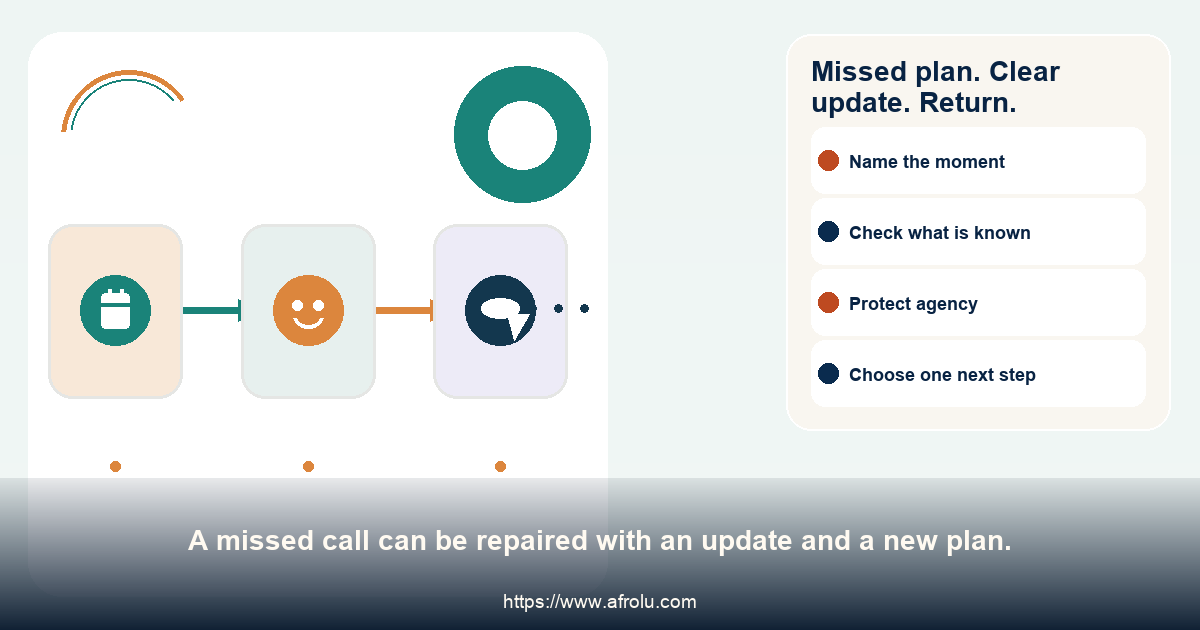
Miriam and Peter work across time zones. After a planned call falls through during a deadline, Peter reads the silence as withdrawal. They had not agreed how to update each other. A direct discussion about a replacement time and a realistic weekly rhythm gives them information that a stream of guesses cannot.
Work · distance · contact
Design a rhythm around real capacity
Long-distance connection can be intentional without making either person constantly available.
Choose a channel, a repeatable window, a repair plan and a time to review.
What can we offer?
Map work, sleep, care and travel windows.
Which channel works?
Pick calls, texts or voice notes by purpose.
What if plans move?
Agree on an update and a new time.
Does this fit both?
Check the pattern and shared effort.
dimension · moment · context
An anxious cue cannot tell you what a delayed reply means
Research often describes adult attachment anxiety as a dimension related to concerns about rejection and closeness. It does not say that a person who wants contact is needy, or that a person who replies slowly is avoidant. Work, travel, time zones, connectivity, rest, and message preferences can all shape contact without explaining the whole relationship.
Start with what you know: a call was planned at seven, a message arrived that the meeting ran late, or no update came. Then identify what is still unknown: whether the plan is cancelled, whether the person wants to reschedule, or whether your preferred contact rhythm is a poor fit. A gap is incomplete information until a pattern or direct answer gives it meaning.
Miriam and Peter work across two time zones. Peter reads an unanswered evening message as retreat; Miriam is leading a late project review. They have not agreed whether late work requires an update. The problem is not solved by guessing at attachment style. A short conversation about schedule changes and next contact can make their expectations visible.
If work demands repeatedly erase every planned conversation and no alternative is offered, it is reasonable to assess availability and compatibility. Naming a possible work explanation does not require you to accept an arrangement that feels one-sided. Observe what happens after both people have described the problem and chosen a realistic next step.
cadence · channel · capacity
Build a contact rhythm around real capacity
Some couples prefer short daily messages; others feel closer after two planned calls each week. A long-distance study found associations between communication patterns and satisfaction in its sample, but it does not provide a schedule that fits every adult, work pattern, culture, or relationship stage. Use research as context, then ask each other what is sustainable.
Separate the channels by purpose. A text can confirm a plan or send a small update. A voice call may work better for a longer conversation. A video call can add face-to-face time when both want it, but neither person owes a camera-on performance after a tiring shift. Choose one or two predictable touchpoints and review whether they help.
A low-pressure agreement can say: “Let us have one proper call on Sunday. If a late shift changes it, send a short update and suggest another window.” That creates a return path without requiring instant replies. Either person may ask to change the rhythm, and the other can say what is genuinely available rather than promising more to stop a difficult conversation.
Keep contact from becoming a second job. Do not expect a partner to reply while driving, in meetings, asleep, or caring for someone. At the same time, you can ask for notice when a shared plan changes. The distinction is between access to a person at all times and basic communication about a commitment the two of you made.

An agreement works when both adults can keep it.
event · explanation · follow-through
Separate an ordinary quiet window from repeated withdrawal
Long-distance routines are vulnerable to shifting shifts, flights, meetings, fatigue, and network problems. A missed window can be disappointing and still be repaired. Look for a brief acknowledgement, a clear explanation that does not require intimate proof, and a new time that the person is able to keep. Follow-through over several weeks is more informative than one polished apology.
If uncertainty spikes, write the sequence without diagnosing it: “We planned a call. It did not happen. I have not heard whether we will reschedule.” Then decide whether to wait until your agreed update point or ask one direct question. Avoid sending a string of escalating messages simply to force a reply; it rarely provides the kind of clarity you need.
When both adults want the connection, the repair may be straightforward: acknowledge the impact, agree a substitute time, and adjust the plan for next week. When one person does not want to continue, a direct ending is kinder than repeatedly leaving plans open. A person may be sincere and still lack the capacity for the relationship structure you want.
An anxious response can be a cue to regulate and gather context, not an instruction to tolerate silence indefinitely. If the same promise is made and missed with no conversation, describe the pattern and decide whether it meets your minimum standard. You do not need to prove malicious intent before you can stop investing in an arrangement that is not working.
time zone · travel · shared plan
Make the distance practical instead of romanticising it
If you hope to meet in person, discuss a rough window, who is travelling, how long the visit would be, and what costs each person can afford. These are not demands for a commitment. They are practical questions that help both adults distinguish a genuine plan from an attractive possibility that never reaches a calendar.
Use a public first-meeting place and keep your own return plan. You can verify basic details in a live call and ask questions that matter to you; no verification method proves character or removes every risk. Do not send identity documents, passwords, bank access, or a one-time code to establish trust with a distant date.
Distance may make an emergency travel story feel plausible. Consumer guidance warns that romance scams often use distance and urgent travel, medical, or investment needs to prompt money transfers. Decline requests for money, gift cards, cryptocurrency, or payment-app transfers to an online romantic contact. Protecting your finances does not require you to accuse the person publicly.
A realistic plan includes a way to pause. If the visit cannot happen now, decide whether continuing remotely is satisfying and for how long you are comfortable doing so. A timeline is a personal boundary, not a universal rule. If one adult's hopes change, state that clearly so the other can make an informed choice.
availability · autonomy · care
Let a relationship coexist with work instead of competing with it
High-pressure jobs can make a dating rhythm unpredictable, yet constant availability can also drain attention and rest. Decide whether you can offer a dependable weekly call, short updates on certain days, or a heads-up when travel begins. Be precise enough to plan and modest enough that one difficult week does not make the agreement impossible.
A partner who cares can still need uninterrupted work time or sleep. A partner who needs more contact can say so without being labelled anxious or demanding. Compare the needs honestly: could a planned voice note, a different call window, or a two-day notice help? If every adjustment feels like a loss to one person, the mismatch may be real.
Work should not become a blanket explanation for breaking every agreement. If a deadline is unusual, communicate when practical. If there is never room for a call, a weekend visit, or any repair, ask whether there is a relationship to build under these conditions. The answer may be disappointing and useful at the same time.
Create an offline boundary that is shared rather than punitive: “I will be in a workshop until six; I will check messages afterward.” Avoid disappearing to see whether the other person pursues you. If you need space, name it and give a reasonable return time. Clarity gives both careers and dating decisions more room.

Respect includes work, rest, updates and shared planning.
privacy · money · consent
Keep privacy and consent intact across every channel
Keep account passwords, verification codes, banking details, private photographs, and live location access under your control. A video call is not a requirement, and a refused camera does not prove a motive. If either person feels pressured to disclose something, return to the actual request and whether it can be declined freely.
Before a first visit, discuss what each person expects from the meeting. A plane ticket, hotel booking, or long call does not create a debt of intimacy. Consent can be withdrawn at any point. You may meet briefly in public, book your own lodging, tell a trusted person your broad plan, and leave independently.
If a match requests funds, encourages secrecy, rushes you off the platform, or keeps asking for codes after a refusal, pause and review. Use available report features and seek local assistance for a threat. These signals merit caution but do not let an editorial page identify the person's intent with certainty.
Remote disagreements need the same boundaries as in-person ones. Do not monitor activity status, demand screenshots of work calendars, or use call recording without consent. Ask for the information you need to decide. If the other person cannot give it, you still retain the choice to slow down or leave.
continue · adjust · pause · end
Review the distance arrangement on evidence and mutual effort
Every few weeks, ask whether the contact rhythm supports connection without taking over both calendars. Do you know how missed calls get repaired? Does travel planning progress within the limits you agreed? Can each person say that a schedule no longer works? Are emotional and practical efforts shared rather than carried by one adult?
Continue when the agreement is clear, the pattern feels reciprocal, and both people want the next step. Adjust one term when a smaller change could solve the problem. Pause if work or family needs temporarily reduce capacity. End when future visits stay indefinitely vague or the relationship depends on one person's repeated overextension.
You can ask: “Do we want to keep building this remotely, and what would make the next month feel workable?” Let the answer include uncertainty. If one person wants daily contact and the other can offer one call a week, neither is automatically wrong; the question is whether the compromise is acceptable to both without resentment or pressure.
A final decision does not require a diagnosis of either person's attachment style. Name the arrangement, state what is no longer working, and close the connection respectfully. If there is a safety concern or financial loss, prioritise appropriate local help. Research can inform the questions; the actual relationship still needs a direct, shared choice.

Review the arrangement, not a single message gap.
Eight long-distance workday moments
A call is missed during a deadline
A demanding workday may explain a single change, not the whole pattern.
Ask for a new time and watch follow-through.One person is ready to talk after midnight
Equal interest does not create equal waking hours.
Choose an overlap window that protects sleep.A quiet workday becomes a rejection story
The gap has not yet answered whether the plan is still current.
Check the agreed update point.Texting feels thin but calls feel demanding
People can prefer different channels and durations.
Try one short planned voice call.A visit is discussed but never scheduled
Warm intent and a practical plan are separate things.
Name a realistic window and cost limit.A missed call is followed by a new plan
Acknowledgement and follow-through add useful information.
Notice whether the replacement time holds.A distant match needs urgent travel funds
Distance and urgency can appear in romance scam requests.
Do not transfer money to an online love interest.Work leaves no dependable contact window
A person may be sincere without having the needed capacity.
Decide whether this current offer meets your needs.Fourteen signs of a sustainable contact pattern
Both adults can name their available call windows honestly.
A delayed reply is judged against the agreed rhythm, not a universal clock.
Work and rest boundaries are stated without using silence as a test.
A missed call receives an update when practical.
The person who cancels offers a replacement time when they want to continue.
The channel and duration of contact work for both people.
Time-zone planning protects sleep and work focus.
A visit conversation includes dates, cost and independent travel choices.
Neither adult is required to provide constant camera or location access.
Plans are reviewed when workload changes rather than silently abandoned.
Money and intimacy stay separate from affection and travel effort.
Both people make some of the scheduling and repair effort.
An uncertain future is described honestly instead of dressed as a promise.
Either person can decide the current distance arrangement does not fit.
A gap-to-evidence decision map
| Situation | What it may mean | What to do next |
|---|---|---|
| Call is missed | Work or availability may have changed; the reason is not yet a pattern. | Ask for an update and replacement window. |
| Replies slow down | A schedule shift, channel preference, or interest change is possible. | Check what was agreed and ask once. |
| I want daily contact | That may be an important relationship need for you. | Describe the frequency and hear the other offer. |
| We have little overlap | Time zones or work hours may limit live conversations. | Try an asynchronous routine both can sustain. |
| Visit keeps moving | The plan may be uncertain or not yet practical. | Ask for a realistic next milestone and date. |
| A video call is declined | Privacy, context, or comfort may explain the choice. | Ask what form of contact feels workable. |
| Money is requested | An online romance may be used to create urgency. | Do not transfer funds or share payment codes. |
| I need offline time | Rest and work are valid parts of a person's life. | State when you will return to the conversation. |
| Only one plans | Effort may be uneven even when both say they care. | Ask for one shared planning responsibility. |
| The rhythm still hurts | A sincere explanation may not solve a compatibility gap. | Revise terms or end based on your needs. |
Twelve scripts for contact, work and visits
“I have meetings until six; I can talk after seven or Sunday morning.”
“Could we protect one call on Sunday and move it when work changes?”
“We have not confirmed Friday; does that plan still work for you?”
“What time window lets both of us rest and still connect?”
“A voice call works better for me than a long text thread.”
“I will be offline during my shift and will check in afterward.”
“Can we choose a month and talk through travel costs before booking?”
“I do not share codes, banking access or live location in a new match.”
“I cannot send travel or emergency funds to an online date.”
“Does our current contact rhythm feel workable for both of us?”
“I like you, and I can offer one call a week right now.”
“This distance arrangement does not meet my needs, so I am ending it.”
Know the difference
A contact agreement versus an anxious guess
A reply takes longer, so the relationship must be ending or the other person must not care.
A call was planned, a work conflict occurred, and the person did or did not update and repair it.
Ask about the plan; judge the pattern over time.

One quiet window and a repeated pattern are different evidence.
An anxious guess versus usable evidence
| Type or dimension | What it describes | Best next question |
|---|---|---|
| Daily texting | Frequent short messages create ongoing contact. | Check that neither person feels on call. |
| Weekly call | A protected conversation offers a reliable touchpoint. | Choose a time and a way to reschedule. |
| Voice notes | Asynchronous updates fit non-overlapping schedules. | Agree whether a response is expected right away. |
| Video call | Face-to-face contact can suit some people some of the time. | Treat camera use as optional and mutual. |
| Weekend-first | Calls or visits cluster around days off. | Keep work recovery and personal plans visible. |
| Slow dating | The relationship develops without a fixed message quota. | Set enough contact to avoid guesswork. |
| Exclusive dating | Both agree whether other romantic dates stop. | Discuss when the status begins. |
| Long-distance | Travel and time zones shape shared availability. | Plan costs and visits in concrete terms. |
| Dating pause | Work or life may temporarily lower capacity. | Say whether contact continues and when you will review. |
A simple plan you can use today
A gap is incomplete data
A delayed response does not establish intent on its own.
Frequency is not a universal rule
Choose contact that both people can keep in real life.
Repair adds information
Notice whether a missed plan is acknowledged and rescheduled.
Work and rest matter
A partner can care without being constantly available.
Distance needs logistics
Affection does not replace clear travel and cost discussions.
Capacity and intent differ
A sincere person may still offer less contact than you want.
Questions organised by purpose and depth
Choose a few prompts that fit the moment. This is a reference library, not a list to complete.
The contact pattern
Compare the actual routine with the one you discussed.
- What was planned?
- What changed?
- Was there a repair?
Real capacity
Make a schedule around work and rest, not guilt.
- Which windows exist?
- Which channel suits us?
- What can wait?
A possible visit
Turn an idea into a safe, workable plan.
- When could we meet?
- What costs fit?
- How will each person travel?
My decision
Check whether the current arrangement meets your needs.
- Continue?
- Revise one term?
- Pause or end?
What deserves a closer look
Look at the response pattern, not a label
A review of adult attachment and stress describes different ways attachment dimensions can relate to emotion regulation in romantic relationships.
Evidence limit: The review does not let a reader diagnose a date from a reply pattern.
Communication channels differ
A study of 647 emerging adults compared remote communication among long-distance and geographically close daters and found associations that varied by channel.
Evidence limit: Its sample does not set a correct contact schedule for every age group or country.
Repair can matter more than volume
Longitudinal studies found within-couple links between negative communication and relationship satisfaction, with the strongest associations often occurring at the same time.
Evidence limit: The findings do not prove that one conversation style causes satisfaction.
Use more than one way to settle a cue
A 2024 study examined flexibility in intrapersonal and interpersonal emotion regulation under daily relationship stress.
Evidence limit: Study findings do not replace individual clinical advice or create a mandated technique.
Keep online romance separate from transfers
Federal Trade Commission consumer guidance describes romance scams that use distance and urgent needs to solicit money.
Evidence limit: The guidance is US consumer material; follow relevant local reporting and banking procedures.
Distance does not create a debt
A meeting, ticket, long call, or intimate image does not create an obligation to continue or to be physically intimate.
Evidence limit: This page is not legal advice for a specific case or country.
Shortcuts that make distance harder
Using a universal reply deadline
Work, time zone, sleep and channel preferences vary.
Reading every gap as rejection
A gap alone cannot answer what happened.
Demanding constant access
Availability at every hour is not a sustainable proof of care.
Explaining every broken plan as work
Repeated lack of repair still matters to compatibility.
Booking travel on a promise
Unconfirmed plans can create avoidable financial and safety risks.
Sending emergency money
Romance scams can use urgent stories to prompt transfers.
Agree on one contact window and a repair plan
This guide is editorial information, not diagnosis, therapy, financial advice, travel-security advice or emergency support. Check current local conditions and qualified help where needed.
Explore the guide library
Show more related guides
Continue with Afrolu
Show more Afrolu guides
Sources used for this guide
Afrolu reviewed these health, research, safety, or public guidance resources while editing this page. They support the behaviour and safety guidance; they do not diagnose any individual described by a reader.
Questions about anxious attachment and distance
How often should long-distance daters text?
There is no universal quota. Choose a rhythm both adults can keep around work, time zones, sleep, and personal preference.
Does a slow reply mean they are avoidant?
No. A single reply pattern cannot diagnose a person or explain their motive. Ask about the shared plan and observe repeated conduct.
What is a low-pressure contact agreement?
It names a realistic channel and cadence, plus what to do when work changes a shared plan. Both people can revise it.
Is daily contact needed in a long-distance relationship?
Some people want it and others do not. State what contact helps you feel connected, then decide whether the other person can offer it freely.
How do we handle a missed call?
A short update and a replacement time can repair one change. If missed plans repeat without discussion, assess whether the arrangement works.
Should we video call every week?
Only if that channel and cadence suit both of you. A video call is not proof of identity or care by itself.
When should we plan an in-person visit?
When both adults want to, can discuss costs and dates, and can meet with independent safety and transport choices.
Should I send travel money to my online match?
No. Do not transfer funds to an online romantic contact. If you have already sent money, contact the bank or payment service promptly.
Can someone be sincere but unavailable?
Yes. Intent and capacity differ. You can respect the reason and still decide that the current offer does not fit your needs.
Should attachment anxiety stop me dating?
This guide does not set that condition. You can date at a chosen pace and seek qualified support if distress is affecting daily life.
One thing to do now
Choose a rhythm both people can keep
Compare the actual contact pattern with the agreement, ask clearly when a plan is uncertain, and judge whether the repair and effort are mutual. Choose the current arrangement only if it fits both adults' needs, capacity, privacy and safety.