Professionals · casual date · the bill
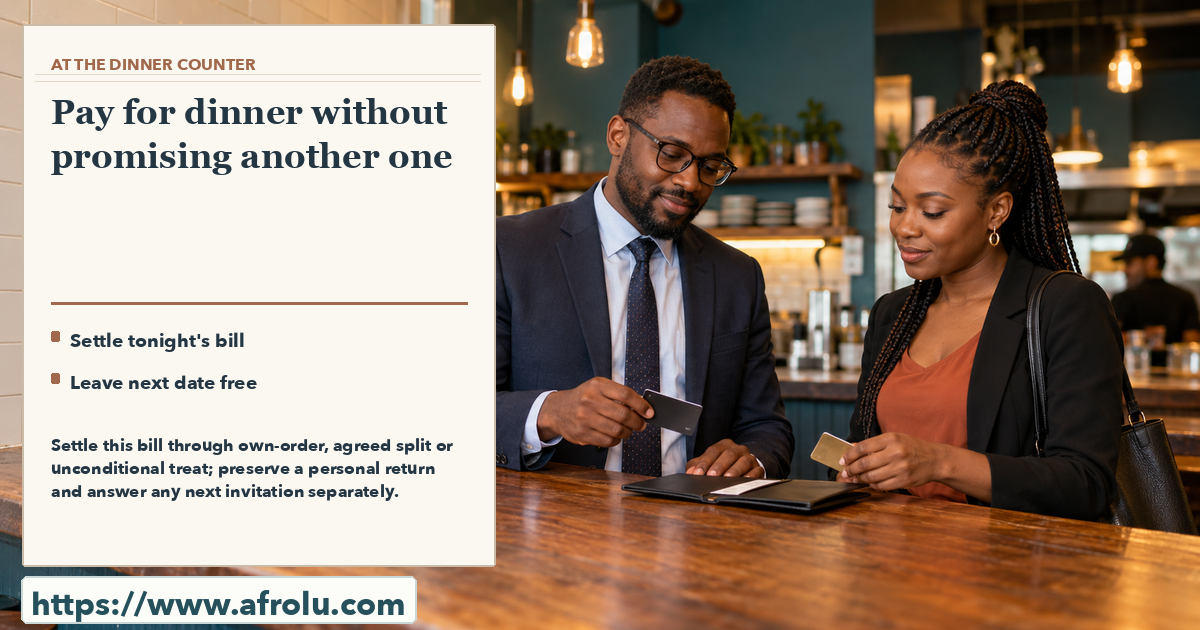
Pay for dinner without promising another one
An after-work date can settle tonight's bill without a future debt. Choose an affordable payment plan, keep your return separate, and leave the next date free.
A treat cannot turn another adult's time into a repayment plan.
Written and edited by Miriam Otieno · Senior Kenya Editor
No. Settle the meal you are having with a choice both adults can freely accept: each pays for their own order, an agreed split, or one offers an unconditional treat. 'You can get the next one' is a possible invitation, not a debt the receipt can create. If you do not want a future date, say so kindly rather than agreeing to repay with time. Keep enough for your own return and do not let a title or salary assumption choose the venue for you. Payment never grants intimacy, exclusivity or another appointment.
If someone says they will pay tonight and I can get the next one, do I owe them another date?
Who pays on a date is a practical question about the cost of this outing. A freely given treat is separate from whether the adults later date again, and from consent to anything physical.
Let your own budget choose the scale of the evening
An after-work date may arrive with assumptions about what adults with careers can afford. One person may have a higher title and little spare money; another may simply prefer a shorter, less costly meal. Choose a venue you could pay for and leave from on your own. If the suggested place does not fit, propose another before ordering. You do not need to recite your income, debts or work benefits to make a modest choice understandable.
If the dinner is squeezed between a workday and an early start tomorrow, a short booking may fit better than a long tasting menu. Say that as a preference for the outing, not an apology for your finances. The other adult may want a different date; they can choose it with you before anyone is seated. Price and duration should be things the two diners understand, not surprises discovered after the bill arrives.
Give the offer a clear shape
When the receipt comes, say what each option means. 'I will pay for my order' is simple. If you split a shared total, agree on the parts both actually chose. If one person wants to treat, the other may accept and say thanks, or decline and pay their portion. The sum spent need not measure affection. love is respect discusses financial boundaries as part of healthy relationships; it supplies no rule that an inviter, a gender or a job title must pay.

What belongs on tonight's receipt
Open full-size visual- Meal cost
- Know the cost of the meal you chose.
- Payment choice
- Choose a free treat, own order or agreed split.
- Own return
- Keep a separate route home.
- Future invitation
- A next invitation has no receipt attached.
Keep the bill, transport and possible future outing in different spaces on the receipt sheet.
What does this receipt settle?
Agree tonight's cost first. A future invitation deserves its own answer.
Own order
Each pays for what they chose
No explanation of income neededAgreed split
Name the shared parts before paying
No surprise running tabUnconditional treat
One offers; the other may accept or decline
No repayment in time or touchWould I choose another meeting if tonight were already paid for?
Answer that invitation separately; keep a way home either way.
Hear 'you get the next one' as an invitation, not an invoice
People often use 'you get the next one' lightly, intending another pleasant evening. If you would welcome that, say you would like to plan one; you can decide its cost later. If you are unsure, answer only the current bill: 'Thanks, but let me pay my part tonight.' If the person meant a genuine gift, they may make that clear. If they insist you now owe another date because they paid, you may settle your share where practical and end the evening.
Even if you hope to meet again, there is no need to mirror the price of this meal. A next outing can be a public walk and a small coffee if both enjoy that. Reciprocity can be an expression of care when chosen, but it becomes a poor accounting system when it obliges someone to spend, extend a date or keep seeing a person. Agree to another meeting because you want it, then plan its cost together.

The line at the counter
Open full-size visualThank you for offering. I would rather settle tonight on its own; I can pay for my meal, and we can decide about another date separately.
- Thank the offer
- Tonight on its own
- Pay my meal
Thank the offer, settle tonight separately, and leave tomorrow's invitation for another choice.
The bill ends with dinner
The bill is for tonight's food. A suggested next date asks for another person's time, which cannot be assigned as change.
Choose a payment arrangement for the receipt; then let a future invitation have its own yes, no or later answer.
- Tonight
Can each person manage the cost?
Own order, a stated split, or an unconditioned treat are choices to make now.
- Return
Can I leave under my own plan?
Keep transport and the end of the evening independent of who pays for dinner.
- Later
Do I want to meet again?
A future invitation is fresh; a paid meal cannot pre-book it.

Bill versus invitation
Open full-size visualTonight's receipt
Own order, an agreed split or a free treat pays for food already chosen.
Another date
A fresh invitation asks for time that the other adult may accept, change or decline.
- Cost understood?
- Offer free of terms?
- Return independent?
- Next date separate?
No payment method pre-books the next meeting or authorizes physical closeness.
Keep dating costs and work status from becoming leverage
The two adults may have met near their offices, but a casual date is still a personal choice. Avoid a conversation in which one person's seniority is treated as proof they should buy everything, or the other's budget as proof they are not interested. If an employer account or corporate expense is proposed, use your actual workplace policy before paying; do not presume a date belongs on it. The easier default is to pay privately within what you can afford.
A meal never purchases closeness
A warm offer changes character when someone cites it to demand a kiss, a private visit or a second date. RAINN describes consent as specific and voluntary; one person's choice to pay cannot supply the other's agreement. You can say you are leaving and use the independent return you planned. If the situation feels unsafe, seek help from staff or someone you trust; a perfectly balanced calculation is less important than leaving safely.
The practical sentence can be brief: 'I appreciate dinner, but I am going home now.' You do not need to litigate whether the first offer was sincere while the pressure is happening. If the other person simply misunderstood your interest and accepts the correction, you can still decide privately whether to meet again. If they continue using money to narrow your choices, let that conduct inform a firm no.

What does the receipt actually settle?
Open full-size visualOne diner says 'I'll get this; you can get the next one' as the after-work bill arrives.
Is tonight's offer unconditional, and do both want a separate next date?- Unconditional treat or agreed splitanswer a later invitation afresh.
- Repayment demandedsettle your share if practical and leave.
Settle the meal you had; another adult's future time never appears on the receipt.
Answer a new invitation for its own reason
If you enjoyed the person and want another outing, offer one that suits both budgets and calendars. If you do not, a brief, truthful no is enough even if they treated: 'Thank you for last night; I do not want to continue dating.' You need not offer a compensating coffee simply to erase a feeling of debt. Clear payment and a separate relationship decision leave both adults able to remember dinner as dinner.

Tomorrow is not on the tab
Open full-size visual- Choose affordable placeSelect a venue you can afford.
- Settle actual billPay only the arrangement chosen tonight.
- Keep route homeLeave independently when you want.
- Answer later freelyAnswer another date only if wanted.
Settle this bill through own-order, agreed split or unconditional treat; preserve a personal return and answer any next invitation separately.
Settle dinner, then leave the invitation open
Choose tonight's payment and your own return; answer any future date after deciding whether you want one.
About these links These information links are not affiliate buttons and are clearly labelled. They do not promise a match or relationship outcome.
What the payment and consent sources can support
Financial-boundary and consent sources support free choices; Afrolu's three bill options are editorial examples, not research findings or a universal payment rule.
Questions after the after-work bill
If they pay, do I owe the next dinner?
No. Another date needs a fresh invitation and a freely chosen answer. You can pay your share tonight if that makes the boundary clearer.
Can I accept a treat and later say no to dating again?
Yes. Thanking someone for a freely given meal is enough; it does not buy another appointment or physical affection.
Should the higher-paid professional cover the bill?
No job title reveals a comfortable budget or creates a universal payment rule. Agree an affordable arrangement for the actual meal.
What if 'you get the next one' was only a joke?
Clarify kindly: settle this meal first, then talk about a next date only if both want one.
What if the offer turns into pressure to stay longer?
You can leave under your own travel plan. Seek help from staff or a trusted person if the situation feels unsafe; do not stay to perfect the accounting.