Adult students · talking stage · weekend
Take a talking stage into Saturday without giving up your choices
Adult students moving from messages to a weekend meeting can choose a public plan, protect campus and home details, name the date's meaning and keep an exit.
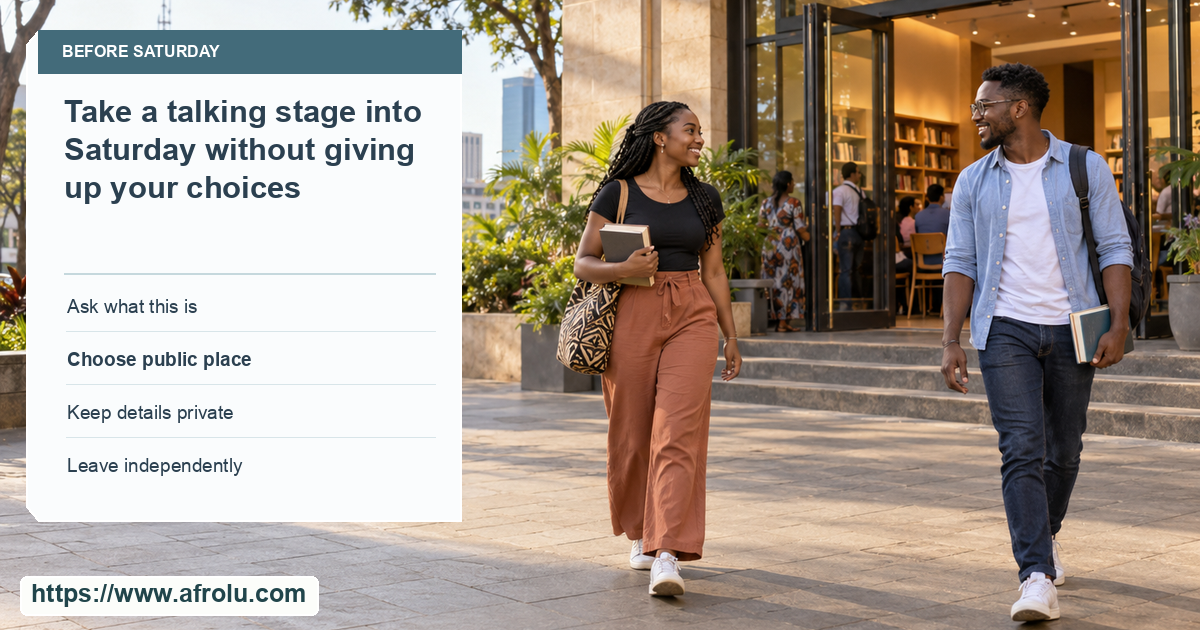
Warm messages are a reason to offer a meeting, not a promise of privacy, exclusivity or touch.
Written and edited by Ruth Akinyi · Local Dating Editor
The talking stage is only what the two adults have actually agreed it is; frequent messages alone do not make exclusivity or an in-person date. If you want to meet, offer a specific, short public daytime plan that fits your study week and your own return route. Keep your home, dorm, exact class schedule and passwords private. Tell a trusted person the meeting plan if helpful. Ask whether the other adult sees the outing as a date instead of trying to infer it from a late-night chat. You can decline a private venue, end early, or continue talking without meeting yet. A warm online exchange does not create physical consent.
How can I move a talking stage toward a weekend date without assuming too much or taking needless risks?
The talking stage means an early period of conversation before adults have clearly agreed on a relationship, exclusivity or sometimes even a date. The label has no fixed timetable or rights of access.
Before a venue
Let the label stay smaller than the agreement
You may have spoken every evening for a week, but neither adult necessarily knows whether the other is dating elsewhere, looking for a relationship or simply enjoying conversation. If the answer matters, ask it in ordinary words. 'I am thinking of Saturday as a first date; how do you see it?' gives the other person a chance to answer without a trap.
The same applies to exclusivity. Do not infer it from a run of good-night messages, and do not claim it in a public post. love is respect distinguishes personal boundaries and mutually discussed expectations. If you would prefer one connection at a time, you can own that choice and ask whether the other adult wants the same arrangement later.
Friends may already describe the two of you as a couple because they have seen the chat continue. That description does not settle what either adult has agreed. Keep other people's guesses outside your first meeting; let the person you are meeting answer the invitation directly.
The Saturday ticket
What exactly are you agreeing to?
Messages can feel close while leaving the simplest practical facts unsettled. A small, answerable plan makes room for both interest and a no.
Write the outing in one sentence. If you cannot name its public place, approximate end and return, keep talking until you can.
Where and when?
A public event and daylight time can be named.
Is this a date?
Ask; don't let message frequency decide.

Messages versus a meeting agreement
Open full-size visualTalking stage
Messages create familiarity but no venue, scope or entitlement.
Meeting plan
Both choose a public place, time, meaning and way home.
- Place public?
- Date meaning clear?
- End time mine?
- Return mine?
A chat can be warm while a first meeting remains fully optional.
The messages you keep
Protect the details that map your days
A student may have a visible campus routine and a tight circle of shared acquaintances. A casual message about a lecture room, dorm building and exact finishing time can disclose more than intended. Keep the first meeting separate from your home or dorm, do not share account passwords, and consider whether linked social profiles reveal daily locations. eSafety's online-dating guidance addresses these identifying details; it does not say every match is unsafe.
If you have already shared a detail, do not blame yourself. You can still choose a public meeting and adjust privacy settings. If the other person asks for proof of trust through live location, passwords or a private address, you may decline. A respectful reply matters more than a rehearsed claim that they would never misuse the information.

A compact first-meeting ticket
Open full-size visual- Public reading event
- The Saturday reading event is the agreed public place.
- Date meaning clear
- Both name whether Saturday afternoon is a first date.
- Own route home
- The reader controls arrival and return.
- Study block kept
- The Sunday study plan remains their own.
Before leaving, verify the public place, date meaning, approximate end and independent return as separate choices.
From chat to Saturday
Make the first meeting easy to leave
Choose a populated public venue you can reach and leave independently. A daytime reading event, café or open gallery can provide a natural start and end. You can tell someone you trust where you plan to be and when you expect to return. RAINN recommends those steps for early in-person dates, while making clear that harm is never the fault of a person who did not follow a checklist.
In this story, the flat invitation is a different plan. You can say, 'I would rather keep our first meeting at the public event.' If they accept, confirm the actual details. If they press you to come privately, postpone or decline. You do not owe an in-person meeting just because a conversation has been fun.
Keep Sunday's study block. A first date should not require a whole weekend of availability, and a last-minute extension is another fresh choice. You can enjoy the event, leave at the time you named and still decide later whether you want to meet again.

What does Saturday actually mean?
Open full-size visualA Saturday reading-event plan is countered with an invitation to a private flat.
Will both adults agree to the public daytime first meeting?- YESconfirm time and independent return.
- NOkeep talking or decline the outing.
A chat can be warm while a first meeting remains fully optional.
A first-meeting ticket you control
Fill this in before travel, not after a private-venue switch.
Keep your own copy
- Public reading event, Saturday afternoon.
- A private flat can still be declined.
- I am thinking of this as a first date.
- A free answer; no implied exclusivity.
- My own route home after a short visit.
- Sunday study time remains mine.

One public invitation
Open full-size visualI would like to meet at the public reading event Saturday afternoon and head home afterward. I am thinking of it as a first date; does that fit for you?
- Name the event
- Say first date
- Keep end time
Say what meeting you want and ask whether the other adult sees it as a date.
After the event
Let what happened replace the imagined version
Ask whether you could talk as freely in person as online, whether the public plan was respected, and whether you want more time. If you do, suggest another modest outing. If you do not, a brief kind end is sufficient. You do not need to deliver a verdict on the other person's personality.
If the outing was warm, you can discuss contact pace or dating scope when it becomes relevant. Do not treat touch, a second meeting or a relationship label as the automatic reward for successful messaging. Each person retains the right to choose their pace, their studies, their friends and their own way home.

Leave Saturday with your choices
Open full-size visual- Keep chats privateKeep home and exact campus details out of early chat.
- Offer public SaturdayMake one public Saturday invitation.
- Respect the answerLet the other adult accept, counter or decline.
- Review in personLeave independently, then decide whether to meet again.
Ask whether Saturday is a date, choose one short public daytime event, protect exact campus and home details, retain an independent return and review afterward.
Choose Saturday deliberately
Make one public plan that leaves both adults free to answer and leave.
About these links These information links are not affiliate buttons and are clearly labelled. They do not promise a match or relationship outcome.
Sources for privacy, consent and early dates
Online and in-person safety guidance offers risk reduction for an adult student's first meeting; it cannot promise safety or define the talking stage for them.
Questions about the talking stage
Does daily texting make us exclusive?
No. Exclusivity requires a conversation and mutual agreement.
Should I say this is a date?
Yes, if the meaning matters to you. Ask plainly and allow a different answer.
May I decline a flat invitation?
Yes. Keep the public plan, continue talking or decline the outing.
Do I need to share my dorm or timetable?
No. A public venue and approximate meeting time are enough for an early date.
What if I want to leave early?
You may. An independent return and a short first plan make that choice easier.