Orbiting · Location safety
An old match turned up after my story. What now?
Start here
If a former date appears where your live story says you are, move toward staff or a trusted person. Leave by a route you choose, and ask for local help if you feel unsafe. A story view alone cannot tell you how they found you. Later, check who can see your posts and whether they reveal where you are now. Save unwanted contact and report repeated following. You do not owe the person a conversation.
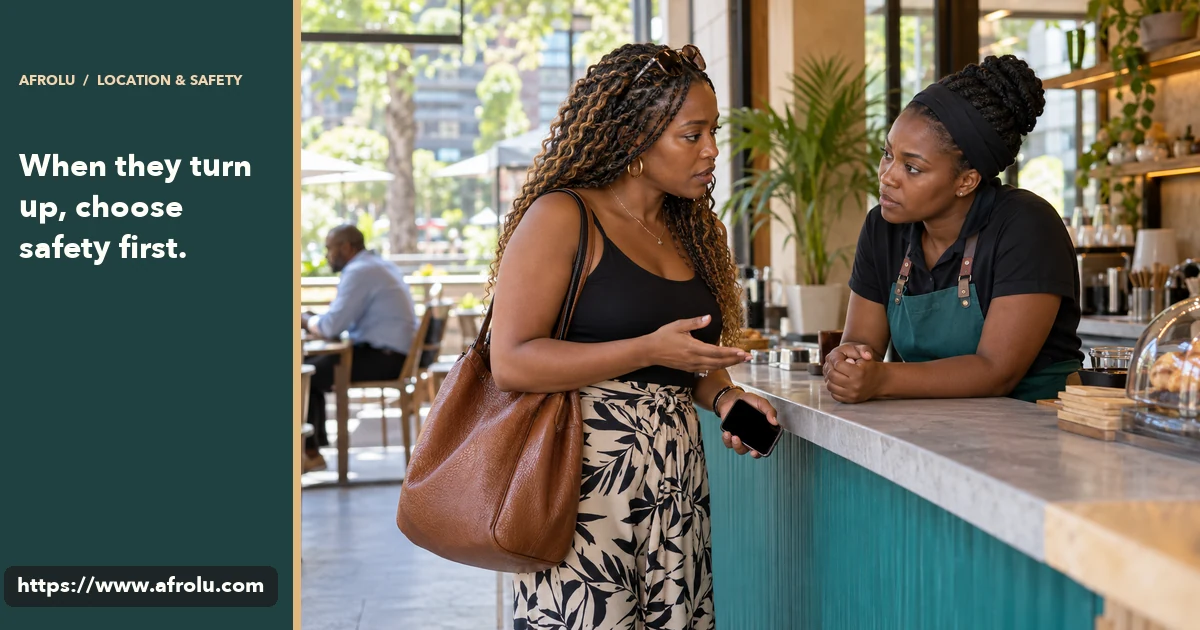
Ada, 38, is visiting Nairobi from London. She posts a picture from a public cafe while she is still there. A former date, Malik, has watched her stories for weeks. He now walks into the same cafe. Ada cannot know whether he saw the story or arrived by chance. She can still choose what helps her feel safe right now.
If they are here now
- PeopleMove toward staff or another place with people.
- ContactTell a trusted person where you are and what you need.
- ExitLeave by a way you choose; you do not need a private explanation.
Go toward people who can help
Ada can step to the staffed counter and say she does not want to speak with Malik. She can call a friend and choose her own way home. She does not need to go outside with him to learn why he came.
Ask for help in the moment
A short request at the counter
Invented exchange between adult visitor Ada and an adult cafe worker. Malik is not part of it.
- Ada
- “Someone I used to date is here. I do not want to speak with him. May I wait near the counter while I call my friend?”
- Worker
- “Yes. You can stay here while you make the call.”
- Ada
- “Thank you. I will leave when my ride arrives.”
Ada asks for a practical, public place without claiming to know why Malik arrived.
Check the post after you are safe
A live place tag, a visible street sign or a familiar routine in a photo may tell more than Ada meant to share. eSafety advises checking location settings and avoiding live check-ins when privacy matters.
She can remove the live post, limit its audience or wait until after leaving to share a future outing. These are her choices. Changing settings cannot undo who already saw a post, but it can reduce what future viewers learn.
Do not turn a view into a story about motive
Malik's views show that his account opened the stories. They do not prove that he followed Ada or that he wants to date again. Seeing him once at a public cafe also does not explain why he is there.
What matters now is his conduct. If he leaves her alone, she may simply go on with her day. If he approaches after she says no, follows her or contacts her from new accounts, she can keep evidence and ask for help.
eSafety describes repeated unwanted tracking and contact as possible cyberstalking. That source cannot decide what happened in Ada's single invented cafe visit.
Choose from what happened
What happened beyond a story view?
- Only a view or like
You can change your audience or leave the app alone. A view does not require a reply.
- They appeared and you feel uneasy
Move to a staffed place, contact someone you trust and choose your own route away.
- Unwanted contact or following repeats
Keep a safe record, use report tools and seek local support or emergency help if needed.
Make a plan if contact repeats
Ada can save messages, dates and screenshots that are safe for her to keep, use the service's report tools and tell a trusted person. If she feels in immediate danger, she should seek local emergency help. A source written for Australia cannot supply a Nairobi emergency number or judge Malik's intent.
Keep reading
Keep your next outing yours
Sources and what they can tell us
Ada, Malik, the cafe and staff exchange are invented. Sources support location privacy and safety choices; they do not explain Malik’s motive or replace local help.
- eSafety Commissioner: Location sharing
It explains how posts, check-ins and app settings can reveal a person’s location and how to limit sharing.
Limit: It cannot tell whether Malik saw Ada’s post or found the cafe another way. - eSafety Commissioner: Cyberstalking
It describes repeated unwanted online tracking and practical steps such as evidence and support.
Limit: One unexpected cafe encounter is not enough for this guide to label Malik a stalker. - Avon and Somerset Police: Staying safe in public places
It advises people who feel unsafe to approach venue staff or a place with others, tell someone and plan a route home.
Limit: This UK advice cannot explain Malik’s arrival or provide Nairobi emergency contacts.
Questions after an old match appears
Does a story view mean they followed me?
No. A view cannot show why someone came to a place. Choose safety from what is happening now.
Should I ask them why they came?
You do not have to. Speak only if you want to and feel safe.
Can I post photos later?
Yes. You may wait until you have left, remove place clues and choose who can see them.
When should I report?
If contact is unwanted or repeated, use the platform tools and local support that fit the situation.
What if I feel in danger now?
Go toward people who can help and contact local emergency services.