Diaspora dating · Gifts and pressure
A big gift should not hurry your answer
Start here
You may thank a distant match for an offer and still say, ‘I am not sharing my work address, passport or money details.’ Do not send money for a ticket, visa or emergency to a person you have not met. If a gift comes with a demand to rush a visit or prove love, pause, keep records and talk with someone you trust before deciding what to do next.
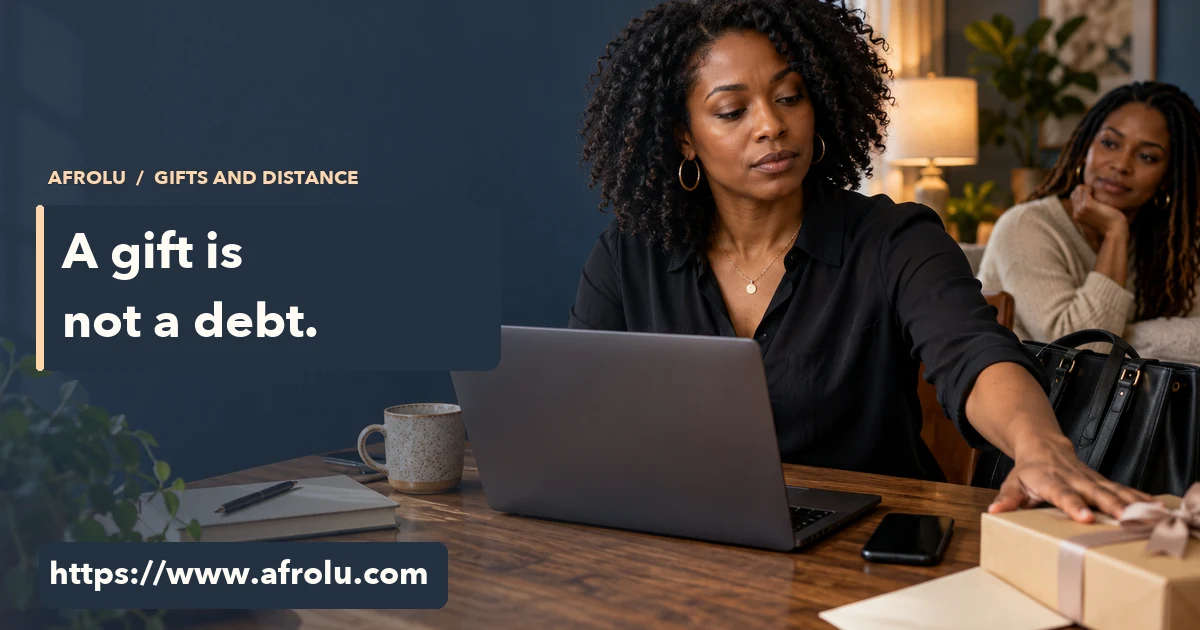
A parcel can feel kind. A costly parcel followed by ‘You owe me now’ changes the conversation. You can look at that change without trying to label a person from afar.
Ask what the gift is being used to get
A match may offer flowers, a hotel stay or a flight. Ask whether the offer leaves you free to say no. The Hotline describes costly gifts and intense contact as possible parts of love bombing when used to create obligation.
One generous act is not a diagnosis. Look at what happens when you set a small limit: can the person accept it without anger, guilt or a new demand?
Choose from the answer
What happened after you said no?
- The offer stays free of conditions
Take your time and keep private details private.
- They ask for money or documents
Do not send them; step away and check the request with someone you trust.
- You already sent payment
Contact the payment provider promptly and use the reporting channel for your location.
Keep the parts of your life you cannot take back private
Do not send a work address just to receive a surprise parcel. Choose whether to give any delivery address, and consider a safer collection option if available. Keep passport photos, employer records, account details and passwords out of a new chat.
The FTC describes romance scams in which a distant person asks for money for travel, visas or emergencies. If the request is for money, do not pay or transfer it. Verify any claim through a route you choose, not a link the match supplies.
A genuine connection can survive a boundary. You do not need to prove trust by handing over details that affect your job or finances.
Example conversation
A ticket offer with a new condition
In this invented exchange, adult professionals Ada and Ben have only spoken online across countries.
This is an invented example.
- Ben
- “I booked a trip for us. Send your passport photo and pay the visa fee tonight so I know you trust me.”
- Ada
- “I will not send documents or money. I did not agree to this trip.”
- Ben
- “If you cared, you would do it now.”
- Ada
- “I am ending this conversation.”
Ada answers the request itself. She does not need to prove whether Ben is a scammer before saying no.
Bring the decision back to a pace you own
Say, ‘I am not booking travel or sharing documents now. We can keep talking at a pace that works for both of us.’ You can also stop talking. A long-distance plan should be specific enough to discuss without making you pay a surprise fee.
If you already sent money, contact the payment service promptly and ask about reversal options. The FTC page gives reporting routes for the United States; readers elsewhere should use their own local consumer or police channels.
Let the response give you information
A respectful reply may simply accept your limit. Repeated urgent messages, guilt or a story that changes each time are reasons to step away and get outside perspective.
You may block contact if pressure continues. Save messages if you need them for a payment dispute or report. Do not confront the person to prove a diagnosis before protecting yourself.
If you decide to meet later, choose a public plan and tell someone trusted the where and when. A paid hotel or ticket never removes your right to change that plan.
Keep reading
A related question
Sources and what they can tell us
The ticket exchange, sample boundary and payment steps are Afrolu editorial examples. The Hotline describes possible pressure patterns, the FTC describes romance scam money requests, and eSafety supports privacy. These sources do not identify this match or replace location-specific reporting advice.
- National Domestic Violence Hotline: Signs of love bombing
Its examples of costly gifts and travel offers used to create obligation support checking whether Ada can decline without being pressured.
Limit: It cannot diagnose Ben, and one gift or intense message alone cannot establish an abusive pattern. - Federal Trade Commission: What to Know About Romance Scams
Its examples of distant matches asking for tickets, visas or emergency funds support refusing an un-met match's money request.
Limit: Its complaint and recovery routes are United States specific, and it cannot prove this individual request is fraud. - eSafety Commissioner: Online dating: How to stay safe
Its online privacy advice supports keeping exact work location and identifying details out of a new dating conversation.
Limit: It cannot make a delivery address safe or determine whether a future meeting across borders will be safe.
Questions you may still have
Is every expensive gift love bombing?
No. The pressure and wider pattern matter; one gift does not prove a person's intent.
Should I accept a flight from someone I have never met?
You may decline. A trip should never require handing over money or documents on demand.
Can I give my office address instead of my home?
Your work address is also private information. Choose whether to share it at all.
What if they say the money is for a visa?
Do not send it to an un-met match. Check any travel requirement through official channels you locate yourself.