First-date bill · Nairobi students
Before the first-date bill, keep your fare home
Start here
Set aside the money you need to get home before you choose food or a place. Then ask, ‘Shall we each buy our own snack?’ If one person offers to pay, the other may accept or decline. Paying for a drink or meal does not buy touch, a ride together or another date.
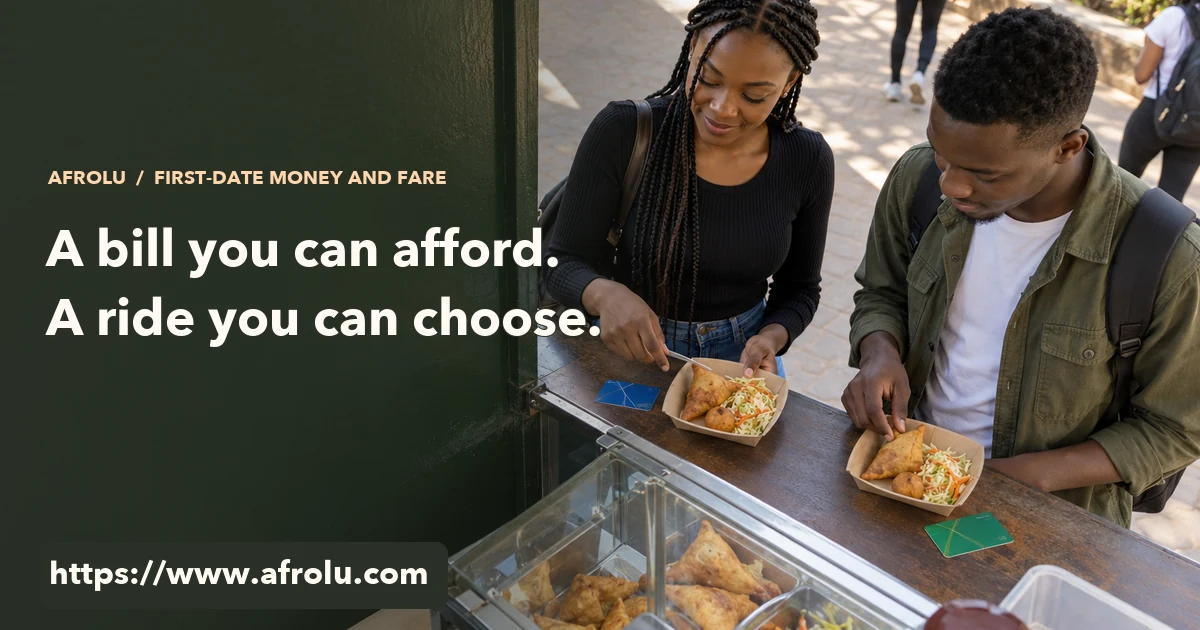
A cheap snack can become an expensive outing if you spend your travel money. The first money decision is the trip home. The second is the bill at the counter.
Put the return trip ahead of the menu
Choose a public kiosk or café near a route you know. Work out what you can spend after the trip there and back. If the money left is small, choose a snack or a walk in a busy place instead of a meal.
Keep control of your own trip. An offer of a lift can be kind, but you can still say, ‘I will make my own way.’ Do not count on the other person to pay your fare.
If the route home becomes difficult at the hour you chose, move the date earlier. A short daytime plan can still tell you whether you enjoy talking.
Ask who pays while either person can still choose
Say it before ordering: ‘I am keeping it simple today. Are you okay if we each pay for our own?’ The other person can choose something that fits their money too.
If they offer to treat you, you can say, ‘Thanks, I would like that,’ or ‘Thanks, I will cover mine.’ You do not need a rule about who pays based on gender, age or who sent the first message.
At a counter where you order one at a time, this may be as simple as saying, ‘I will pay for mine now.’ It need not become a speech about fairness.
Choose from the answer
If the bill turns awkward
- You can each afford your order
Pay separately and enjoy the conversation if you want to stay.
- The new place costs too much
Say your budget once. Keep the original plan or leave.
- They say paying means you owe them
You owe no touch or second date. Leave and seek help if needed.
A pricier plan needs a new yes
If the date suggests a costly restaurant after you agreed to a snack, say what you can spend. You may keep the kiosk plan, suggest a different day, or leave. A change to the bill is a change to the plan.
If someone uses their payment to ask for private time or a ride you did not want, repeat your no and move toward other people. Ask for help nearby if you feel unsafe.
Example conversation
At the kiosk before ordering
In this invented Nairobi example, two adult students each keep travel money separate.
This is an invented example.
- Zuri
- “I have enough for a snack after keeping my fare home. Want to buy our own?”
- Eli
- “Yes. I will get mine, and we can sit by the open tables.”
- Zuri
- “Good. I need to leave by four for my own trip back.”
The bill is settled before the order, and neither student has promised a ride or more time.
Judge the talk, not the receipt
The person who paid more is not automatically more interested. The person who split fairly is not automatically less kind. Did they listen when you named a limit? Did you have a choice about your route home? Those answers tell you more.
If you want another date, choose another plan you can afford. If you do not, a polite goodbye closes this one.
Keep reading
A related question
Sources and what they can tell us
The kiosk, fare-first order and sample chat are Afrolu advice for adult students. The Hotline supports equal choices and respect for boundaries. eSafety supports telling someone a meeting plan and noticing pressure. Neither source sets prices, transport rules or bill customs in Nairobi.
- National Domestic Violence Hotline: Healthy Relationships
Describes open talk, privacy, shared decisions, support for parenting, and respect for time and boundaries.
Limit: General relationship guidance cannot judge a particular match or prescribe how every couple defines commitment. - eSafety Commissioner: Online dating: How to stay safe
Covers privacy, sharing a meeting plan with someone trusted, pressure, children’s details, and reporting or blocking harmful contact.
Limit: This is Australian guidance. It does not certify a Nairobi venue, diagnose a person, or describe every app setting.
Questions you may still have
Is it rude to split the first bill?
No. Asking before ordering lets both adults decide within their money.
Can I accept a snack they offered?
Yes, if you want it. An offer does not buy anything else from you.
What if I cannot afford a café?
Offer a short public walk or wait until you can meet without spending travel money.
Should I let them pay my ride home?
You may keep your own fare and route. That lets you leave when you choose.