Later life · Casual dating
Notice the calm, then keep your own pace
Start here
A casual relationship can feel steady when both adults say what they want, respect a no, and make room for friends, family and time alone. One pleasant date does not prove a relationship is secure. Notice the pattern over several meetings: can you disagree without fear, keep your own plans, and ask for clarity without being punished? If the answer changes, you can slow down or leave, even if the dates have been fun.
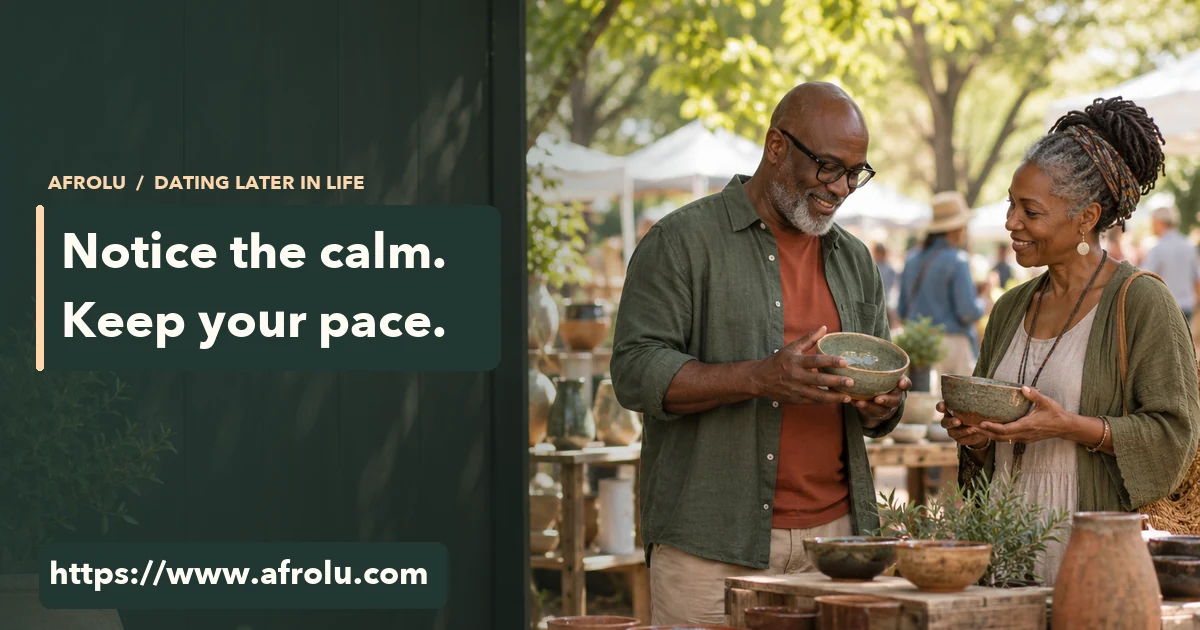
Ruth is 56 and Emmanuel is 60. They meet at a neighbourhood pottery fair and begin seeing each other every few weeks. Ruth likes their conversations and does not want to move in with anyone. Emmanuel says he is happy to keep things light. Ruth wonders what a healthy casual connection looks like when neither person is looking for a quick serious promise.
Say what 'casual' means to each of you
For Ruth, casual means time together without plans to combine homes. For Emmanuel, it might mean no exclusive promise. They should ask instead of letting one word do all the work: 'Are we seeing other people?' and 'How often do we want to meet?' are small, useful questions.
A good answer may show they want different things. That does not make either adult wrong. It gives each a chance to decide whether this connection fits.
If one adult wants to keep dating others while the other wants to be exclusive, they can name that difference early. A pleasant fair visit does not make it fair to leave the question unanswered for months.
Look at ordinary moments, not just the best date
Emmanuel offers a Saturday outing. Ruth has already promised to help a friend at a market. If he says, 'Enjoy it; perhaps next week,' her existing life still has room. If he sulks every time she sees friends, the mood of one lovely date is less useful than this pattern.
Love is respect names respect for friends and family time and the ability to speak without fear as signs to look for. The page cannot certify Emmanuel from a single exchange.
Example conversation
A good date leaves room for another plan
Invented conversation between adults Ruth and Emmanuel after the pottery fair.
This is an invented example.
- Emmanuel
- “Would you like to go to the market with me Saturday?”
- Ruth
- “I promised a friend I would help at her stall. Sunday afternoon is open.”
- Emmanuel
- “Sunday works. And if you need a quiet weekend, tell me.”
- Ruth
- “Thanks. I like that we can say what works without guessing.”
The exchange shows respect for an existing promise; the pattern over time matters more than one nice reply.
Try a small no and notice the response
Ruth might say she does not want an overnight visit or a photograph posted online. A respectful answer accepts the limit without a debate. Emmanuel can have his own wishes, but he cannot turn her no into a duty to reassure him with access or affection.
Love is respect treats time alone and personal choices as valid boundaries. A person who wants a different kind of dating can say so plainly and leave kindly. Neither person has to bargain away a limit to keep a casual label.
Choose from the answer
What happens when you keep your pace?
- They hear your no and offer another plan
Enjoy the next date if you want; keep noticing how this works over time.
- You want different kinds of casual
Name the difference and decide whether either arrangement truly fits both adults.
- They punish a no or isolate you
Make space from the connection and talk with someone you trust about the pattern.
Keep your own life while you share time
Ruth can enjoy Emmanuel's company and still keep her phone, money, home and family matters her own. They may choose to share more as trust grows, but a few pleasant dates do not create a right to private accounts or household decisions.
The Hotline describes privacy, trust and time apart as parts of healthy relationships. These ideas fit casual dating too. They are a guide to conversation, not a guarantee that either person will always feel calm.
If the pace changes, speak before you drift
After a few months, Ruth might want more time together; Emmanuel might still want occasional dates. They can revisit what they mean by casual. A changed feeling is information to share, not a promise the other person must match.
If the connection no longer gives Ruth room to say no or spend time with others, she can end it. She does not need to wait until it meets a dramatic label. Likewise, Emmanuel can leave if their wishes no longer fit.
Keep reading
A related question
Sources and what they can tell us
Ruth, Emmanuel, the pottery fair, the market and their exchanges are invented Afrolu examples. The sources describe healthy behaviours; they cannot guarantee a secure relationship from one date.
- National Domestic Violence Hotline: Healthy relationships
It names trust, privacy, respect, open communication and time apart as parts of a healthy relationship.
Limit: It does not certify one invented date or require a casual relationship to become serious. - Love is respect: Dating basics: what should I look for?
It includes room for friends and family and the ability to communicate without fear among healthy signs.
Limit: It cannot tell whether Emmanuel's one Saturday reply will become a lasting pattern. - Love is respect: What are my boundaries?
It treats time alone and choices about one's own life as valid personal boundaries.
Limit: It does not prescribe how often Ruth and Emmanuel should meet or whether to become exclusive.
Questions you may still have
Can casual dating be healthy?
Yes, when both adults understand the arrangement and keep each other's choices and boundaries intact.
Is a peaceful first date enough to know?
No. Notice the pattern after changes of plan, disagreement and a clear no.
Do I owe a serious commitment because we are older?
No. Age does not set the pace or the relationship label.
What if I want more later?
Say so and listen to their answer. You can change your mind without requiring them to change theirs.