Diaspora · Respect after a joke
A date joked about your home. Watch the repair
Start here
If a date jokes about your home, accent or culture and it hurts, you can say so. Ask them not to repeat it. A useful apology names what they did and changes how they act, including around friends. You may accept the apology and still decide not to date again. One awkward joke does not tell you everything about a person; repeated mockery after a clear request tells you more about whether this connection respects you.
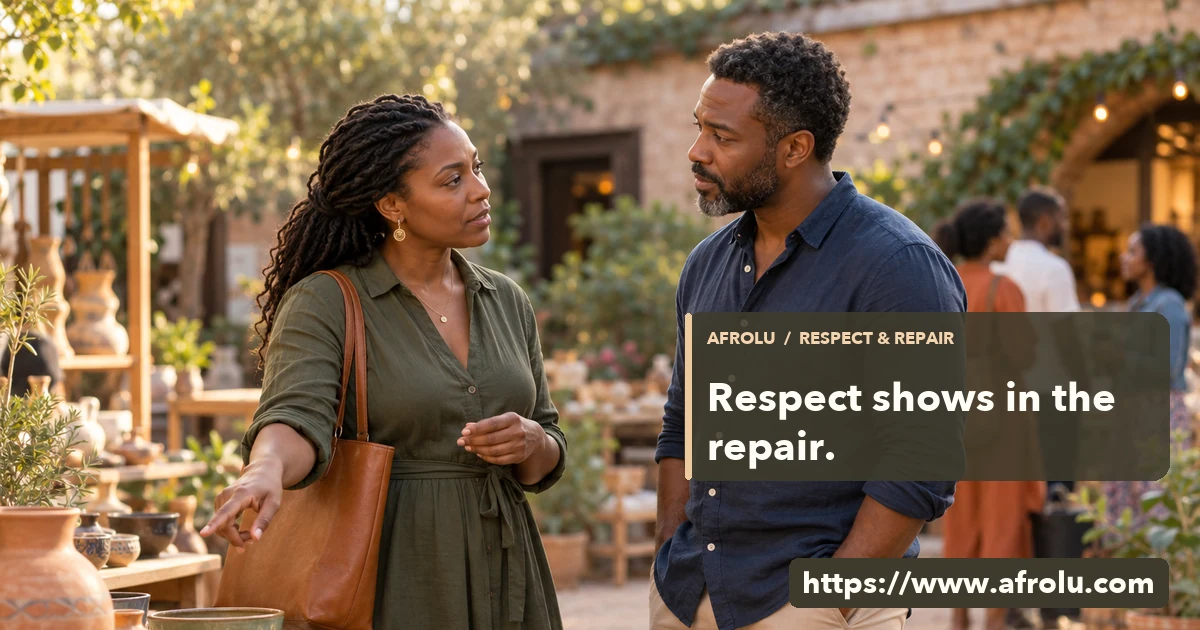
Zawadi lives in London and is spending a weekend in Nairobi. At a crafts courtyard, her new date, Tobi, jokes in front of friends that she 'sounds like a tourist at home now.' Zawadi feels small. When their friends move on, she tells him that the joke hurt. What he does next matters more than a perfect line about where she belongs.
Say which words hurt without defending your identity
Zawadi can say, 'The tourist joke hurt me. I would like you not to say that again.' She does not need to debate whether she is local enough or laugh to keep the peace. Tobi can hear the request even if he meant it lightly.
A private repair conversation
A repair that does not ask her to shrink
Invented exchange between adult daters Zawadi and Tobi away from their friends.
- Zawadi
- “The tourist joke hurt me. Please do not use my home as a joke with our friends.”
- Tobi
- “I am sorry. I did that. I will not say it again.”
- Zawadi
- “Thank you for hearing me. I want some space before I decide about another date.”
Tobi owns the words; Zawadi keeps the right to choose her next step.
A repair has two parts
Own the wordsThey can name what they said without blaming your reaction.
Change the next momentThey can stop repeating the joke, including around friends.
Look for an apology that makes room for you
A useful reply might be, 'I am sorry. I made your home sound like a joke. I will not repeat it.' It does not ask Zawadi to comfort him or tell friends she was too sensitive.
The Hotline says healthy partners can discuss problems and value each other's feelings. Its guidance on fair disagreement supports listening and changing course after hurt. It cannot certify Tobi from one apology.
If Tobi asks what would help, Zawadi can name one thing, such as not making that joke with friends. She can also say she wants to end the outing. Her answer is not a task for him to negotiate away.
After the talk
What happened after you named it?
- They listen and change
You may choose another date if you want one; watch the pattern over time.
- They apologize but repeat the joke
Name the repeat if safe, or stop. A nice apology cannot replace changed conduct.
- They mock your reaction or you feel unsafe
Leave the outing and seek trusted help. You do not need to win an argument.
Notice what happens next time friends are present
If they meet again, the next group moment offers a simple observation: does Tobi avoid the joke and let Zawadi speak for herself? He need not perform a public apology if she does not want one. Change in ordinary company matters more than a private promise.
Keep your own answer even after a good apology
Zawadi can enjoy the rest of the weekend, choose one more date or stop. A good repair is encouraging; it does not create a duty to continue. If the same mockery repeats or he laughs at her limit, she can leave and seek support from someone she trusts.
Love is respect notes that cultural context shapes how relationships feel and unfold. It does not define Zawadi's identity or decide whether this particular joke is forgivable.
Keep reading
Look for respect in action
Sources and what they can tell us
Zawadi, Tobi, the courtyard and their words are invented. Sources support respect and the importance of context; the repair example is Afrolu editorial guidance, not a character diagnosis.
- The National Domestic Violence Hotline: Healthy relationships
It describes listening, valuing feelings and respectful discussion as healthy relationship practices.
Limit: It cannot judge Tobi or promise that a single apology makes a relationship secure. - The National Domestic Violence Hotline: How to fight fair
It supports slowing a disagreement, talking about hurt and agreeing how to handle future conflict.
Limit: It does not require Zawadi to stay, forgive or request a public apology. - Love is respect: Relationships and cultural context
It notes that relationships are experienced within cultural and community contexts.
Limit: It does not define Zawadi’s home identity or decide what Tobi meant by the joke.
Questions after a hurtful cultural joke
What if they say it was only a joke?
You can answer, "It hurt me. Please do not repeat it." Their intent does not cancel your limit.
Do I have to accept an apology?
No. You can hear it and still choose to stop dating.
Should they apologize in front of friends?
That is your choice to discuss. A public performance is not required to show changed conduct.
Can one mistake be repaired?
Sometimes. Notice whether they listen and change; this guide cannot predict the person.