Later-life dating · Weekend messages
When a daily good-morning text feels too close
Talk about the meaning
You can like someone and still find a daily good-morning text too close for a new relationship. Tell them what the greeting means to you, without guessing what it means to them. You might enjoy a note about a shared interest or a plan for the next date instead of a daily ritual. Ask what they hope the greeting does. If you want different levels of closeness, talk about that choice rather than counting messages or replying from duty.
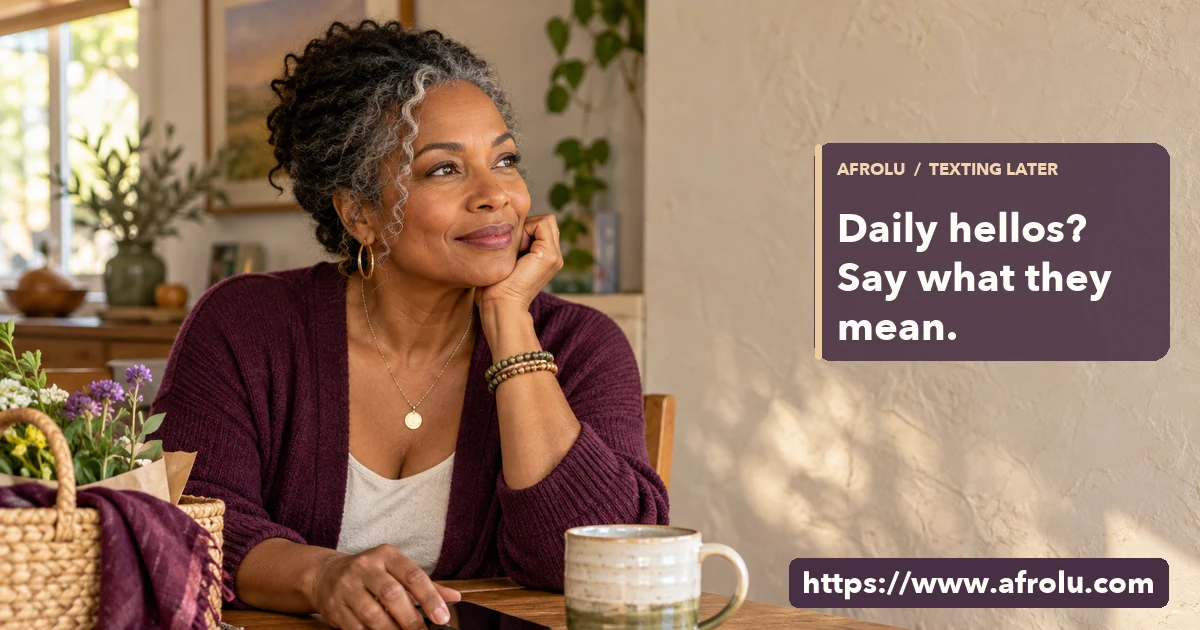
Grace, 56, enjoyed a Saturday art market with Emmanuel. Since then he has sent 'good morning' and 'good night' each day. In Grace's long past relationship, those words were part of sharing a home. She likes Emmanuel, but she does not want to step into that couple habit after one date. He may simply mean hello. She wants to tell him how it lands for her.
The same words can mean different things
To Emmanuel, a morning greeting may be an easy hello. To Grace, it sounds like a promise of everyday closeness. Neither adult knows the other's meaning from the message alone. Love is respect suggests asking about digital expectations rather than assuming them.
Grace does not need to call the texts wrong or explain her whole past. She can notice that the habit feels too fast for her now. Feelings can be real even when no one has done harm.
Tell them what the greeting brings up for you
She can say, 'I enjoy seeing you. Daily morning and night texts feel like a couple habit to me, and I am not there yet.' This names her experience, not Emmanuel's character. She can ask whether he meant a simple hello or hoped for daily closeness.
Love is respect says people can reach emotional milestones at different times. It supports telling a partner how words feel and what you hope for. It does not tell Grace that a greeting must carry a promise.
Say what it means
A message about meaning, not a quota
Invented messages between adult daters Grace and Emmanuel after one weekend date.
- Emmanuel
- “Good morning, Grace. I like starting the day with a note to you.”
- Grace
- “I like spending time with you. Daily morning notes feel like a couple habit to me, and I am not ready for that yet. Could we message when we have something to share and plan another walk on Thursday?”
- Emmanuel
- “I meant it as a friendly hello. That sounds fine; I would like another walk.”
Grace explains the meaning she hears. Emmanuel can clarify his own without a timing game.
Meaning before number
What does the greeting mean to each of you?
- It is simply a hello to both
Enjoy it if you want; no daily reply promise is needed.
- It feels like a couple ritual to you
Say so and offer messages tied to things you actually want to share.
- One wants daily closeness and the other does not
Decide whether a lighter pattern fits both, or whether the mismatch matters.
Offer a kind of contact you can enjoy
Grace might like a note after a shared outing, a photo of an interesting book, or one message to plan another market walk. She can send one too.
That gives them something real to discuss without starting and ending every day together by text.
Emmanuel may prefer a daily hello. He can say so. The two can try a lighter pattern for a weekend and then ask if it feels good, without treating the trial as a contract.
Hear the answer without making either person wrong
If Emmanuel says the greeting was casual, Grace can choose whether to receive it that way or ask for fewer. If he says daily contact helps him feel close, she can say honestly what she can offer now. A mismatch can be disappointing without being disrespect.
If either adult agrees to a lighter pace but later wants more contact, they can talk again. Grace need not answer at dawn to prove interest, and Emmanuel need not wait forever for a kind of closeness he wants.
Keep reading
Keep the connection comfortable
Sources and what they can tell us
Grace, Emmanuel, their past and their messages are invented. The lighter-weekend experiment is Afrolu advice, not a rule for people over 50.
- Love is respect: Digital boundaries
It specifically includes texting expectations among terms adults can discuss and change.
Limit: It gives no ideal daily message count or meaning for Emmanuel's greeting. - Love is respect: Emotional boundaries
It says people may reach emotionally close words at different times and can explain how words feel to them.
Limit: It discusses expressions of love, not good-morning texts; the comparison is Afrolu's example. - Love is respect: What is respect in a healthy relationship?
It supports listening to another person's choices and honoring boundaries.
Limit: It does not require Grace or Emmanuel to enjoy the same kind of greeting.
Questions about daily greetings
Is a good-morning text a promise?
No. Ask what the sender means; you can still say it feels too close for you.
Must I explain my old relationship?
No. You may simply say what kind of contact feels comfortable now.
Can I send a morning note sometimes?
Yes. A note on one day does not create a daily rule.
What if they feel hurt by my answer?
Listen kindly, but do not promise a daily ritual you do not want.