Adult student life · first date · manageable nerves
Let a first date be one meeting, not an exam
Adult students in Nairobi can make a first date smaller: choose a public plan, prepare an independent exit, try a calming pause and decide what to do afterward.
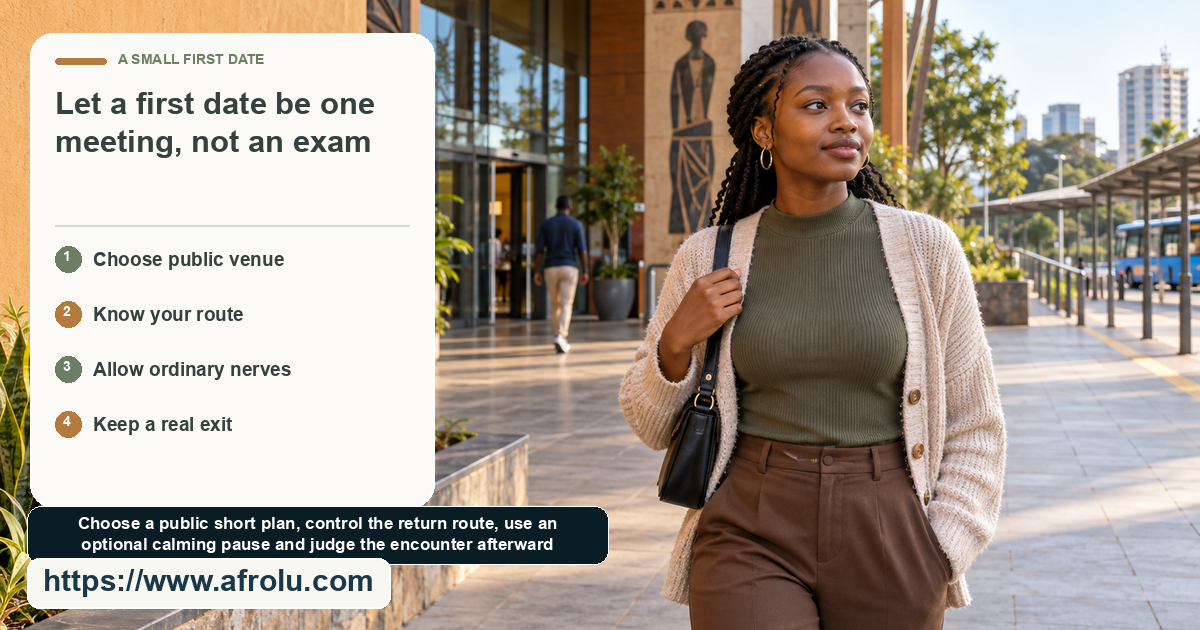
A first date is one encounter, not an exam of charm or a treatment for persistent anxiety.
Written and edited by Miriam Otieno · Senior Kenya Editor
Make the plan small: a daytime public meeting with a clear duration, a budget you can afford and a way home you control. Ordinary nerves before meeting someone new do not predict a bad date. Before arrival, try an unforced calming breath if it helps; during the meeting, focus on whether you can both talk and choose freely. You may leave if a boundary is crossed. Afterward, record what actually happened before deciding whether to meet again. If fear repeatedly disrupts study or everyday life, seek professional support rather than treating a dating checklist as care.
First dates · Students
How do I get through a first date without trying to perform perfectly or ignoring a real safety concern?
First-date anxiety here means worry or physical nervousness about an unfamiliar social meeting. This page offers practical preparation, not a diagnosis or treatment plan for an anxiety disorder.
Illustrative scenario: An adult student agrees to meet a new match at a public cultural centre for forty-five minutes on Saturday. They check the route and fare, tell a friend the plan, and arrive separately. After a shaky first few minutes they ask about a shared exhibition. They can stay longer, leave on time, or end early if the interaction feels unsafe.
The one-meeting frame
Lower the stakes without dismissing safety
A date is a chance to meet another adult, not a performance review. Practical control over place, fare and departure can leave more attention for the conversation.
Prepare only the decisions you can make before arrival, then use observed behaviour to decide whether to continue or leave.
Choose public
An ordinary venue with other people is enough.
Keep your return
Know the fare and how you will leave on your own.
Allow nerves
An unsettled stomach is not a verdict on the match.
Use your answer
You may shorten, extend or end the meeting.
Shrink the event
Forty-five minutes is enough for a first hello
A first date can feel like an exam when the plan includes a whole evening, a costly meal and an expectation that you will know the future by dessert. Choose a public activity or short drink that fits your studies and budget. State an approximate duration up front, even if both later freely choose more time.
A date who insists on a private location or reacts badly to a simple public plan is giving you useful information before you travel. You can decline or change the plan. You do not need to override that concern because you have already told yourself that you are 'just anxious'.
Before you travel
Make the arrival and return your own choices
Plan your own arrival and journey home where possible, and let a trusted person know where you intend to be. RAINN's safer-dating advice recommends public early meetings and independent transportation; it is U.S. guidance and not a safety guarantee. In Nairobi, check the actual route, daylight, fare and transport options available to you.
Before leaving, confirm the public entrance and a meeting point you can find without sharing a home address or live location. Keep enough fare for your own return even if the date offers a ride. If the venue changes at the last moment to somewhere you do not want to go, you may decline. Arriving separately leaves that answer practical, not merely theoretical.

No fabricated campus emergency route is shown.
Four practical preparations
- Place confirmedA public, known meeting point is easier to leave.
- Fare plannedKeep enough money for your own return trip.
- Friend informedA trusted person can know the plan you chose.
- Exit availableLeaving at the stated time is allowed, even if it went well.
Use practical preparation without trying to erase every sensation or dismissing a real concern.
As the meeting approaches
Prepare one opener, then stop rehearsing a perfect personality
Once the place and journey are settled, charge your phone, choose clothing that lets you move comfortably and think of one ordinary question about the activity or neighbourhood. A prepared opener can reduce the blank-page feeling; an entire script makes it harder to hear the person in front of you. You can arrive without having rehearsed a perfect personality.
If your body feels tense while waiting, you could let your breath move gently without forcing it, as the NHS breathing guide describes. This is an optional self-help exercise for stress and anxiety, not a method that guarantees calm or treats a disorder. You can also notice the entrance, people nearby and the route back, then return to what is happening now.
NIMH notes that meeting new people and dating can be anxiety-provoking in social anxiety disorder, while occasional nerves need not be a disorder. This page cannot tell which applies to you. If distress is persistent or begins to interfere with classes, work, friendships or everyday tasks, speak with a qualified professional or a campus service rather than relying on date preparation alone.

Independent arrival is normal.
A forty-five-minute invitation
Optional wording
I would like to meet at the cultural centre on Saturday at 11 for about forty-five minutes. I will get there on my own; does that work for you?
Adapt it in four moves
- State the venue
- Give a time
- Name short duration
- Arrive separately
A short invitation makes both duration and independent arrival plain.
At the table
You do not have to hide every pause
A pause after the first hello is ordinary. You can ask what brought them to the venue, follow up on an answer or say, 'I was a little nervous arriving; I am glad we found the place.' You do not have to disclose more than feels comfortable, and you do not need a clever line for every minute. Notice whether conversation becomes more mutual after the first few exchanges.
If the date wants a longer meeting, private address or physical closeness that you do not want, a simple no is enough. love is respect explains that consent is specific and can be changed. Anxiety is not a reason to let someone press past a boundary, and safety concern is not something to breathe through in order to appear polite.
When the stated end time arrives, you can thank them and leave even if the conversation was pleasant. If you both want another half hour and it fits your plan, choose that too. The point of a reversible date is that staying and going are real options, rather than a test of whether you can endure the whole evening.
After the date
Write down events before writing a story about yourself
Once you are home, note a few observable facts: Did you feel free to speak? Were limits respected? Did the planned departure work? Was there something you genuinely enjoyed? This can counter the urge to turn one awkward phrase or missed joke into evidence that you failed. A first date is information about a possible fit, not a grade.
If you liked the person, you can send a brief honest note and offer another modest meeting. If you did not, you can decline kindly. If you felt unsafe or pressured, seek support and keep records of concerning contact if doing so is safe. You need not send a polite second-date message to protect another person's feelings.
Anxiety may still be present on a good date. The goal was never to erase every sensation; it was to keep enough choice to learn what happened. If fear is regularly making you avoid social life or study, the NIMH guidance on when to seek help is more relevant than endlessly refining a first-date script.
Choose what follows
A second date is a new choice, not proof you passed
If you decide to meet again, choose a plan that fits both calendars and budgets. You do not need to compensate for nervousness by buying an elaborate evening or agreeing to more intimacy than you want. The first date may have been slightly awkward and still worth another conversation.
If the other person declines, that answer is about the proposed connection, not your worth as a student or a dater. Make space for the disappointment and return to your ordinary supports. If your own schedule does not permit another meeting, say so rather than leaving a vague promise that you cannot keep.
With practice, you may learn which preparations genuinely help: public places, a shorter plan, a friend who knows your route or a calming pause. Keep the ones that make choice easier in your actual life. Leave behind rituals that turn every new meeting into a bigger exam you never wanted to sit.

A second date is optional.
One date, then a choice
- Set a small planAgree a short public plan and your own way back.
- Pause if helpfulA gentle pause can help nerves, not a crossed boundary.
- Observe the meetingNotice mutual talk and whether your no is respected.
- Decide after returningAfter you leave, decide whether to meet again.
choose a public short plan, control the return route, use an optional calming pause and judge the encounter afterward
Before, during and after a first meeting
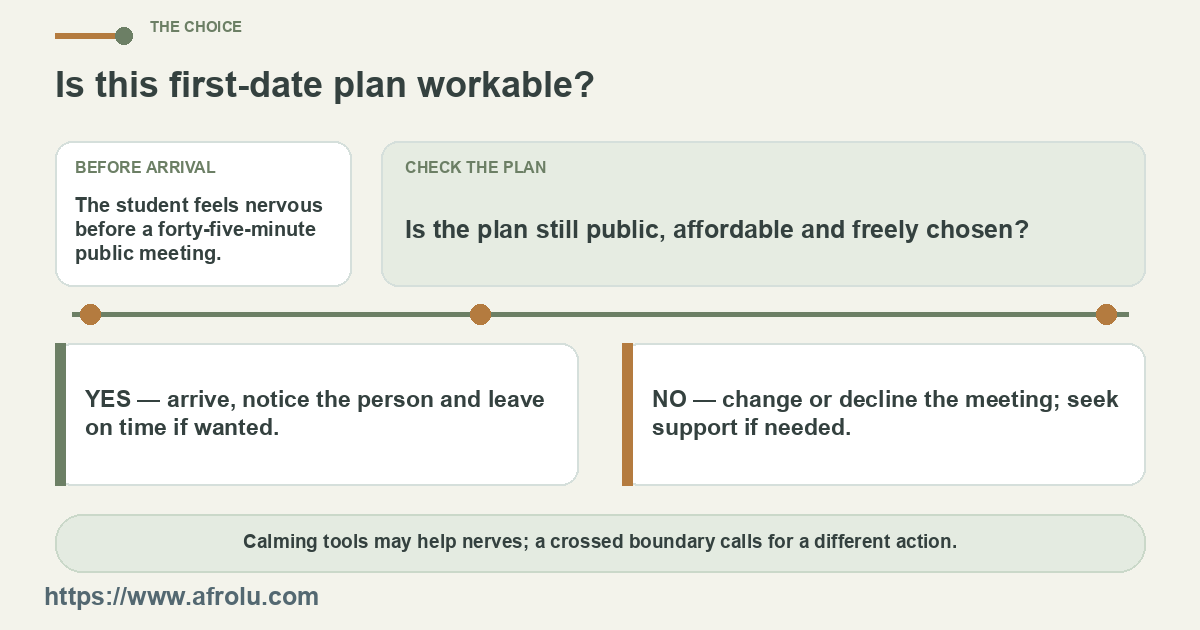
Is this first-date plan workable?
- Notice
- The student feels nervous before a forty-five-minute public meeting.
- Ask
- Is the plan still public, affordable and freely chosen?
- YESarrive, notice the person and leave on time if wanted.
- NOchange or decline the meeting; seek support if needed.
Calming tools may help nerves; a crossed boundary calls for a different action.
The student worries about arriving alone
Route and fare are practical questions that can be answered.
Check the public entrance and return plan.Conversation goes quiet for a few seconds
Silence is not a grade.
Ask about the shared activity or allow the pause.The date pushes to leave the public venue
A chosen meeting place is being changed.
Decline and use your own return plan.The student replays one awkward phrase
A single phrase does not describe the whole encounter.
Write down what actually happened before deciding.A few practical preparations
The place and short duration are clearly agreed.
The fare and return route remain under your control.
A trusted person knows the plan if you want that support.
You can say no to a new venue or touch.
Ongoing fear affecting study or everyday life gets professional attention.
Is the plan still freely chosen?
| Situation | What it may mean | What to do next |
|---|---|---|
| Nerves rise before arrival | An unfamiliar meeting can feel uncertain. | Try a gentle pause if helpful and keep the plan small. |
| The public venue changes | Your original choice no longer applies. | Accept only if the new place also feels right; otherwise decline. |
| A quiet minute occurs | Neither adult has failed. | Ask one genuine question or let the moment breathe. |
| A physical boundary is crossed | This is conduct, not merely a nervous thought. | Leave and seek support as needed. |
| Fear disrupts ordinary life | A date checklist may be too small a response. | Contact a qualified professional or campus support service. |
Words for a small first meeting
“Could we meet at the cultural centre Saturday at 11 for about forty-five minutes? I will travel there on my own.”
“I was a little nervous getting here. What drew you to this exhibition?”
“Thank you for meeting. I am going to head home now and think about whether another date feels right.”
Know the difference
Ordinary nerves versus a safety signal
An unsettled feeling about meeting someone new while the plan remains safe and chosen.
Pressure for a private place, no independent return or a no that is ignored.
Calming tools may help nerves; a crossed boundary calls for a different action.

Leaving remains possible in either case.
Nerves or a boundary concern?
Nerves
An unsettled feeling about meeting someone new while the plan remains safe and chosen.
Boundary concern
Pressure for a private place, no independent return or a no that is ignored.
Questions that separate them
- Public place?
- Own way home?
- No respected?
- Daily life affected?
Calming tools may help nerves; a crossed boundary calls for a different action.
Nerves are different from pressure
| Type or dimension | What it describes | Best next question |
|---|---|---|
| Pre-date worry | An anticipated unfamiliar conversation. | Use a small practical plan. |
| Ordinary pause | A few quiet seconds at the venue. | Ask or listen without self-judgment. |
| Boundary pressure | A no to venue or touch is ignored. | Leave; do not self-soothe through the pressure. |
| Persistent impairment | Fear repeatedly disrupts school or social life. | Seek qualified support. |
Keep the date to its true size
One date is not an exam
You can learn about a person without performing perfectly.
Practical safety aids choice
A public venue and independent return give you options.
After is for facts
Remember the whole encounter, not one awkward line.
Questions after you return
Choose a few prompts that fit the moment. This is a reference library, not a list to complete.
Before leaving
Use practical choices, not a perfect-person checklist.
- Where is the public entrance?
- What is my return fare?
- Who knows my plan?
After returning
Separate feeling from observed conduct.
- Were my limits respected?
- Did I enjoy anything?
- Do I want another meeting?
What safety and mental-health sources support
Public meeting
RAINN suggests a public early-date venue and independent transportation.
Evidence limit: U.S. options, not a guarantee or Nairobi transport instruction.
Optional breath
The NHS offers a gentle, unforced breathing exercise for stress and anxiety.
Evidence limit: Self-help may be useful; it does not treat a disorder or override danger.
Social anxiety
NIMH lists dating among situations that can trigger social anxiety disorder and says daily-life interference warrants help.
Evidence limit: Ordinary first-date nerves do not diagnose that disorder.
Consent
love is respect says a yes can be changed and each activity needs consent.
Evidence limit: A date plan never obliges touch or a longer meeting.
Seeking help
NIMH advises considering the effect of symptoms on daily life and speaking to a provider if they worsen.
Evidence limit: U.S. guidance; the guide does not provide individual medical advice or Kenyan clinical referral.
When preparation turns into performance
Writing a full script
It can make listening to the actual person harder.
Calling every concern anxiety
A crossed boundary needs action, not just calming.
Diagnosing from nerves
One nervous date does not establish a disorder.
Choose a modest public first hello
The date can be short, affordable and reversible; decide what it meant after you get home.
Explore the guide library
Continue with Afrolu
First-date safety, consent and anxiety sources
Afrolu reviewed these health, research, safety, or public guidance resources while editing this page. They support the behaviour and safety guidance; they do not diagnose any individual described by a reader.
Questions about first-date anxiety
Is it normal to feel nervous before a date?
Many people feel occasional nerves before meeting someone new. This page cannot diagnose the cause or degree of yours.
Should I force myself to stay the full time?
No. A stated duration is a guide, and you can leave earlier if uncomfortable or unsafe.
Will breathing make anxiety disappear?
No guarantee. The NHS offers gentle breathing as an optional calming technique, not a cure or substitute for safety.
What if a date wants a private venue?
You may keep the public plan or decline. A no to venue or touch should be respected.
When should I get more help?
If fear repeatedly affects studies, work, friendships or daily tasks, speak with a qualified professional or campus service.
One thing to do now
Let the meeting be information
Prepare one public, affordable, reversible meeting; then judge the actual encounter rather than every nervous thought beforehand.