First call · Listening comfort
Nervous about hearing a first video date? Make the call clearer
Start here
You can ask for a quiet call and a clear view of the other person's face. You may use captions or headphones if they work for you. Try the settings before the date, then say what would help: 'Could we turn off the television and face the camera?' You do not have to explain your health details. If video still feels hard, a written conversation is another choice.
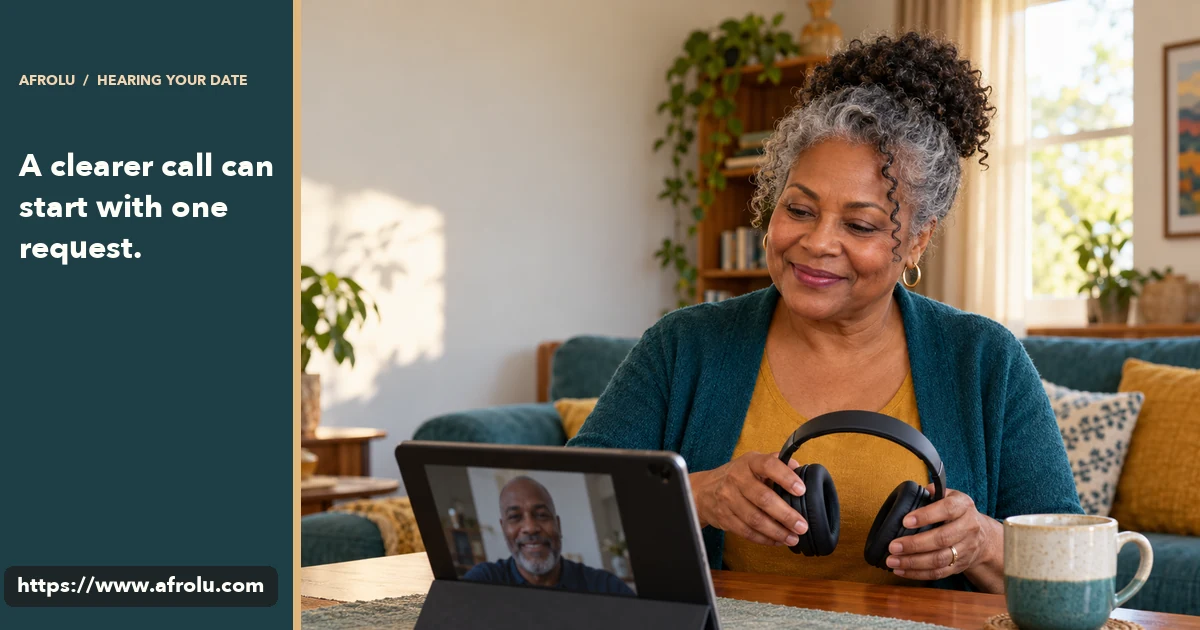
Ruth, 58, has been messaging David in another city. She likes his gentle questions and would like a first video date. On family calls she often misses words when the television is on. She worries David will think she is not interested if she asks him to repeat himself. The first decision is how they can both follow the conversation.
Start with the sound you can control
Ruth can choose a quiet room, turn off her television and test the volume she likes. Headphones may help her, but they are not a rule. The National Institute on Deafness and Other Communication Disorders suggests reducing background noise when talking with someone who has hearing loss.
She can invite David to choose a quiet place too. If either adult cannot find one today, they can move the call. A loud connection is a practical problem, not a sign that either person has failed.
A request before the call
A request that leaves both people a choice
Invented messages between adult daters Ruth and David.
- Ruth
- “Could we both find a quiet room and face the camera? I follow calls more easily that way.”
- David
- “Yes. I can turn off the television. Would a short call work?”
- Ruth
- “That sounds good. If the sound is difficult, we can message instead.”
Ruth asks for a practical change without having to explain a diagnosis.
Ask for one change without a medical story
Ruth might say, 'I follow a call more easily when I can see your face. Could you face the light and speak a little more clearly?' NIDCD notes that seeing a speaker's face can help some people understand. Needs differ, so Ruth is the person who decides what helps her.
She can explain that she has hearing loss if she wants. She can also simply describe the change she needs. David can say what helps him follow a call as well.
If captions or video do not work, change the plan
Some devices offer live captions. They can miss names or make mistakes, so Ruth can ask David to repeat an important word rather than treating a caption as perfect. They might use the dating app's messages instead, or stop and try a call another day.
eSafety says a person can say no to contact that does not feel right and warns that moving away from a dating app can expose more personal information. Ruth need not share a private number or address to prove interest.
Choose the conversation
What feels workable today?
- Both can make a clearer call
Try it and ask for a repeat when needed.
- One person needs another time
Choose a new time only if both want to.
- Video does not work for you
Use a written conversation or decide not to continue.
Notice the answer, not one awkward moment
David may need a moment to find a quieter spot. That is different from mocking Ruth for asking. A respectful response gives both adults room to explain and adjust. Ruth can enjoy an imperfect call and still decide whether she wants another one.
Keep reading
Make your first conversation easier
Sources and what they can tell us
Ruth and David are invented adults. The video-call request and alternatives are Afrolu examples; hearing needs and device features vary.
- NIDCD: Age-related hearing loss
It suggests facing the speaker and reducing background noise for some conversations.
Limit: It does not prescribe a video-date setup or determine what works for Ruth. - eSafety Commissioner: Online dating
It explains privacy and the choice to say no during online dating.
Limit: It does not recommend a particular caption setting or decide whether Ruth should call. - Love is respect: What is respect in a healthy relationship?
It describes listening and valuing another person's needs as part of respect.
Limit: One helpful call cannot prove a future relationship will be healthy.
Questions about hearing and a first call
Must I tell a date that I have hearing loss?
You choose what to share. You can first describe the change that helps you follow a call.
Are captions always accurate?
No. They can miss words or names. Ask for a repeat or use another way to communicate when something matters.
What if I feel embarrassed asking?
A simple request gives the other person a chance to help. You are allowed to take part in a conversation you can follow.