First date · faith · a real workweek
A first date around faith and work: ask one real question
You can care about faith and still let a first lunch be a first lunch.
Offer a short public date at a time that fits your work and rest. Ask one plain question about how faith shows up in an ordinary week. You can listen, share your own answer, and go home without deciding your whole future together.

Listening to an ordinary-life answer is more useful than asking for a future promise in the first hour.
One first meeting
What can I ask on one date without turning it into an interview or a promise?
A long workweek may leave you with one free hour. You do not have to use that hour to settle where you will live, who you will marry, or what your career should be.
Choose a public lunch you can reach and leave on your own. Bring one honest question: What does this belief look like in a normal week? Listen to the answer and share yours. Then go home with room to think.
One lunch
One lunch, three small choices
- Before lunch
Offer Saturday from 12:30 to 1:30, after your work is done.
You know the time you can give. - At the table
Ask what faith changes in an ordinary week. Give your own example too.
You hear how each person lives, not just a label. - At the end
Say whether you want another talk. Leave moves, jobs, and marriage for later.
One lunch gives you one next choice.
If your body feels tense
Take a quiet pause before you arrive
If you want, sit with your feet on the ground and let a gentle breath come in and out without forcing it. The NHS describes a breathing exercise for stress that some people find useful. You can also skip it and simply give yourself a few minutes to arrive.
A calmer breath cannot tell you whether someone is right for you. Your job at lunch is to listen and notice how the conversation feels, not to stop every nervous feeling.
Words you could use
An answer that opens a conversation
When the date asks for a firm future timeline:
“My workweek is full, but Saturday lunch works. What does faith change in a normal week for you? I would like to learn that before we discuss a timeline.”
Then listen. Does the person give a real example and ask about your week too?
When work enters the talk
Keep your job details yours
You can say that work is busy without showing company documents, naming clients, or sharing your income. If the other person asks for details you cannot or do not want to share, say so plainly.
A match may be curious. You can answer a lighter question, such as what you enjoy outside work. If they keep pressing for private work information or a firm move date, that is a request you can decline.
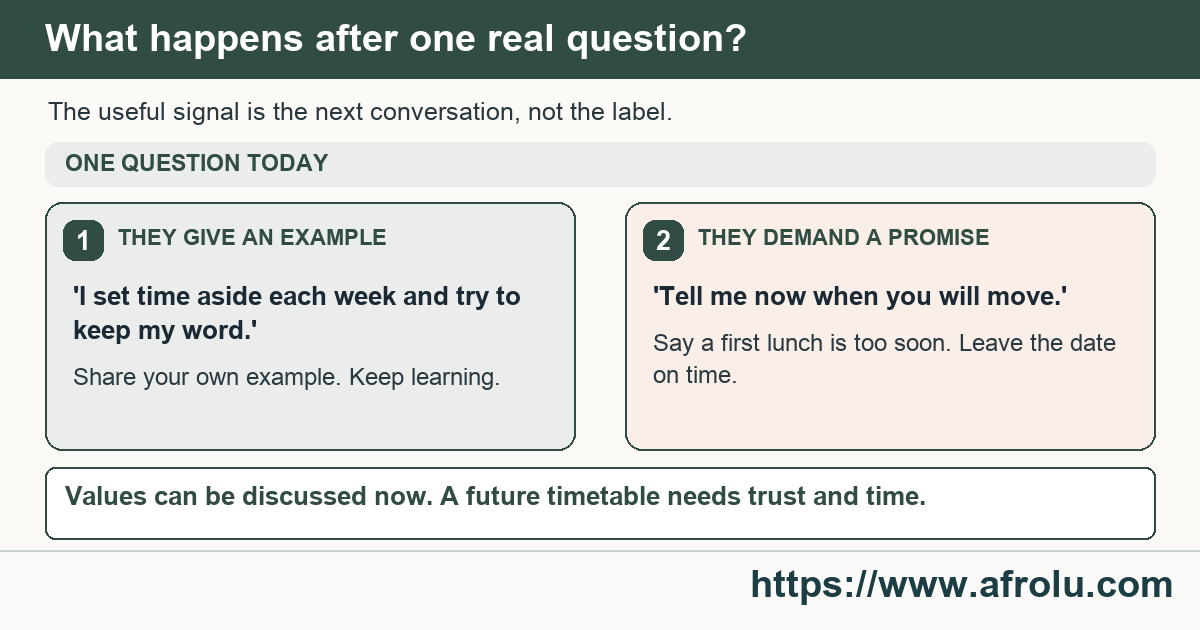
What happens after one real question?
Open full-size visualThe useful signal is the next conversation, not the label.
- They give an example'I set time aside each week and try to keep my word.'Share your own example. Keep learning.
- They demand a promise'Tell me now when you will move.'Say a first lunch is too soon. Leave the date on time.
Values can be discussed now. A future timetable needs trust and time.
At the end
You can like someone and still leave without a timeline
If the talk felt kind, you can say you would like another conversation. You do not need to turn that into a promise about marriage, moving, or leaving a job.
If the person demanded a future answer in the first hour, ask yourself whether they made room for your 'not yet.' Respect for that answer matters more than saying the same faith words.
Your next choice
Choose a lunch and one question
Offer a time you can keep. Ask what faith looks like during an ordinary week. Save future promises for another day.
Sources and their limits
The NHS breathing page supports an optional gentle exercise for stress. It does not promise a good date. eSafety supports meeting when ready and controlling private details. The faith question, work boundary, and pace are Afrolu examples.
- NHS: Breathing exercises for stress
Supports a short, optional breathing exercise before a stressful event.
Limit: Does not promise that breathing will remove anxiety or prove compatibility. - eSafety Commissioner: Online dating: How to stay safe
Supports meeting only when ready and retaining control over personal details.
Limit: Does not define faith practice or the right relationship timeline.
Questions you may still have
Is one faith question enough for a first date?
It can be. One honest question and a real answer give you something to discuss without making the date an interview.
Should I explain my job in detail?
Only what you choose to share. You can describe your week without showing private work papers or income.
What if they ask when we will marry or move?
You can say those choices need time and you are meeting to get to know each other today.
Will breathing make the date go well?
No exercise can promise that. A gentle pause may help you arrive; the conversation still tells you more.