Dating red flags · Voice messages
A familiar voice asks you to send money. What should you check?
Pause and check independently
Do not send money just because a voice message sounds familiar or urgent. Pause and contact the person through a number or channel you already know, rather than a new number supplied in the message. A recording alone cannot prove who sent it: voices can be copied, and an account can be impersonated. If you have already paid, contact the payment provider through its official app or a known number promptly and ask what it can do.
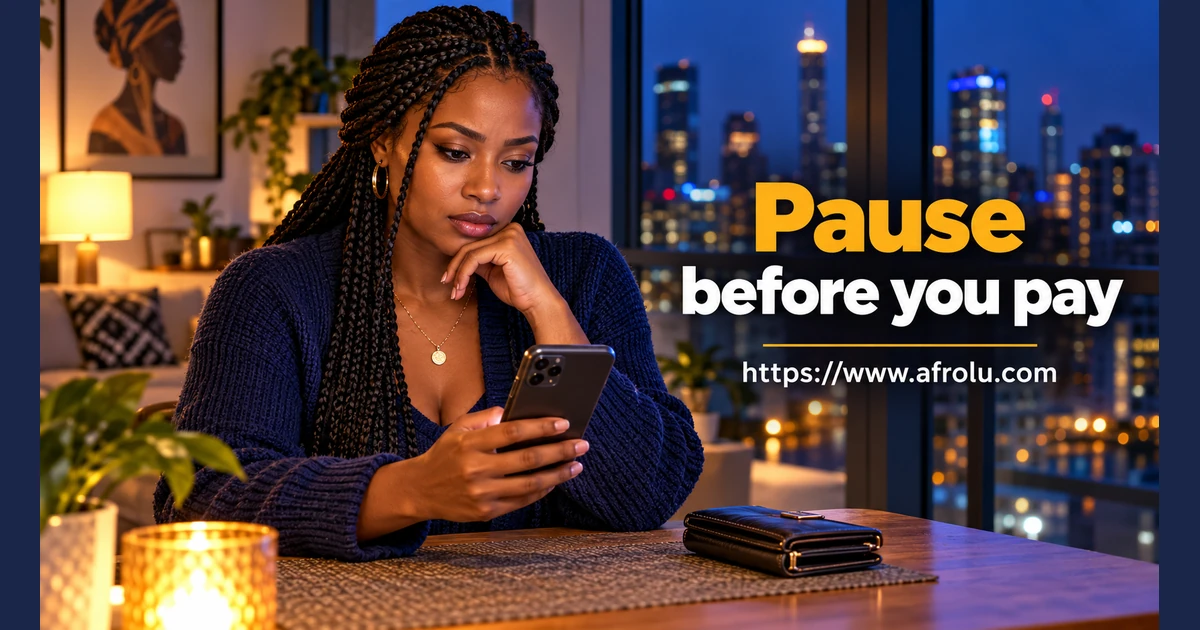
Ama lives abroad and has been talking seriously with an online date. On a weekend, a message that sounds like him says he needs money quickly for an emergency. The voice sounds familiar, but the message asks her to use a new payment account.
Use a contact you already trust
Leave the message unanswered while you check. If Ama has a number she already knows belongs to the person, she can call it herself. She can ask a trusted mutual contact to help if that is safe. A new number or payment detail in the same urgent message does not independently verify the request.
The US Federal Trade Commission explains that a voice can be cloned from a short recording and recommends calling the person on a known number. Its example concerns a family emergency; it does not establish that Ama’s message is fake.
If you have never met
The FTC warns against sending money or gifts to an online romantic interest you have not met in person. Even if you have met, you can still decline or take time to check a request. A genuine emergency does not require you to ignore your own limits or give someone account access.
Do not share a card number, account password or one-time sign-in code to “release” a payment. Contact your own bank through its app or the number on your card if you need help.
If money has already left
Contact the company, bank or service used to pay as soon as possible. Tell it what happened and ask what options are available. Keep the transaction details and messages if safe. The FTC recommends contacting the payment company after a suspected romance scam; it cannot promise that money will be returned.
Consider telling a trusted friend. Reporting options depend on the service and country. If the message threatens you, use a safe device or trusted support service to plan the next step.
You can slow the relationship down
A request for money is a reason to pause and verify, not proof that every person who needs help is dishonest. Notice whether the other person accepts a delay and your no. If they pressure you, ask for secrecy or keep changing the payment details, you may stop the conversation and report the account to the platform.
Keep reading
More ways to protect your accounts
Sources and what they can tell us
Ama and the voice message are invented. A familiar voice cannot establish the sender’s identity; local reporting and recovery options vary.
- US Federal Trade Commission: Scammers use AI to enhance family emergency schemes
It explains voice cloning and recommends calling the person on a known number.
Limit: It describes family emergency scams and does not identify the sender of Ama’s message. - US Federal Trade Commission: What to know about romance scams
It warns against sending money to an online romantic interest you have not met and recommends contacting the payment company if you paid.
Limit: US reporting information and recovery options vary elsewhere; a refund is not guaranteed. - eSafety Commissioner: Online dating
It discusses online dating privacy, reporting and seeking support.
Limit: It cannot verify this message or guarantee a safe result.
Questions about urgent voice requests
Can AI make a voice sound familiar?
Yes. The FTC describes voice cloning from short audio samples. A familiar voice alone does not verify a request.
Must I prove trust by sending money?
No. You can say no, delay, and check independently.
What if I already paid?
Contact the payment provider through a known channel promptly; ask what it can do and keep useful records.